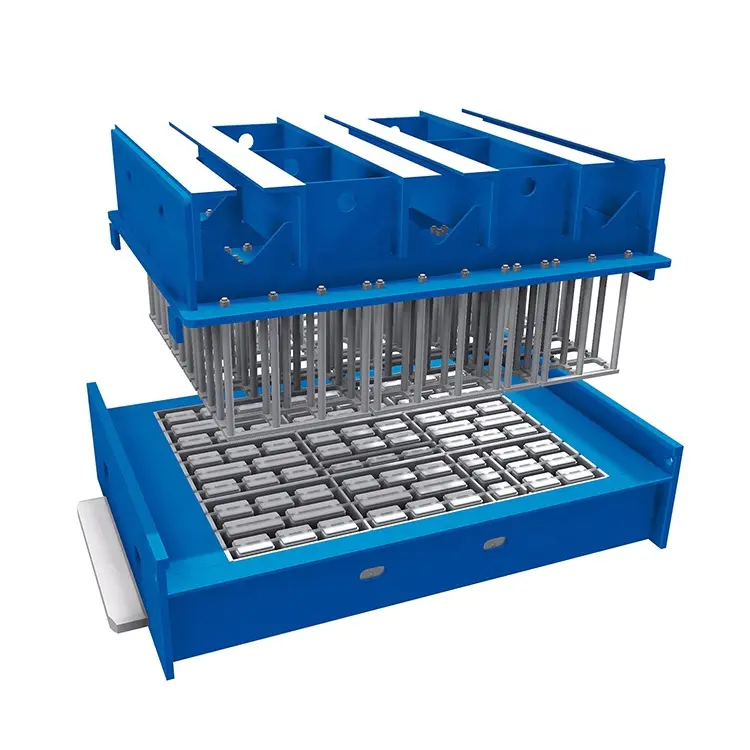

As global construction industries shift toward greener manufacturing practices, the demand for sustainable production equipment has grown rapidly. One of the most impactful innovations in this field is the environmentally friendly block machine mold, which plays a crucial role in reducing material waste, energy consumption, and environmental pollution during concrete block production. This article explores how eco-conscious mold design transforms traditional block manufacturing into a cleaner, more efficient, and economically viable process. It also addresses common industry challenges, performance benefits, material technologies, and selection guidelines for manufacturers aiming to upgrade their production systems.

The environmentally friendly block machine mold is a specialized tool used in concrete block production machines to shape raw materials into uniform blocks, bricks, or pavers while minimizing environmental impact. Unlike conventional molds, these eco-optimized designs prioritize reduced energy consumption, longer lifespan, and compatibility with low-emission production systems.
Modern construction demands not only performance but also responsibility toward natural resources. As a result, manufacturers have re-engineered mold structures using advanced steel alloys, wear-resistant coatings, and precision CNC machining processes to ensure reduced waste and improved efficiency.
These molds are widely used in producing hollow blocks, solid bricks, interlocking pavers, and permeable construction materials, which are essential for sustainable urban infrastructure development.
The construction industry is one of the largest consumers of raw materials and energy worldwide. Traditional block production methods often involve high carbon emissions, excessive material waste, and inefficient curing processes. This creates long-term environmental challenges, especially in rapidly urbanizing regions.
Sustainable block mold technology addresses these issues by focusing on three key principles:
By integrating environmentally friendly molds into production lines, manufacturers can significantly reduce their ecological footprint while improving operational efficiency.
The performance of a block machine mold is heavily dependent on the materials used in its construction. Eco-friendly molds rely on advanced engineering materials that enhance durability and reduce the need for frequent replacements.
Common materials include:
| Material Type | Characteristics | Environmental Advantage |
|---|---|---|
| Alloy Hardened Steel | High strength, wear resistance | Long lifespan reduces waste |
| Carburized Steel | Surface hardness with tough core | Reduces replacement frequency |
| Eco-Coated Steel | Anti-corrosion and low friction | Improves energy efficiency |
| Recycled Metal Alloys | Reprocessed industrial metals | Reduces raw material extraction |
Advanced CNC machining and laser cutting technologies ensure precision manufacturing, reducing material waste during production. Additionally, heat treatment processes improve structural integrity, allowing molds to withstand high-pressure vibration systems used in modern block machines.
Environmentally friendly block machine molds offer a wide range of operational and environmental advantages that directly impact production quality and business profitability.
Main benefits include:
These benefits make eco-friendly molds especially valuable for large-scale infrastructure projects, where consistency and efficiency are critical.
Understanding the difference between traditional molds and environmentally friendly molds helps manufacturers make informed investment decisions.
| Feature | Traditional Mold | Eco-Friendly Mold |
|---|---|---|
| Material Quality | Standard steel | High-strength alloy steel |
| Service Life | Short to medium | Extended lifespan |
| Production Waste | Higher defect rate | Low defect rate |
| Energy Efficiency | Moderate | Optimized for low energy use |
| Environmental Impact | Higher emissions | Reduced carbon footprint |
The transition to eco-friendly molds is not just a technological upgrade but also a strategic shift toward long-term sustainability and cost efficiency.
Selecting the appropriate mold requires careful consideration of production requirements, machine compatibility, and material quality.
Key selection criteria:
Investing in high-quality molds reduces long-term operational costs and improves production stability.
Proper maintenance is essential for maximizing mold lifespan and ensuring consistent product quality. Even the most advanced eco-friendly molds require routine care to maintain performance.
Maintenance practices include:
With proper maintenance, eco-friendly molds can operate efficiently for years, reducing replacement frequency and minimizing downtime.
Environmentally friendly block machine molds are widely used across multiple construction and infrastructure sectors.
Key application areas include:
These molds are especially important in projects requiring high precision and environmental compliance, such as green cities and sustainable housing developments.
Despite their advantages, manufacturers may face certain challenges when adopting eco-friendly mold technology.
Challenges and solutions:
Over time, these challenges are outweighed by improved efficiency and reduced operational costs.
The future of block machine molds is closely linked to automation, digital manufacturing, and environmental responsibility. Emerging trends include:
These innovations will continue to reshape the construction materials industry, making production more efficient and environmentally responsible.
Q1: What makes a block machine mold environmentally friendly?
It uses durable materials, reduces waste during production, and supports energy-efficient manufacturing processes.
Q2: How long does an eco-friendly mold last?
Depending on usage and maintenance, it can last significantly longer than traditional molds due to wear-resistant materials.
Q3: Can it be used in all block machines?
Most molds are customizable to fit different machine models, but compatibility must be confirmed before purchase.
Q4: Does it improve block quality?
Yes, precision engineering ensures consistent shape, density, and strength of produced blocks.
Q5: Is it cost-effective in the long run?
Although initial costs may be higher, reduced maintenance and longer lifespan make it more economical over time.
The environmentally friendly block machine mold represents a significant advancement in modern construction manufacturing. By combining high-performance engineering with sustainable design principles, it helps manufacturers achieve better efficiency, lower environmental impact, and improved product quality.
As global demand for green infrastructure continues to grow, adopting advanced mold technology is no longer optional but essential for long-term competitiveness. Manufacturers who invest early in eco-friendly production systems will be better positioned to meet future regulatory standards and market expectations.
Fujian Quangong Mould Co.,Ltd is committed to providing high-quality, durable, and environmentally responsible block machine mold solutions for global construction industries. With advanced manufacturing capabilities and strict quality control systems, the company supports clients in achieving efficient and sustainable production.
Contact us today to learn more about customized mold solutions, technical support, and partnership opportunities. Our team is ready to help you upgrade your production line with reliable and eco-friendly technology.