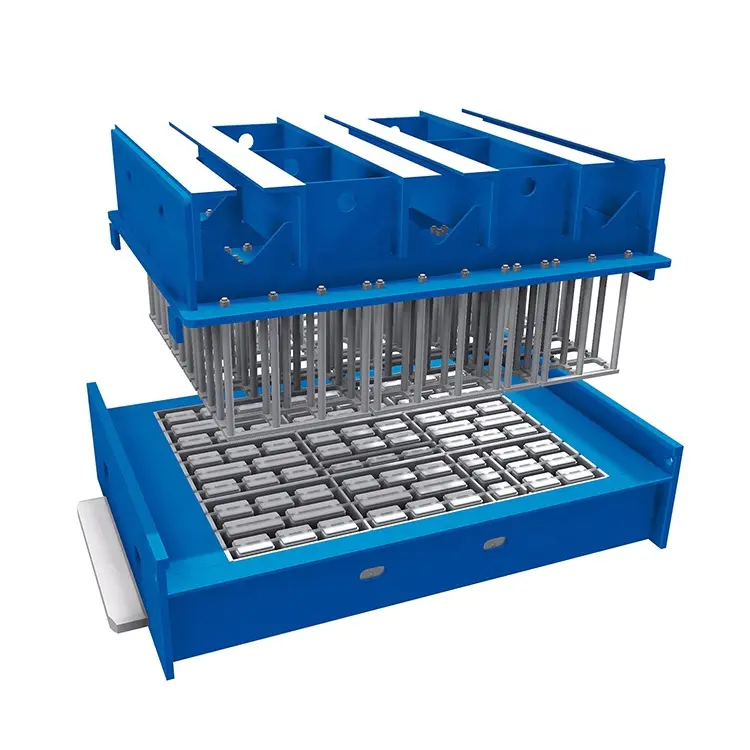
Producing high-performance concrete products requires more than a carefully formulated concrete mix. The mold itself must withstand repeated loading, vibration, abrasion, demolding forces, and demanding production conditions. A properly engineered High Strength Concrete Mold helps maintain accurate dimensions and stable product geometry while minimizing cracking, deformation, sticking, edge damage, and premature mold wear.
This article covers mold construction, material selection, design considerations, production benefits, maintenance requirements, common problems, and purchasing criteria. Whether you manufacture precast components, concrete pipes, architectural products, paving products, or other high-strength concrete items, understanding mold performance can help you make a more informed investment.
What Is a High Strength Concrete Mold?
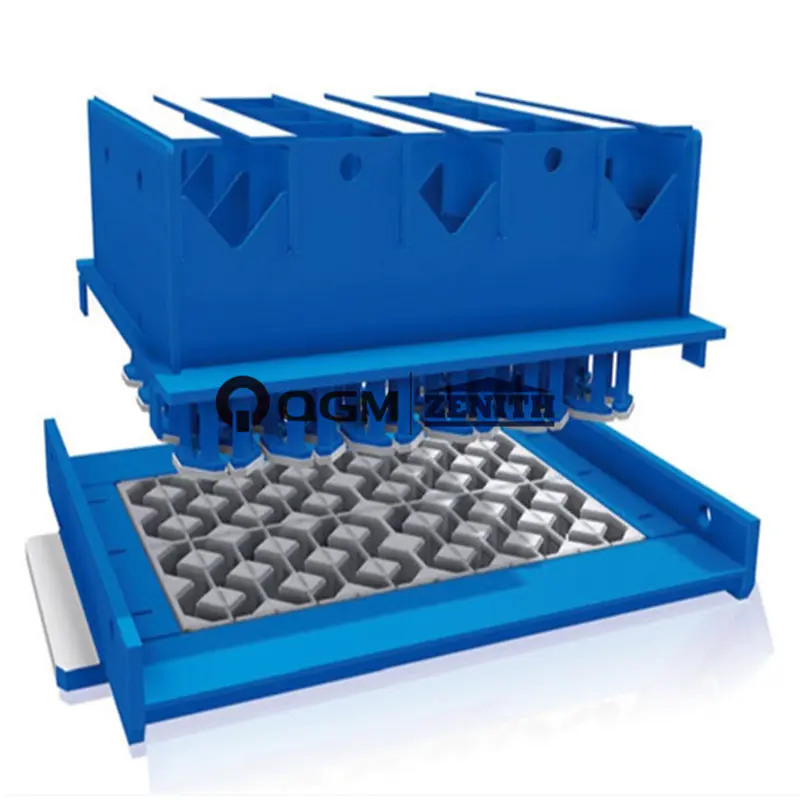
A High Strength Concrete Mold is a purpose-designed forming tool used to shape concrete products under demanding manufacturing conditions. Unlike basic molds intended for occasional or low-volume production, high-performance molds are engineered to tolerate repeated cycles, mechanical vibration, heavy concrete pressure, abrasion, and frequent demolding.
The mold determines the external geometry of the finished product. Its dimensions, structural rigidity, internal surface, joints, release characteristics, and overall construction can therefore have a direct effect on the final concrete component.
Depending on the application, molds may be manufactured from steel, engineered polymers, rubber compounds, fiberglass-reinforced materials, or combinations of different materials. The ideal construction depends on product shape, concrete formulation, production volume, curing method, demolding process, and required surface finish.
Why Mold Performance Matters
High-strength concrete is often selected because manufacturers need products with superior load-bearing capacity, durability, dimensional stability, or resistance to harsh environments. However, the advantages of the concrete mix can be compromised if the forming system is inaccurate or unstable.
Dimensional Accuracy
Rigid and accurately manufactured molds help products maintain their specified dimensions.
Surface Finish
A suitable mold surface can reduce unwanted marks, rough areas, and edge imperfections.
Production Consistency
Stable mold geometry makes repeated production cycles more predictable.
Reduced Waste
Fewer defective products can mean lower material consumption and less rework.
For manufacturers, this is particularly important when production volumes are high. A small dimensional problem repeated across hundreds or thousands of units can become a significant operational cost.
Key Material and Construction Considerations
Material selection should be based on the complete production environment rather than simply the initial purchase price. A mold that costs less but requires frequent repair or replacement may ultimately be more expensive.
|
Material / Construction
|
Typical Strength
|
Main Advantage
|
Important Consideration
|
|
Steel
|
High
|
Excellent rigidity and durability
|
Weight and corrosion protection
|
|
Engineered Polymer
|
Medium to High
|
Lightweight and flexible options
|
Temperature and chemical compatibility
|
|
Rubber-Based Mold
|
Application dependent
|
Useful for complex shapes and demolding
|
Wear and formulation compatibility
|
Other details are equally important, including welding quality, reinforcement structure, corner design, connection systems, surface treatment, and tolerance control. For specialized products, customized construction can be more appropriate than a standard mold.
Essential Mold Design Features
Good mold design balances strength, usability, precision, and production efficiency. Before ordering a mold, manufacturers should evaluate the following factors:
-
Structural rigidity: The mold should resist deformation during filling, vibration, handling, and curing.
-
Accurate dimensions: Critical dimensions and tolerances should be clearly defined before manufacturing.
-
Easy demolding: The mold should allow the hardened concrete product to be removed without unnecessary damage.
-
Reliable joints: Connections should remain stable during repeated production cycles.
-
Suitable surface treatment: The internal surface should support the required finish and release process.
-
Safe handling: Lifting points, handles, locks, and other operating components should suit the production environment.
-
Maintainability: Wear components should be accessible for inspection, adjustment, or replacement.
A mold that looks simple externally may require considerable engineering inside. Reinforcement placement, load distribution, corners, openings, and demolding mechanisms can all influence long-term performance.
Production Benefits of a High-Performance Mold
Investing in a properly designed mold can improve several parts of the production process simultaneously. The biggest benefit is not necessarily a single technical specification, but the cumulative effect of more stable manufacturing.
-
More consistent product dimensions. Stable forming conditions help minimize dimensional variation.
-
Better visual quality. Appropriate surfaces and precise joints can contribute to cleaner finished products.
-
Lower rejection rates. Fewer mold-related defects can reduce discarded or reworked concrete components.
-
Improved cycle efficiency. Practical demolding and handling features can shorten unnecessary downtime.
-
Longer service life. Durable construction can support repeated production over an extended period.
-
Better cost control. Reduced maintenance, waste, and replacement frequency can improve the total cost of ownership.
Key takeaway: Mold quality affects much more than the shape of concrete. It can influence the entire production chain, from filling and vibration to demolding, inspection, packaging, and delivery.
How to Evaluate a Concrete Mold Supplier
Choosing a supplier should involve more than comparing quotations. The right supplier should understand the actual working conditions of the mold and be able to translate product requirements into practical manufacturing details.
-
Ask about experience with similar concrete products.
-
Confirm the mold's material, thickness, reinforcement, and surface treatment.
-
Discuss product dimensions and required tolerances before production.
-
Clarify expected production cycles and operating conditions.
-
Request information about inspection and quality-control procedures.
-
Check whether customization is available for unusual shapes or dimensions.
-
Discuss spare parts, maintenance support, and after-sales service.
-
Consider packaging and transportation requirements for international orders.
A reliable supplier should also communicate clearly about limitations. If a particular design creates unusual stress, difficult demolding, or excessive wear, identifying the issue before production is much better than discovering it after installation.
Fujian Quangong Mould Co.,Ltd focuses on concrete mold manufacturing and can provide customized solutions based on product specifications, production requirements, and application conditions. For buyers who need a mold adapted to a particular concrete product, discussing the complete production process with the manufacturer can help avoid costly design changes later.
Common Mold Problems and Practical Solutions
|
Problem
|
Possible Cause
|
Practical Direction
|
|
Deformed product
|
Insufficient mold rigidity
|
Review structural reinforcement and load distribution
|
|
Concrete sticking
|
Poor release preparation or unsuitable surface
|
Check release-agent procedure and mold surface condition
|
|
Damaged edges
|
Difficult demolding or excessive mechanical force
|
Review draft angles, joints, and demolding method
|
|
Inconsistent dimensions
|
Wear, movement, or inaccurate assembly
|
Inspect critical components and measurement points
|
It is important to distinguish between mold-related defects and problems caused by concrete mix design, vibration, curing, temperature, or operator procedures. A systematic inspection can prevent unnecessary mold modifications when the actual cause lies elsewhere.
Maintenance Practices for Longer Mold Life
Even a durable mold requires proper maintenance. Concrete residue, moisture, impact, improper storage, and excessive mechanical force can gradually affect mold performance.
-
Clean concrete residue from the mold after production according to the manufacturer's recommendations.
-
Inspect joints, locks, welds, reinforcement areas, and high-wear surfaces regularly.
-
Check critical dimensions periodically rather than waiting for visible product defects.
-
Use appropriate release procedures to reduce sticking and demolding stress.
-
Store molds on stable surfaces where they will not be exposed to unnecessary impact or deformation.
-
Repair damaged areas promptly to prevent small problems from becoming structural issues.
Keeping a simple maintenance record can also help identify patterns. If defects begin appearing after a certain number of production cycles, the information can be useful when determining whether a component requires adjustment, refurbishment, or replacement.
High Strength Concrete Mold vs. Conventional Mold
Not every concrete application requires the same level of mold performance. The difference becomes particularly important when production volume, concrete pressure, vibration intensity, dimensional tolerance, and product complexity increase.
|
Factor
|
Conventional Mold
|
High-Performance Mold
|
|
Production intensity
|
Suitable for moderate requirements
|
Designed for demanding repeated cycles
|
|
Structural stability
|
Depends heavily on construction
|
Engineered around production loads
|
|
Customization
|
Often limited
|
Can be designed around specific products
|
|
Long-term cost
|
May increase with frequent replacement
|
Potentially lower total ownership cost
|
Purchasing Checklist
Before placing an order, prepare a clear specification sheet. This allows the manufacturer to understand the application and reduces the risk of misunderstandings.
-
Finished concrete product drawings
-
Required mold dimensions and tolerances
-
Concrete type and approximate working conditions
-
Expected daily or annual production volume
-
Vibration and compaction method
-
Demolding method
-
Required surface finish
-
Preferred mold material or supplier recommendation
-
Maintenance and spare-part expectations
-
Shipping and installation requirements
The more complete the technical information, the easier it is for the mold manufacturer to recommend an appropriate structure. For customized orders, drawings, samples, photographs, and production videos can be especially useful during the initial discussion.
Frequently Asked Questions
What applications require a High Strength Concrete Mold?
Applications with repeated production cycles, demanding dimensional requirements, heavy concrete loading, strong vibration, complex shapes, or high-quality surface requirements can benefit from a high-performance mold. The exact design should be matched to the product and manufacturing process.
Can a concrete mold be customized?
Yes. Customization can cover dimensions, geometry, reinforcement, openings, joints, demolding mechanisms, surface treatment, lifting components, and other production requirements. Customized design is particularly useful for non-standard concrete products.
How can mold life be extended?
Regular cleaning, correct release procedures, proper storage, routine dimensional inspection, controlled handling, and timely repair can all help extend service life. Avoiding unnecessary impact and excessive demolding force is also important.
Is a more expensive mold always better?
Not necessarily. The best mold is the one that matches the actual application. Over-engineering can increase initial costs without providing meaningful benefits, while under-designed molds can create maintenance and replacement expenses. A balanced design should consider both performance and total operating cost.
What information should buyers provide before requesting a quotation?
Buyers should ideally provide product drawings, dimensions, tolerances, concrete characteristics, production volume, demolding method, vibration process, desired surface finish, and any special operating conditions. These details allow the manufacturer to prepare a more accurate proposal.
Why is mold design important for high-strength concrete products?
High-strength concrete products can require precise forming conditions and controlled production processes. A stable mold helps maintain geometry, supports consistent production, reduces avoidable defects, and makes the demolding process more manageable.
Final Thoughts
A high-quality concrete product begins with a well-controlled production process, and the mold is one of the most important parts of that process. A properly engineered High Strength Concrete Mold can support dimensional consistency, cleaner surfaces, efficient demolding, reduced waste, and more dependable long-term production.
Instead of selecting a mold based only on price, buyers should evaluate material quality, structural design, production conditions, customization capability, maintenance requirements, and supplier experience. Taking these factors into account can help manufacturers choose a forming solution that delivers value throughout its working life.
If you are looking for a customized concrete mold for a specific product, production line, or demanding application, Fujian Quangong Mould Co.,Ltd can discuss your requirements and help develop a suitable solution. Contact us with your drawings, product dimensions, production requirements, or sample information to start a professional mold consultation.