


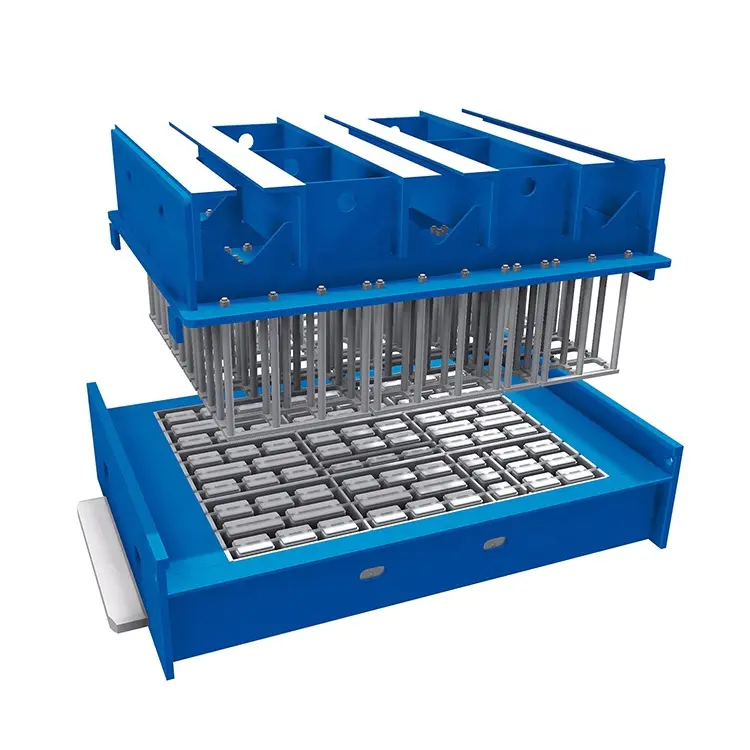
Heavy duty precast concrete moulds are more than temporary containers for wet concrete. They are precision production tools that determine the shape, dimensions, surface quality, repeatability, and efficiency of precast concrete products. For manufacturers producing concrete components repeatedly, a robust mould can make the difference between a stable production process and constant problems with deformation, difficult demoulding, surface defects, and dimensional variation.
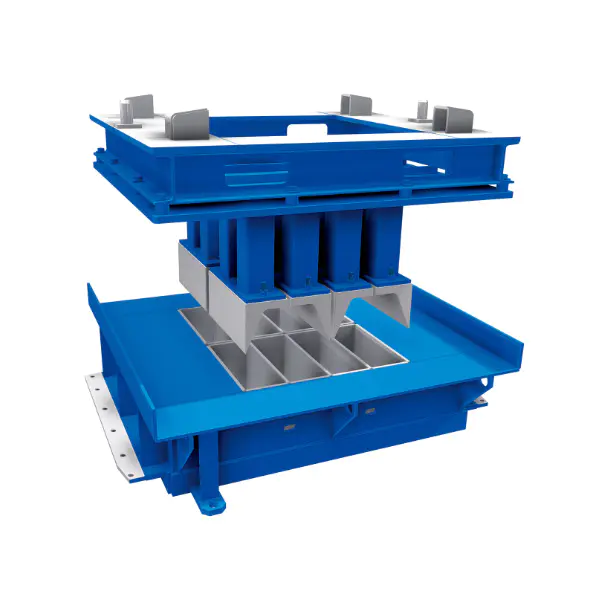
This guide explains how heavy duty precast concrete moulds support reliable concrete production, what design factors affect their performance, how mould materials and reinforcement influence service life, and how manufacturers can reduce common production problems. It also covers mould preparation, concrete pressure, vibration, demoulding, maintenance, quality control, and practical questions buyers should ask before ordering custom moulds.
Table of Contents
- Why Heavy Duty Precast Concrete Moulds Matter
- How Heavy Duty Moulds Are Constructed
- Materials and Structural Performance
- Key Design Features for Reliable Production
- Common Applications
- Common Production Problems and Solutions
- A Practical Mould Production Workflow
- Maintenance and Service Life
- What Buyers Should Prepare Before Ordering
- Frequently Asked Questions
- Final Thoughts
Why Heavy Duty Precast Concrete Moulds Matter
Precast concrete manufacturing depends on repeatability. A production team may cast dozens, hundreds, or thousands of similar components, so the mould must maintain its geometry throughout repeated loading, vibration, curing, and demoulding cycles.
A weak or poorly designed mould can create problems that appear to be concrete-related but actually originate from the forming system. If a side panel moves under concrete pressure, the finished element may become oversized or distorted. If joints are not sufficiently tight, cement paste can escape and leave unwanted fins along the edges. If the mould surface is damaged or contaminated, the concrete finish can become inconsistent.
Heavy duty precast concrete moulds are therefore designed to provide structural stability while remaining practical for assembly, cleaning, demoulding, and repeated use. Proper mould stiffness, alignment, and support are particularly important when producing large or heavy elements.
How Heavy Duty Moulds Are Constructed
A heavy duty mould normally combines forming surfaces with a structural support system. The forming surface contacts the concrete, while frames, ribs, braces, stiffeners, hinges, clamps, bolts, or other mechanisms provide the necessary rigidity.
1. Forming Surfaces
The forming surface determines the geometry and appearance transferred to the concrete. For products requiring smooth architectural finishes, the surface must be clean, stable, and appropriately prepared.
2. Reinforced Frames
Large moulds require structural reinforcement to resist deformation. Reinforcing ribs and external frames distribute loads and help maintain dimensional stability during casting.
3. Connection and Adjustment Systems
Bolted connections, clamps, adjustable panels, positioning devices, and removable sections can make a mould easier to assemble and adapt. The appropriate configuration depends on the product design and production volume.
4. Demoulding Components
A mould should not only hold concrete securely during casting; it should also allow the hardened or partially hardened component to be removed without damaging corners, surfaces, inserts, or the mould itself.
Materials and Structural Performance
Different precast products require different mould materials. Material selection should consider the number of expected uses, required surface finish, product geometry, concrete pressure, production environment, and maintenance requirements.
| Mould Material | Typical Characteristics | Suitable Production Conditions |
|---|---|---|
| Steel | High strength, rigidity, repeatability, and resistance to demanding production conditions. | Heavy components, repetitive production, structural products, and industrial applications. |
| Timber / Plywood | Easy to fabricate and modify, particularly useful for limited production or prototypes. | Short production runs, special shapes, and projects where frequent modification is expected. |
| Fiberglass / Composite | Useful for detailed shapes and selected architectural applications with relatively complex surfaces. | Decorative products and moulds where geometry or surface characteristics require flexibility. |
| Plastic-Based Systems | Lightweight and suitable for selected modular or repetitive applications. | Products where weight, handling, and mould configuration are important considerations. |
For demanding industrial production, steel is commonly selected because it can provide the stiffness and durability required for repeated casting. However, the exact steel grade, plate thickness, reinforcement configuration, welding method, and surface treatment should be determined according to the product and operating conditions rather than using one standard specification for every mould.
Key Design Features for Reliable Production
Dimensional Stability
The mould must resist movement when concrete is placed and compacted. This is particularly important for large wall panels, beams, columns, drainage products, utility structures, and other heavy precast components.
Accurate Alignment
Panels, corners, openings, inserts, and embedded components must remain in their intended positions. Small errors in the mould can be repeated across every casting cycle, turning a minor tooling issue into a major production problem.
Controlled Joints
Mould joints should minimize unwanted concrete leakage while still allowing practical assembly and stripping. Properly designed joints can reduce edge defects and cleaning work after demoulding.
Suitable Chamfers and Edges
Sharp concrete corners are vulnerable during handling and demoulding. Appropriate chamfers can help protect edges while also creating a consistent appearance across production batches.
Accessible Cleaning Areas
A mould that is difficult to clean can gradually accumulate hardened concrete, dust, release-agent residue, and other contaminants. Easy access to critical surfaces helps maintain repeatable casting conditions.
Practical Demoulding
Removable side panels, hinges, lifting points, adjustable sections, or other stripping features can reduce the physical effort required to release the finished component. The demoulding method should be considered during mould design rather than added as an afterthought.
Resist concrete pressure and repeated handling.
Maintain geometry through repeated production cycles.
Provide a suitable and consistent concrete-facing surface.
Support practical assembly, stripping, cleaning, and adjustment.
Common Applications of Heavy Duty Precast Concrete Moulds
Heavy duty mould systems can be engineered for many different precast products. The final configuration should reflect the component's geometry, weight, reinforcement arrangement, production quantity, and installation requirements.
- Concrete wall panels: large flat elements require stable mould frames and reliable alignment.
- Concrete beams and columns: dimensional consistency is important for connections and installation.
- Drainage channels: repeated production benefits from durable forming surfaces and efficient stripping.
- Manholes and utility components: accurate openings and embedded features require controlled positioning.
- Road and infrastructure components: heavy production conditions require robust mould construction.
- Architectural precast products: surface finish, detailing, chamfers, and geometric consistency become especially important.
- Custom concrete components: non-standard shapes may require adjustable or specially fabricated mould sections.
Common Production Problems and Practical Solutions
| Problem | Possible Cause | Practical Response |
|---|---|---|
| Mould deformation | Insufficient stiffness, inadequate bracing, or excessive casting pressure. | Review frame structure, support points, panel thickness, and reinforcement. |
| Concrete leakage | Gaps at joints, worn seals, or poor panel alignment. | Inspect joints, seals, clamps, and assembly accuracy before casting. |
| Surface defects | Dirty mould surface, damaged forming face, excessive release agent, or poor consolidation. | Clean the mould, inspect the surface, and control release-agent application. |
| Difficult demoulding | Insufficient release preparation, unsuitable geometry, or premature stripping. | Review release-agent procedure, mould geometry, and concrete strength before stripping. |
| Dimensional variation | Panel movement, repeated wear, inaccurate setup, or inconsistent measurement. | Check mould dimensions before casting and establish repeatable inspection points. |
| Fast mould wear | Rough handling, poor cleaning methods, corrosion, or unsuitable maintenance. | Establish cleaning, inspection, storage, and repair procedures. |
One important lesson is that quality problems should be investigated systematically. If several concrete units show the same dimensional error, checking the mould itself may be more productive than changing the concrete mix immediately.
A Practical Mould Production Workflow
Step 1: Confirm the Product Drawing
Start with the finished concrete component rather than the mould. Confirm overall dimensions, wall thickness, openings, inserts, reinforcement interfaces, lifting points, chamfers, surface requirements, and allowable tolerances.
Step 2: Define the Production Target
The expected number of castings has a direct influence on the mould structure, material, surface treatment, adjustment system, and maintenance strategy.
Step 3: Develop the Mould Structure
The mould manufacturer can then determine the forming surfaces, reinforcement frame, support points, connection method, removable sections, and demoulding approach.
Step 4: Verify Assembly and Dimensions
Before production begins, check the mould's overall dimensions, squareness, alignment, openings, fixtures, and critical contact surfaces.
Step 5: Trial Casting
A trial casting can reveal practical issues that may not be obvious from drawings alone, including concrete leakage, access problems, stripping difficulty, surface defects, or interference with reinforcement and inserts.
Step 6: Establish a Repeatable Production Routine
Once the mould has been validated, operators should follow consistent procedures for cleaning, release-agent application, assembly, inspection, casting, curing, demoulding, and storage.
Maintenance and Service Life
Even a heavy duty mould requires regular maintenance. Repeated exposure to wet concrete, vibration, lifting, impact, cleaning, and temperature changes can gradually affect joints, surfaces, fasteners, supports, and alignment.
- Clean concrete residue from the mould after each production cycle.
- Inspect forming surfaces for dents, scratches, corrosion, and deformation.
- Check bolts, clamps, hinges, and other connection points regularly.
- Verify important dimensions after repeated production cycles.
- Repair damaged seals and joints before they create concrete leakage.
- Use a release agent compatible with the mould surface and required concrete finish.
- Store moulds in conditions that minimize unnecessary corrosion or physical damage.
Maintenance should focus on early detection. A small deformation that is corrected during routine inspection is much easier to manage than a dimensional problem discovered after a large batch of concrete components has already been produced.
What Buyers Should Prepare Before Ordering
When requesting a quotation for heavy duty precast concrete moulds, detailed project information helps the manufacturer develop a more practical solution. Instead of providing only the finished product dimensions, buyers should prepare as much of the following information as possible:
- Product drawings or 3D models.
- Overall dimensions and critical tolerances.
- Expected production quantity and casting frequency.
- Concrete type and approximate casting pressure or production method.
- Reinforcement layout and embedded components.
- Required surface finish.
- Demoulding method and available handling equipment.
- Whether the mould needs to be fixed, adjustable, modular, or reusable for multiple product sizes.
- Target delivery schedule and installation requirements.
- Special requirements for customization, surface treatment, or corrosion protection.
Frequently Asked Questions
What are heavy duty precast concrete moulds?
Heavy duty precast concrete moulds are robust forming systems designed to shape concrete components under demanding production conditions. They are generally engineered for repeated use and incorporate structural reinforcement to maintain geometry during casting, vibration, curing, and demoulding.
Why is mould stiffness important?
Mould stiffness helps prevent panels and frames from moving under concrete pressure. Excessive movement can lead to dimensional variation, uneven edges, leakage, and inconsistent finished products.
Are steel moulds suitable for repeated precast production?
Steel is widely used for demanding precast applications because it can provide high rigidity, durability, and repeatability. The appropriate construction depends on the product size, expected production cycles, surface requirements, and operating conditions.
How can concrete leakage around mould joints be reduced?
Joint leakage can be reduced by maintaining accurate panel alignment, using suitable seals where required, checking clamps and connections, and inspecting the mould before each casting cycle.
How often should a precast mould be inspected?
A basic inspection should be carried out before production cycles, with more detailed dimensional and structural inspections scheduled according to production frequency and mould usage. Critical dimensions should be checked whenever unusual wear, impact, deformation, or repeated defects are observed.
Can heavy duty moulds be customized for unusual concrete products?
Yes. Custom moulds can be developed around non-standard dimensions, complex shapes, embedded components, special surface finishes, adjustable production requirements, and particular demoulding methods. The product drawing and production process are the starting points for customization.
What information does a mould manufacturer need?
Important information includes product drawings, dimensions, tolerances, production quantity, concrete and reinforcement details, embedded parts, surface finish, demoulding method, and any requirements for adjustment or repeated use.
How can mould service life be extended?
Regular cleaning, dimensional inspection, correct release-agent application, careful handling, timely repair, proper storage, and routine inspection of joints and fasteners can help maintain mould performance over repeated production cycles.
Final Thoughts
Heavy duty precast concrete moulds form the foundation of a repeatable precast production process. Their performance directly affects dimensional consistency, surface quality, demoulding efficiency, production speed, maintenance workload, and the overall reliability of finished concrete components.
The right mould should therefore be developed around the complete production process rather than treated as a simple container. Product geometry, concrete pressure, reinforcement, casting method, curing conditions, demoulding, production volume, and maintenance requirements all need to work together.
For manufacturers producing customized or demanding precast components, a carefully engineered mould can help reduce recurring production problems while creating a more stable and predictable manufacturing process. The earlier these requirements are considered, the easier it becomes to develop a mould that fits both the product and the production environment.
Looking for Customized Heavy Duty Precast Concrete Moulds?
Fujian Quangong Mould Co.,Ltd focuses on precast concrete mould solutions designed around different product structures, production requirements, and customization needs. Whether you need a mould for standard precast components or a specially engineered forming solution for a complex concrete product, providing detailed drawings and production requirements is the best starting point.
Have a specific mould project in mind? Contact us to discuss your product dimensions, production requirements, and customized heavy duty precast concrete mould solution.