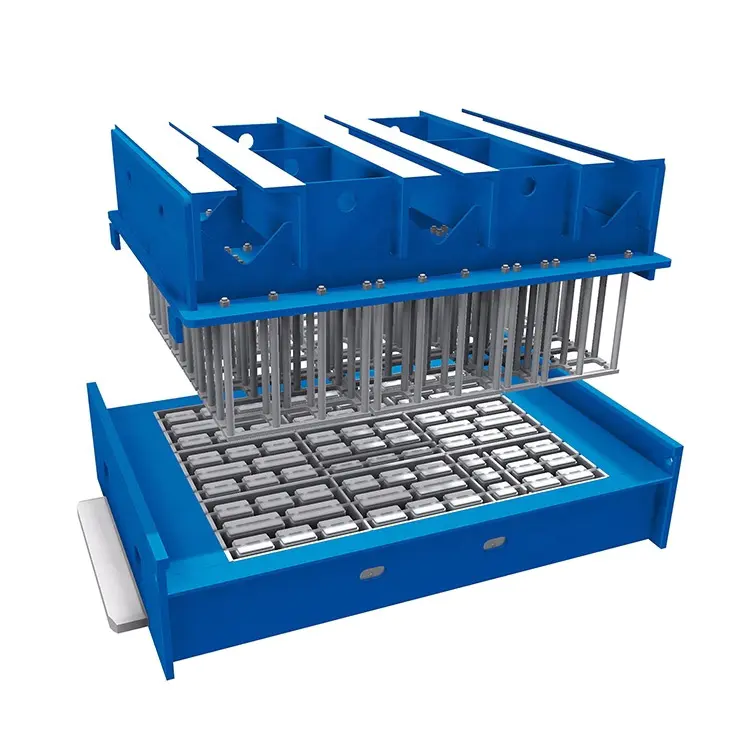

When a block plant manager specifies a new production line, the mould is often treated as an afterthought—a piece of tooling that is ordered after the machine has been selected. In practice, the mould defines what the plant can produce, and therefore what markets it can serve. A plant with a single hollow block mould is limited to wall construction. A plant with a portfolio of paver, curbstone, and retaining wall moulds can serve municipal, landscaping, and infrastructure customers. The type of Brick Machine Mould selected determines the product mix, the cycle time, the maintenance requirements, and the total cost of ownership. For procurement managers, understanding the different mould types is the first step in building a production capability that matches the market demand.
This guide is written for buyers who need to evaluate brick machine moulds for modern block production. We will explain the main mould categories, the design features that distinguish them, the specifications that matter for each type, and the criteria for selecting a supplier. We will also provide detailed product parameters from our factory at Fujian Quangong Mould Co.,Ltd. Whether you are producing hollow blocks for residential walls, pavers for municipal sidewalks, or custom shapes for architectural projects, this guide will help you select the right Brick Machine Mould for your production line.
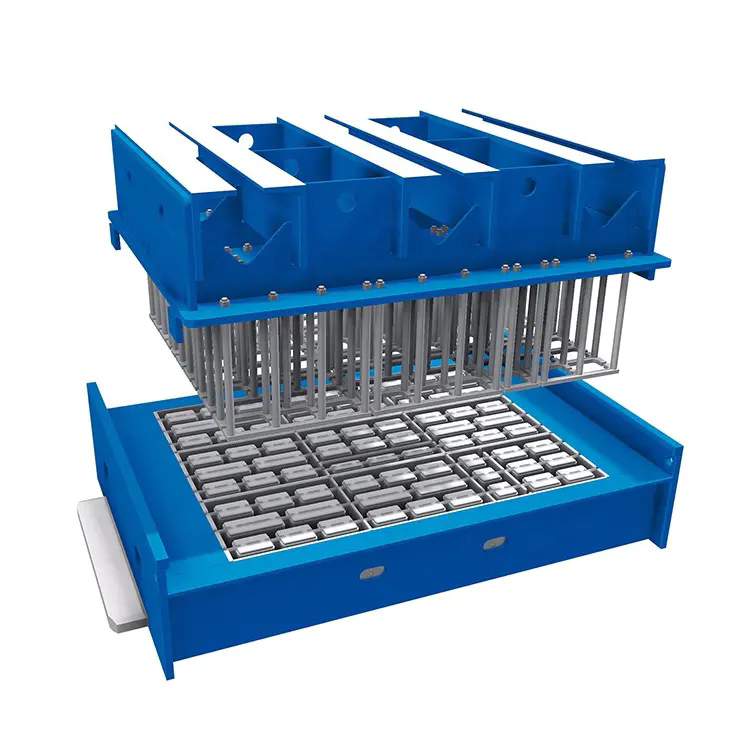
Brick machine moulds are classified by the product they produce and the production method they support. The main categories in modern block production are hollow block moulds, solid block moulds, paver moulds, curbstone moulds, retaining wall moulds, and custom architectural moulds. Each category has its own design requirements, material specifications, and maintenance considerations. The table below summarizes the main categories and their typical applications.
| Mould Category | Typical Product | Key Design Feature | Primary Market |
| Hollow Block Mould | 2-core, 3-core, or multi-core blocks | Core bars and cavity geometry | Residential and commercial walls |
| Solid Block Mould | Solid load-bearing blocks | Dense cavity, high compaction | Foundations, load-bearing walls |
| Paver Mould | Interlocking pavers, slabs | Surface texture, tight tolerances | Municipal, landscaping, driveways |
| Curbstone Mould | Road curbs, edging | Long, narrow cavity, chamfered edges | Road construction, landscaping |
| Retaining Wall Mould | Interlocking wall blocks | Complex geometry, interlocking features | Slope stabilization, garden walls |
| Custom Mould | Architectural elements, special shapes | Bespoke geometry, surface finish | Architectural, specialty projects |
At QGM, our factory produces moulds in all these categories. We work with our customers to understand their target market and production volume, and we recommend the mould types that will deliver the best return on investment. Our engineering team can also design custom moulds for products that are not available in standard catalogues.
The hollow block mould and the solid block mould differ in their cavity design, their core bar arrangement, and their compaction requirements. A hollow block mould uses core bars to create the voids in the block. The core bars must be precisely positioned and securely mounted to prevent deflection during the vibration and pressing cycle. The cavity walls must be designed to allow the concrete to flow around the core bars without creating voids or segregation. A solid block mould, by contrast, has no core bars. The cavity is a simple rectangular or shaped void that is filled with concrete and compacted to a high density. The table below compares the design features of hollow and solid block moulds.
| Feature | Hollow Block Mould | Solid Block Mould |
| Core Bars | Yes (2-4 per block) | No |
| Cavity Complexity | High (core bar clearance) | Low (simple cavity) |
| Compaction Requirement | Moderate (voids reduce mass) | High (full mass compaction) |
| Wear Pattern | Core bar wear, cavity edge wear | Uniform cavity wall wear |
| Typical Material | 42CrMo4, 40Cr | 42CrMo4, 20CrMnTi |
At our factory, we design hollow block moulds with replaceable core bars, so that worn core bars can be replaced without replacing the entire mould. We also design the cavity walls with optimized draft angles and surface finishes to ensure smooth ejection and long service life. For solid block moulds, we focus on cavity hardness and compaction resistance, using materials and heat treatments that can withstand the high pressing forces.
Paver moulds require a different design and material approach because the paver product has different requirements from a standard block. Pavers are thin, have a large surface area, and often feature a textured or chamfered surface. The mould must produce a product with precise dimensions and a flawless surface finish. The thinness of the paver means that the mould cavity is shallow, and the compaction forces are concentrated over a small area. This increases the wear on the cavity walls and the base plate. The texture and chamfer features require precision machining and, in some cases, replaceable inserts. The table below summarizes the design and material requirements for paver moulds.
| Requirement | Paver Mould | Standard Block Mould |
| Cavity Depth | Shallow (40-80 mm) | Deep (150-250 mm) |
| Surface Finish | High precision, textured | Standard finish |
| Material Hardness | 58-62 HRC | 45-52 HRC |
| Wear Resistance | Critical (thin section, high wear) | Moderate |
| Typical Material | 20CrMnTi, Hardox 450 | 42CrMo4, 40Cr |
At Fujian Quangong Mould Co.,Ltd., our factory uses high-hardness materials and precision machining for paver moulds. We also offer replaceable wear inserts for the most critical areas of the mould, extending the service life and reducing maintenance costs. Our engineering team can work with you to design a paver mould that matches your product design and production requirements.
Curbstone and retaining wall moulds present unique design challenges because the products are long, narrow, or geometrically complex. A curbstone is typically 1,000 mm long and 150-250 mm high, with a narrow cross-section. The mould must support the product during ejection without bending or cracking. The cavity must be designed with a draft angle that allows the product to release cleanly, and the base plate must be stiff enough to prevent deflection under the compaction force. A retaining wall mould, by contrast, produces a block with interlocking features, such as a lip, a groove, or a tapered face. The mould must accurately reproduce these features, and the core or insert that forms them must be robust enough to withstand repeated cycling. The table below summarizes the critical design features for these two mould types.
| Design Feature | Curbstone Mould | Retaining Wall Mould |
| Cavity Shape | Long, narrow, chamfered | Interlocking, tapered |
| Draft Angle | Critical for release | Critical for interlock features |
| Base Plate Stiffness | High (prevents bending) | Moderate |
| Insert/Core Robustness | Moderate | High (interlock features) |
| Typical Material | 42CrMo4, 40Cr | 42CrMo4, 20CrMnTi |
At our factory, we design curbstone moulds with reinforced base plates and optimized draft angles to ensure clean release and long service life. For retaining wall moulds, we use robust inserts and cores that can withstand the cyclic loading of the interlock features. Our engineering team can review your product design and recommend the mould configuration that will deliver the best performance.
A custom mould is the right choice when the product is not available in a standard catalogue, when the production volume justifies the tooling investment, or when the product design requires features that cannot be achieved with a standard mould. Custom moulds are common in architectural projects, where the architect specifies a unique shape or surface texture, and in infrastructure projects, where the client requires a specific interlocking geometry. A custom mould can also be justified when a standard mould has a wear pattern that could be improved by a design change. The table below summarizes the situations where a custom mould is appropriate.
| Situation | Custom Mould Justified? | Alternative |
| Unique product geometry | Yes | None |
| High production volume | Yes | Standard mould with inserts |
| Special surface texture | Yes | Standard mould with applied texture |
| Low volume, standard product | No | Standard catalogue mould |
| Prototype or trial production | Sometimes | Standard mould with modification |
At Fujian Quangong Mould Co.,Ltd., our factory has extensive experience in custom mould design and manufacturing. We work with our customers from the initial concept through to the finished mould, using CAD design, simulation, and precision machining. Our goal is to deliver a custom mould that meets the product requirements and the production economics.
Evaluating a supplier of brick machine moulds requires a focus on manufacturing capability, material quality, design engineering, quality control, and after-sales support. The supplier must have the CNC machining, EDM, and grinding equipment to produce moulds to the required tolerances. They must use certified materials from reputable suppliers. They must have the design engineering capability to optimize the mould for the product and the machine. They must have a quality control system that ensures consistent quality. And they must provide after-sales support, including spare parts and technical assistance. The table below summarizes these evaluation criteria.
| Evaluation Criterion | What to Look For | Why It Matters |
| Manufacturing Capability | CNC machining, EDM, grinding equipment | Ensures dimensional accuracy and surface finish |
| Material Quality | Certified alloy steels, material traceability | Ensures wear resistance and durability |
| Design Engineering | CAD, simulation, product design support | Optimizes mould for product and machine |
| Quality Control | ISO 9001, dimensional inspection | Ensures consistent product quality |
| After-Sales Support | Spare parts, technical assistance | Ensures long-term reliability |
At our factory, we have been producing brick machine moulds for over a decade. We have in-house CNC machining, EDM, and grinding capabilities, and we maintain an ISO 9001 quality management system. Our design engineering team can assist with product design and mould optimization. And our after-sales team provides spare parts and technical support. We invite you to evaluate us against these criteria and to consider us as your partner for brick machine moulds.
The following table provides the key product parameters for our brick machine moulds. These moulds are designed for modern block production lines and are available in a range of types, sizes, and materials. Our factory can also produce custom moulds to meet specific requirements.
| Parameter | Specification Range | Notes |
| Mould Type | Hollow Block, Solid Block, Paver, Curbstone, Retaining Wall, Custom | Selected for product mix |
| Mould Material | 42CrMo4, 40Cr, 20CrMnTi, Hardox 450 | Selected for wear resistance |
| Hardness | 45-62 HRC | Depends on material and heat treatment |
| Surface Finish | Ra 0.8 - 3.2 µm | Smooth surface for easy ejection |
| Dimensional Tolerance | +/- 0.1 mm | Ensures block dimensional accuracy |
| Core Bar Material | 40Cr, 42CrMo4 | Replaceable for hollow block moulds |
| Base Plate Thickness | 20-50 mm | Selected for machine and product |
| Expected Service Life | 150,000 - 1,000,000 cycles | Depends on type, material, and maintenance |
| MOQ | 1 set | Negotiable for large orders |
| Lead Time | 3 - 6 weeks | Depends on complexity and quantity |
At our factory, we manufacture our brick machine moulds to meet these specifications and more. We can customize the type, material, hardness, and dimensions to suit your specific production requirements. Our quality control system includes inspection of raw materials, in-process inspection, and final inspection before shipment. Our goal is to provide our customers with high-quality moulds that deliver long service life and consistent block quality.
Question 1: What is the most common type of brick machine mould used in block production?
Answer: The hollow block mould is the most common type. It is used to produce the standard hollow blocks that are used in residential and commercial wall construction. Hollow block moulds are available in a range of configurations, including 2-core, 3-core, and multi-core designs. At Fujian Quangong Mould Co.,Ltd., we produce hollow block moulds for all major block machine brands.
Question 2: How do I choose between a standard mould and a custom mould?
Answer: Choose a standard mould if your product is a common block or paver shape and your production volume does not justify the cost of custom tooling. Choose a custom mould if your product has a unique geometry, a special surface texture, or an interlocking feature that is not available in standard catalogues. Our engineering team can help you evaluate the economics of each option.
Question 3: What material is best for a paver mould?
Answer: Paver moulds require a material with high hardness and wear resistance because the paver is thin and the compaction forces are concentrated. We recommend 20CrMnTi with carburizing and hardening to 58-62 HRC, or Hardox 450 for high-impact applications. The material selection depends on the paver design and the production volume.
Question 4: How often should a brick machine mould be replaced?
Answer: The replacement interval depends on the mould type, the material, the operating conditions, and the maintenance practices. A high-quality mould can last 150,000 to 1,000,000 cycles. We recommend regular dimensional inspection to monitor wear and to plan replacement before the block quality is affected. Our factory can provide a service life estimate based on your specific application.
Question 5: Can you produce a mould for a block machine brand that is not listed in your catalogue?
Answer: Yes. We can produce moulds for any block machine brand, provided that we have the machine's mould interface dimensions and the product drawings. Our engineering team can work with you to confirm the compatibility and to design the mould for your specific machine. Please contact us with the machine details and we will provide a quotation.
The type of Brick Machine Mould selected determines the product mix, the production efficiency, and the total cost of ownership of a block plant. Hollow block moulds, solid block moulds, paver moulds, curbstone moulds, retaining wall moulds, and custom moulds each have their own design requirements and material specifications. By understanding these differences and selecting the right mould for the market and the machine, buyers can build a production capability that meets the demand and delivers a strong return on investment. At Fujian Quangong Mould Co.,Ltd., our factory has the expertise and the equipment to manufacture high-quality brick machine moulds for all these categories. We work closely with our customers to understand their product requirements and to deliver a mould that meets their performance and economic targets.
Whether you are producing hollow blocks, pavers, curbstones, or custom architectural elements, we invite you to contact us to discuss your mould requirements. We can provide samples, technical data, and customized solutions. Our commitment to quality and customer satisfaction has made us a trusted partner for block plants around the world.
Contact Fujian Quangong Mould Co.,Ltd. today to discuss your Brick Machine Mould requirements and discover how our moulds can improve your production efficiency and block quality.