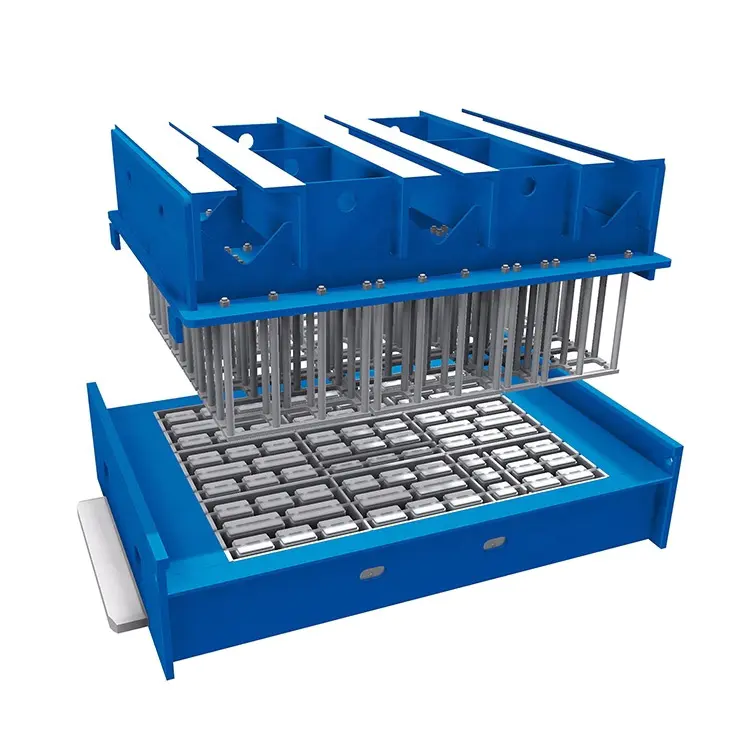

For a block plant manager, the brick machine mould is a consumable item with a significant impact on production economics. A mould that lasts 500,000 cycles is a different financial proposition from one that lasts 150,000 cycles. The difference is not only the cost of the replacement mould itself, but also the downtime required to change it, the risk of dimensional drift affecting block quality, and the labor involved in maintenance. Understanding the factors that influence mould service life is essential for procurement managers who need to balance upfront cost against total cost of ownership. A low-cost mould that wears out quickly is rarely the most economical choice.
This guide is written for buyers who need to evaluate brick machine moulds for concrete block production. We will examine the factors that determine service life, including material selection, heat treatment, design geometry, operating conditions, and maintenance practices. We will explain how each factor affects wear and fatigue, how to specify the right mould for your application, and how to evaluate a supplier. We will also provide detailed product parameters from our factory at Fujian Quangong Mould Co.,Ltd. Whether you are producing hollow blocks, pavers, curbstones, or specialized concrete products, this guide will help you select a mould that delivers the best balance of performance and longevity.
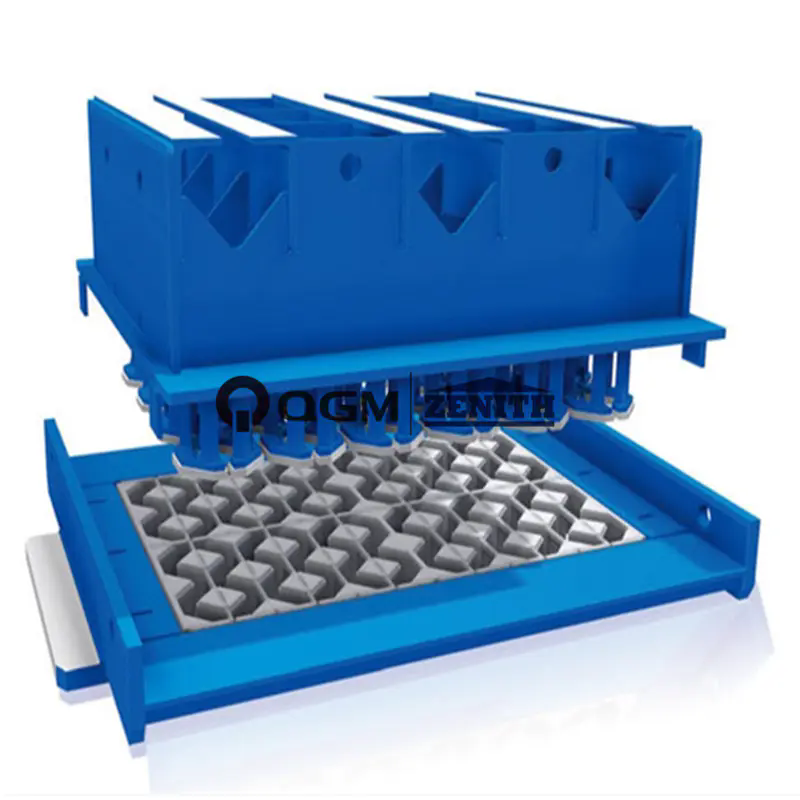
A brick machine mould is subjected to a combination of abrasive, adhesive, and fatigue wear mechanisms during block production. Abrasive wear occurs when the concrete mix, which contains sand, gravel, and cement, slides against the mould surfaces. The hard aggregate particles act like a cutting tool, gradually removing material from the mould walls and the edges of the mould cavities. Adhesive wear occurs when the concrete mix sticks to the mould surfaces, particularly in the corners and the areas with complex geometry. When the block is ejected, the adhered material is torn away, taking some of the mould material with it. Fatigue wear occurs due to the cyclic loading of the mould during the pressing and vibrating cycle. Over millions of cycles, this can cause cracks to initiate and propagate. The table below summarizes these wear mechanisms and their effects.
| Wear Mechanism | Cause | Effect on Mould | Typical Location |
| Abrasive Wear | Hard aggregate particles sliding against mould | Gradual material removal, loss of dimensions | Mould walls, cavity edges |
| Adhesive Wear | Concrete sticking to mould surfaces | Material tear-out, surface roughening | Corners, complex geometry |
| Fatigue Wear | Cyclic loading during pressing and vibration | Crack initiation and propagation | Stress concentration points |
| Corrosion | Moisture and chemicals in concrete mix | Surface degradation, pitting | All surfaces |
At Fujian Quangong Mould Co.,Ltd., our factory designs moulds to resist these wear mechanisms through careful material selection, heat treatment, and surface finishing. We understand that each wear mechanism requires a different countermeasure, and we work with our customers to select the mould that is best suited to their specific production conditions.
Material selection is the single most important factor in determining the service life of a brick machine mould. The mould must have high hardness to resist abrasive wear, high toughness to resist cracking under cyclic loading, and good dimensional stability to maintain block tolerances. The most common materials for brick machine moulds are alloy steels, such as 42CrMo4, 40Cr, and 20CrMnTi. These steels offer a combination of hardenability, wear resistance, and toughness that is suitable for concrete block production. The choice of material depends on the block type, the production volume, and the operating conditions. The table below compares the properties of common mould materials.
| Material | Hardness (HRC) | Toughness | Wear Resistance | Typical Application |
| 42CrMo4 | 48-52 | Good | Good | General-purpose block moulds |
| 40Cr | 45-50 | Good | Moderate | Low to medium volume production |
| 20CrMnTi | 58-62 | Moderate | Excellent | High-volume paver and curbstone moulds |
| Hardox 450 | 45-50 | Excellent | Good | Heavy-duty, high-impact applications |
At our factory, we use high-quality alloy steels from certified suppliers. We verify the material composition and hardness before it enters production. We also offer custom material selection for applications that require special properties, such as high-temperature resistance or corrosion resistance. Our engineering team can help you select the right material for your specific block type and production volume.
Heat treatment is the process that transforms the raw steel into a durable mould. It involves heating the steel to a specific temperature, holding it at that temperature for a specified time, and then cooling it at a controlled rate. The heat treatment determines the hardness, toughness, and dimensional stability of the mould. The most common heat treatment processes for brick machine moulds are quenching and tempering, carburizing, and nitriding. Quenching and tempering provides a uniform hardness and toughness throughout the mould. Carburizing creates a hard surface layer while maintaining a tough core. Nitriding creates an extremely hard surface layer with excellent wear resistance and low distortion. The table below summarizes these heat treatment processes.
| Heat Treatment | Process | Hardness Achieved | Advantages | Typical Application |
| Quenching & Tempering | Heat, quench, temper | 45-52 HRC | Uniform properties, good toughness | General-purpose moulds |
| Carburizing | Heat in carbon-rich atmosphere, quench | 58-62 HRC (surface) | Hard surface, tough core | High-wear applications |
| Nitriding | Heat in nitrogen-rich atmosphere | 60-65 HRC (surface) | Extreme surface hardness, low distortion | Precision moulds, high-volume production |
At Fujian Quangong Mould Co.,Ltd., our factory has in-house heat treatment capabilities, including controlled-atmosphere furnaces and nitriding equipment. We verify the hardness and case depth of every mould after heat treatment. We also perform dimensional inspection to ensure that the heat treatment has not caused distortion. Our goal is to provide our customers with moulds that have the optimal combination of hardness and toughness for their application.
Operating conditions have a significant effect on the service life of a brick machine mould. The most important factors are the concrete mix design, the vibration parameters, the pressing force, and the cycle time. A concrete mix with high aggregate content and low cement content is more abrasive and causes faster wear. A mix with high moisture content is more adhesive and can cause sticking and tear-out. The vibration parameters affect the fatigue loading on the mould. Higher vibration frequency and amplitude increase the cyclic stress and accelerate fatigue wear. The pressing force affects the contact stress between the concrete and the mould. Higher pressing force increases both abrasive and adhesive wear. The cycle time affects the cooling and lubrication of the mould. Shorter cycle times increase the operating temperature and reduce the effectiveness of lubrication. The table below summarizes the effect of operating conditions on mould wear.
| Operating Condition | Effect on Mould Wear | Mitigation |
| High Aggregate Content | Increased abrasive wear | Use wear-resistant mould material |
| High Moisture Content | Increased adhesive wear | Optimize mix design, use release agents |
| High Vibration | Increased fatigue wear | Optimize vibration parameters |
| High Pressing Force | Increased contact stress | Use mould with higher hardness |
| Short Cycle Time | Increased temperature, reduced lubrication | Improve cooling, use high-temperature lubricants |
At our factory, we work with our customers to understand their operating conditions and to recommend the mould design and material that will provide the longest service life. We also provide guidance on mix design and machine settings to help our customers optimize their production process and reduce mould wear.
Maintenance practices play a critical role in extending the service life of a brick machine mould. Even the best-designed mould will wear out prematurely if it is not properly maintained. The key maintenance practices are regular cleaning, inspection, and lubrication. Regular cleaning removes concrete residue that can cause adhesive wear and interfere with block ejection. Inspection identifies wear, cracks, and dimensional changes before they become critical. Lubrication reduces friction and wear on the mould surfaces. The table below summarizes the maintenance practices and their frequency.
| Maintenance Practice | Frequency | Purpose |
| Cleaning | Every shift | Remove concrete residue, prevent adhesive wear |
| Visual Inspection | Weekly | Identify wear, cracks, and damage |
| Dimensional Inspection | Monthly | Verify block dimensions and mould wear |
| Lubrication | As recommended | Reduce friction and wear |
| Release Agent Application | Every cycle or as needed | Prevent sticking and tear-out |
At Fujian Quangong Mould Co.,Ltd., we provide our customers with detailed maintenance guidelines for our moulds. We also offer training and technical support to help our customers implement effective maintenance programs. Our goal is to help our customers maximize the service life of their moulds and minimize downtime.
Evaluating a supplier of brick machine moulds requires a focus on manufacturing capability, material quality, heat treatment, quality control, and technical support. The supplier must have the capability to machine, heat treat, and inspect moulds to the required tolerances. They must use high-quality materials from certified suppliers. They must have in-house heat treatment or a qualified heat treatment partner. They must have a quality control system that ensures consistent quality. And they must provide technical support to help customers select and maintain the right mould. The table below summarizes these evaluation criteria.
| Evaluation Criterion | What to Look For | Why It Matters |
| Manufacturing Capability | CNC machining, EDM, grinding equipment | Ensures dimensional accuracy |
| Material Quality | Certified alloy steels, material traceability | Ensures wear resistance and toughness |
| Heat Treatment | In-house furnaces, hardness testing | Ensures optimal hardness and toughness |
| Quality Control | ISO 9001, dimensional inspection | Ensures consistent product quality |
| Technical Support | Mould design, material selection, maintenance | Helps maximize mould service life |
At our factory, we have been producing brick machine moulds for over a decade. We have in-house CNC machining, EDM, grinding, and heat treatment capabilities. We are ISO 9001 certified, and we maintain detailed records of all inspections. Our technical team is available to assist with mould design, material selection, and maintenance. We invite you to evaluate us against these criteria and to consider us as your partner for brick machine moulds.
The following table provides the key product parameters for our brick machine moulds. These moulds are designed for hollow blocks, solid blocks, pavers, curbstones, and other concrete products. Our factory can also produce custom moulds to meet specific requirements.
| Parameter | Specification Range | Notes |
| Mould Material | 42CrMo4, 40Cr, 20CrMnTi, Hardox 450 | Selected for block type and volume |
| Hardness | 45-62 HRC | Depends on material and heat treatment |
| Heat Treatment | Quenching & Tempering, Carburizing, Nitriding | Selected for wear resistance |
| Surface Finish | Ra 0.8 - 3.2 µm | Smooth surface for easy ejection |
| Dimensional Tolerance | +/- 0.1 mm | Ensures block dimensional accuracy |
| Mould Types | Hollow Block, Solid Block, Paver, Curbstone, Custom | Designed for specific block geometry |
| Expected Service Life | 150,000 - 1,000,000 cycles | Depends on material, operation, and maintenance |
| MOQ | 1 set | Negotiable for large orders |
| Lead Time | 3 - 6 weeks | Depends on complexity and quantity |
At our factory, we manufacture our brick machine moulds to meet these specifications and more. We can customize the material, hardness, heat treatment, and geometry to suit your specific requirements. Our quality control system includes inspection of raw materials, in-process inspection, and final inspection before shipment. Our goal is to provide our customers with high-quality moulds that deliver long service life and consistent block quality.
Question 1: What is the most important factor in determining mould service life?
Answer: Material selection and heat treatment are the most important factors. A mould made from a high-quality alloy steel with the correct heat treatment will resist abrasive, adhesive, and fatigue wear far better than a mould made from a lower-grade material. However, operating conditions and maintenance practices also play a significant role. The best mould in the world will fail prematurely if it is operated beyond its design limits or not properly maintained.
Question 2: How can I tell if my mould is worn out?
Answer: The signs of mould wear include dimensional drift (blocks no longer meeting specification), visible wear on the cavity walls and edges, cracks, and sticking or difficult ejection. If you notice any of these signs, the mould should be inspected and either repaired or replaced. Regular dimensional inspection is the best way to detect wear before it affects block quality.
Question 3: Can a worn mould be repaired?
Answer: In some cases, a worn mould can be repaired by welding and re-machining. However, the repair process can affect the heat treatment and the dimensional accuracy of the mould. For high-precision moulds or moulds with extensive wear, replacement is often the more economical choice. Our factory offers mould repair services and can advise on whether repair or replacement is the better option for your specific mould.
Question 4: How does the concrete mix affect mould wear?
Answer: The concrete mix has a significant effect on mould wear. A mix with high aggregate content and low cement content is more abrasive and causes faster wear. A mix with high moisture content is more adhesive and can cause sticking and tear-out. To minimize wear, use a well-graded mix with adequate cement content and controlled moisture. Our technical team can help you optimize your mix design for longer mould life.
Question 5: What is the typical service life of a brick machine mould?
Answer: The typical service life of a brick machine mould ranges from 150,000 to 1,000,000 cycles, depending on the material, heat treatment, operating conditions, and maintenance. A high-quality mould made from 20CrMnTi with nitriding treatment can achieve 500,000 to 1,000,000 cycles in a well-maintained plant. A lower-cost mould may last only 150,000 to 300,000 cycles. Our factory can provide a service life estimate based on your specific application.
The service life of a brick machine mould is determined by a combination of material selection, heat treatment, operating conditions, and maintenance practices. By understanding these factors and selecting a mould that is appropriately specified for your application, buyers can achieve longer service life, lower total cost of ownership, and consistent block quality. At Fujian Quangong Mould Co.,Ltd., our factory has the expertise and the equipment to manufacture high-quality brick machine moulds that meet the most demanding requirements. We use certified alloy steels, in-house heat treatment, and precision machining to ensure that every mould we produce delivers reliable performance and long service life.
Whether you are producing hollow blocks, pavers, curbstones, or specialized concrete products, we invite you to contact us to discuss your mould requirements. We can provide samples, technical data, and customized solutions. Our commitment to quality and customer satisfaction has made us a trusted partner for block plants around the world.
Contact Fujian Quangong Mould Co.,Ltd. today to discuss your brick machine mould requirements and discover how our moulds can improve your production efficiency and block quality.