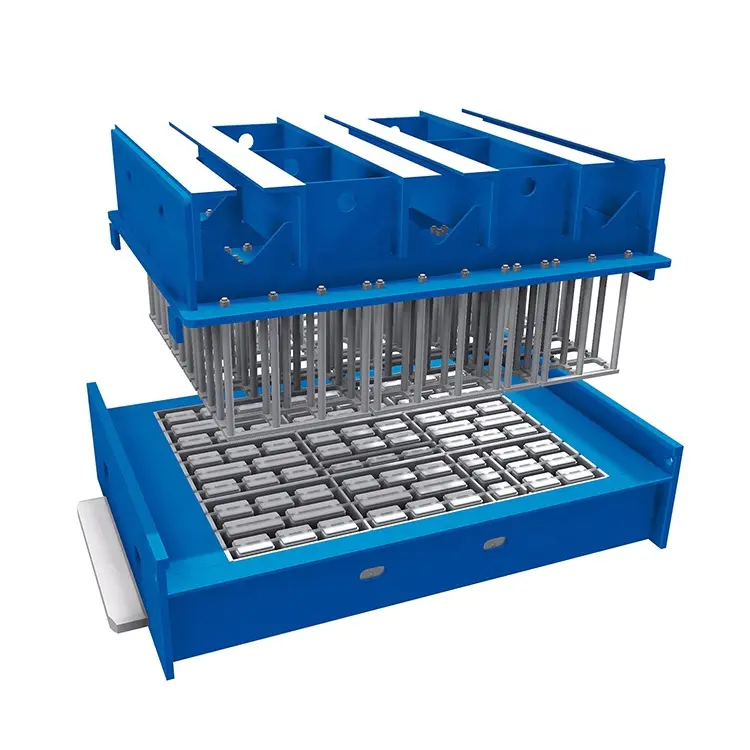
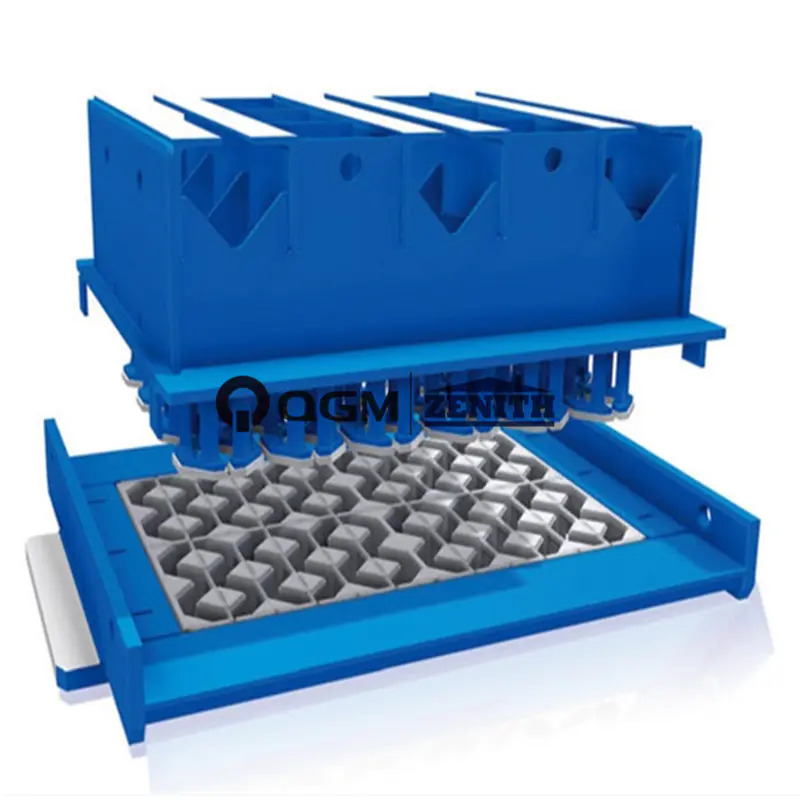
Brick production has evolved from manual shaping methods to highly automated manufacturing systems driven by precision engineering components such as brick machine molds. This article explores the structure, function, materials, and technological advancements of brick machine molds and how they directly impact brick quality, production efficiency, and operational cost. It also addresses common challenges faced by manufacturers, including wear resistance, dimensional accuracy, maintenance issues, and mold customization. By understanding these aspects, businesses can improve production stability and product consistency while reducing long-term operational expenses.
1. Introduction to Brick Machine Molds
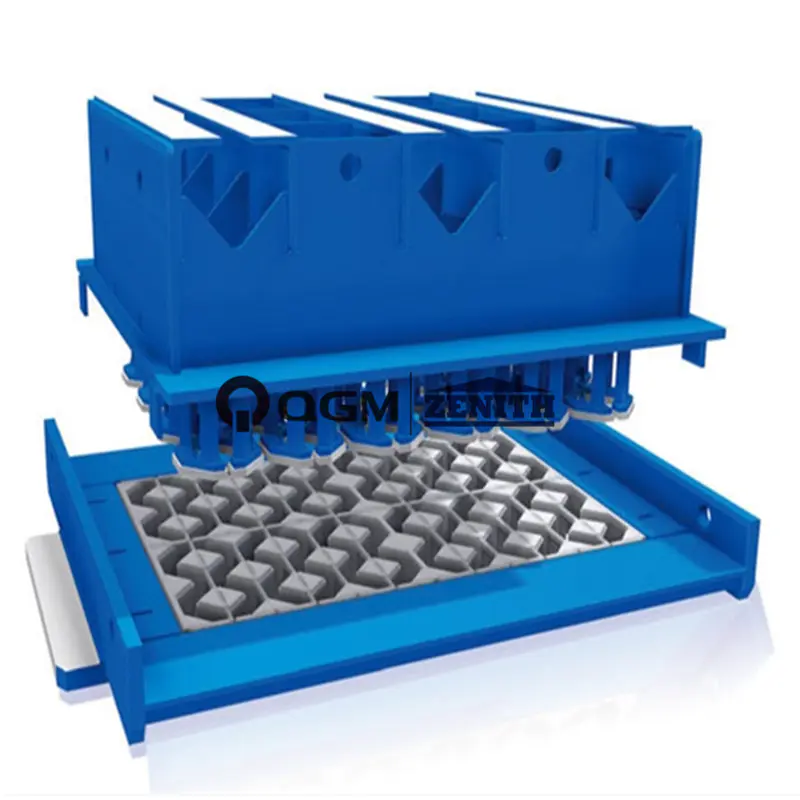
Brick machine molds are essential components in automated brick manufacturing systems. They define the shape, size, and surface precision of bricks during the molding process. Without high-quality molds, even the most advanced brick machines cannot produce consistent or structurally reliable bricks.
In modern construction industries, brick molds are no longer simple metal cavities. They are engineered systems designed with precision machining, heat treatment, and wear-resistant coatings to ensure long-term stability under high-pressure production environments.
2. Why Brick Machine Molds Matter in Production
The performance of a brick manufacturing line heavily depends on the mold quality. A well-designed mold influences every stage of production—from raw material compaction to final brick surface finish.
-
Consistency: Ensures every brick meets identical dimensions.
-
Efficiency: Reduces cycle time in automated systems.
-
Cost control: Minimizes waste and defective output.
-
Structural strength: Improves compaction uniformity.
Even small deviations in mold precision can lead to large-scale production inefficiencies, especially in high-volume manufacturing environments.
3. Main Types of Brick Machine Molds
Different production needs require different mold structures. Below are the most commonly used types:
-
Hollow brick molds: Used for lightweight and insulation bricks.
-
Solid brick molds: Designed for high-strength construction bricks.
-
Paver molds: Used for decorative paving stones and road bricks.
-
Interlocking molds: Create bricks with locking systems for structural stability.
Each mold type is engineered with specific tolerances depending on the brick machine model and production environment.
4. Materials Used in Mold Manufacturing
The durability of brick machine molds depends largely on the materials used. Manufacturers typically choose materials based on hardness, wear resistance, and cost efficiency.
|
Material
|
Characteristics
|
Application
|
|
High Manganese Steel
|
Excellent impact resistance, work-hardening ability
|
Heavy-duty brick production lines
|
|
Alloy Steel
|
Balanced hardness and toughness
|
Standard brick manufacturing
|
|
Carbon Steel with Heat Treatment
|
Cost-effective, moderate durability
|
Small to medium production facilities
|
|
Tungsten Carbide Coating
|
Extreme wear resistance
|
High-output automated systems
|
Advanced coatings and heat-treatment technologies significantly extend mold lifespan, reducing downtime and replacement frequency.
5. How Brick Machine Molds Work in Production Lines
Brick molds operate within hydraulic or mechanical press systems. The process typically includes:
-
Raw material feeding into the mold cavity
-
Compression under high pressure
-
Initial shaping and vibration compaction
-
Demolding through automated ejection systems
-
Drying and curing of formed bricks
Each stage depends on mold precision. Poor mold alignment can lead to cracking, uneven density, or defective edges.
6. Key Factors Affecting Mold Performance
Several technical factors determine how well a brick machine mold performs:
-
Hardness level: Higher hardness increases wear resistance.
-
Surface finish: Smooth surfaces improve brick release efficiency.
-
Heat treatment: Enhances structural stability.
-
Design accuracy: Ensures dimensional consistency.
-
Machine compatibility: Improper matching reduces efficiency.
Manufacturers must carefully balance these factors to achieve optimal production output.
7. Maintenance and Lifespan Optimization
Proper maintenance significantly extends mold lifespan and ensures stable production quality.
-
Regular cleaning to remove cement residue
-
Lubrication of contact surfaces
-
Periodic dimensional inspection
-
Timely repair of surface wear
-
Controlled storage environment to prevent rust
Ignoring maintenance can reduce mold life by up to 50%, leading to unexpected production downtime.
8. Common Problems and Practical Solutions
Even high-quality molds can encounter operational challenges. Below are common issues and solutions:
|
Problem
|
Cause
|
Solution
|
|
Uneven brick surfaces
|
Mold wear or misalignment
|
Recalibration and surface repair
|
|
Cracking during demolding
|
Excessive friction
|
Improve lubrication and surface coating
|
|
Short mold lifespan
|
Low-grade materials
|
Upgrade to alloy or coated steel
|
|
Dimensional deviation
|
Thermal deformation
|
Improve heat treatment process
|
9. Technological Innovations in Mold Design
Modern brick machine molds are increasingly integrating advanced technologies:
-
Laser precision machining: Improves dimensional accuracy.
-
Anti-wear nano coatings: Enhances surface durability.
-
Modular mold systems: Allows quick replacement and customization.
-
Digital simulation design: Optimizes structural performance before production.
These innovations reduce operational risks and significantly improve production efficiency in large-scale manufacturing environments.
10. Mold Comparison Table
|
Type
|
Durability
|
Cost
|
Best Use
|
|
Standard Steel Mold
|
Medium
|
Low
|
Small factories
|
|
Alloy Steel Mold
|
High
|
Medium
|
Medium-scale production
|
|
Coated High-End Mold
|
Very High
|
High
|
Industrial automation lines
|
11. Frequently Asked Questions
Q1: How long does a brick machine mold usually last?
A: Depending on material and usage intensity, it can last from several months to several years.
Q2: Can molds be customized?
A: Yes, molds can be designed based on specific brick shapes, sizes, and machine models.
Q3: What is the most common cause of mold failure?
A: Wear and improper maintenance are the primary causes.
Q4: Are high-cost molds always better?
A: Not necessarily. The best mold depends on production scale and material requirements.
Q5: How can production efficiency be improved?
A: By using high-precision molds, regular maintenance, and compatible machinery settings.
12. Conclusion and Industry Outlook
Brick machine molds are a fundamental element in modern brick manufacturing systems. Their design, material selection, and maintenance directly influence production efficiency and product quality. As automation continues to advance, molds are becoming more precise, durable, and adaptable to different production environments.
Future developments will likely focus on intelligent manufacturing systems, longer-lasting materials, and fully modular mold structures that reduce downtime and improve scalability.
In a highly competitive construction materials market, investing in high-quality brick machine molds is no longer optional—it is a strategic necessity for sustainable production success.
For high-performance and customized brick machine mold solutions, Fujian Quangong Mould Co.,Ltd provides professional engineering support and advanced manufacturing capabilities tailored to global industry standards. If you are looking for reliable mold systems that improve productivity and reduce operational costs, feel free to contact us for detailed technical consultation and cooperation opportunities.