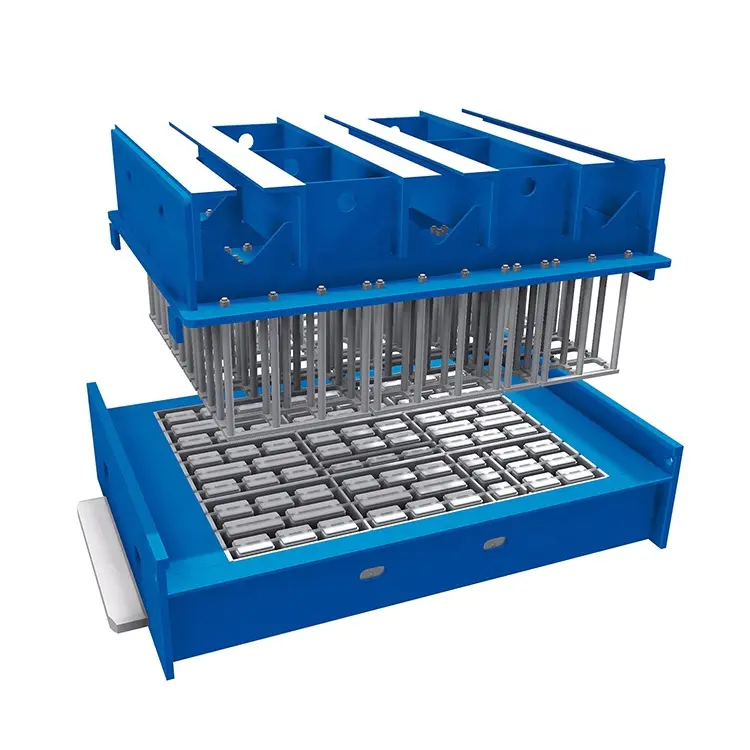

Hollow block moulds play an important role in producing high-quality concrete blocks used in residential buildings, commercial projects, infrastructure development, and industrial construction. Choosing the right hollow block mould directly influences production efficiency, block strength, dimensional accuracy, and long-term manufacturing costs.
This article explains how hollow block moulds work, why they matter, what challenges manufacturers commonly face, and how advanced mould solutions can help businesses improve productivity and product quality.

A hollow block mould is a specialized manufacturing tool designed to shape concrete mixtures into hollow blocks with accurate dimensions and consistent structures. These moulds are widely used in block-making machines to produce construction materials that combine strength, durability, and reduced material consumption.
Unlike traditional solid blocks, hollow blocks contain internal cavities that reduce overall weight while maintaining sufficient structural performance. The mould determines the final shape, size, surface quality, and stability of each produced block.
For manufacturers, the quality of the mould directly affects production results. A precisely engineered hollow block mould helps reduce material waste, minimize production errors, and maintain stable output during large-scale manufacturing.
The construction industry requires building materials that are reliable, affordable, and environmentally responsible. Hollow blocks meet these requirements, but their performance depends heavily on the precision of the mould used during production.
A high-quality hollow block mould provides manufacturers with better control over production processes. It ensures that every block maintains the same size, shape, and strength, which is especially important for large construction projects where thousands or millions of blocks may be required.
| Key Factor | Impact of Quality Hollow Block Mould |
|---|---|
| Production Efficiency | Faster moulding cycles and reduced downtime improve overall manufacturing capacity. |
| Block Accuracy | Precise dimensions ensure easier construction installation and better structural alignment. |
| Material Saving | Optimized mould design reduces unnecessary concrete consumption. |
| Product Appearance | Smooth surfaces improve the visual quality of finished blocks. |
| Equipment Performance | Compatible mould structures help machines operate more smoothly. |
Many block manufacturers experience production problems because of low-quality or unsuitable moulds. These issues can increase operational costs and negatively affect customer satisfaction.
To overcome these challenges, manufacturers need mould solutions that combine accurate engineering, durable materials, and reliable production performance.
A professional hollow block mould should not only create the correct shape but also support continuous industrial production. Several factors determine mould performance.
| Feature | Description | Manufacturing Benefit |
|---|---|---|
| High Strength Material | Uses durable steel and advanced processing technology. | Longer service life and fewer replacements. |
| Precision Design | Maintains accurate dimensions during repeated production. | Improves product consistency. |
| Wear Resistance | Handles continuous friction and pressure. | Reduces maintenance requirements. |
| Customized Structure | Designed according to block sizes and machine requirements. | Supports different customer applications. |
| Easy Maintenance | Allows convenient cleaning and inspection. | Improves production efficiency. |
Selecting the correct hollow block mould is a critical decision for manufacturers because it affects product quality, production efficiency, and long-term operating costs. Different construction markets may require different block sizes, shapes, and performance standards. Therefore, businesses should evaluate several important factors before purchasing mould solutions.
A suitable hollow block mould should match the production machine, raw material characteristics, and expected manufacturing volume. The wrong mould choice may result in poor block quality, unnecessary maintenance, and reduced productivity.
| Selection Factor | What to Consider | Why It Matters |
|---|---|---|
| Material Quality | Check whether the mould uses durable steel and advanced manufacturing processes. | High-quality materials improve wear resistance and service life. |
| Production Requirements | Consider block size, shape, thickness, and daily output needs. | Ensures the mould meets actual production goals. |
| Machine Compatibility | Confirm the mould matches the block machine model. | Prevents installation problems and production interruptions. |
| Customization Capability | Evaluate whether the supplier can provide customized designs. | Supports special construction applications. |
| Supplier Experience | Choose manufacturers with professional engineering knowledge. | Provides better technical support and reliable solutions. |
Hollow block moulds are widely applied in construction material production because hollow blocks offer excellent balance between strength, weight reduction, and cost efficiency. From residential buildings to large infrastructure projects, these moulds support various construction needs.
| Application Area | Role of Hollow Block Mould |
|---|---|
| Residential Construction | Produces lightweight and durable blocks for walls and building structures. |
| Commercial Buildings | Supports large-scale production requirements with consistent quality. |
| Infrastructure Projects | Provides reliable construction materials for long-term applications. |
| Precast Manufacturing | Enables customized block production according to project specifications. |
| Urban Development | Helps manufacturers supply cost-effective construction materials. |
The advantages of using advanced hollow block mould technology include:
Manufacturing technology continues to improve, and advanced hollow block mould solutions provide significant advantages compared with traditional mould products. Understanding these differences helps businesses make better investment decisions.
| Comparison | Traditional Mould | Advanced Hollow Block Mould |
|---|---|---|
| Design Accuracy | May have limitations in precision. | Provides accurate dimensions and stable performance. |
| Service Life | Usually requires frequent replacement. | Designed for long-term industrial operation. |
| Production Stability | Quality may vary during continuous use. | Maintains consistent block quality. |
| Customization | Limited design flexibility. | Supports customized mould solutions. |
| Cost Efficiency | Lower initial investment but higher maintenance costs. | Higher value through durability and efficiency. |
A professional manufacturer provides more than mould products. They offer engineering support, production experience, and customized solutions that help customers solve real manufacturing challenges.
Experienced suppliers understand the importance of mould precision, material selection, heat treatment, and production compatibility. These factors directly influence the final performance of hollow block production lines.
Fujian Quangong Mould Co.,Ltd focuses on providing reliable mould solutions for construction material manufacturers. With professional manufacturing experience and attention to product quality, the company helps customers achieve stable production, accurate block forming, and improved operational efficiency.
A hollow block mould is used to shape concrete mixtures into hollow blocks with accurate sizes and structures. It is an essential component in block-making machines for construction material production.
The service life depends on material quality, production conditions, maintenance practices, and manufacturing technology. High-quality moulds can support long-term industrial production with proper care.
Yes. Professional manufacturers can customize mould designs according to block dimensions, machine models, production capacity, and specific construction requirements.
High-quality moulds improve production efficiency, reduce maintenance costs, enhance block consistency, and provide better long-term economic value.
Choosing the right hollow block mould can significantly improve manufacturing efficiency, product quality, and business competitiveness. A reliable mould supplier provides the technical support and customized solutions needed for modern construction material production.
Fujian Quangong Mould Co.,Ltd is committed to delivering high-quality hollow block mould solutions designed for stable performance and long service life. Whether you need customized mould designs or professional manufacturing support, our team is ready to provide suitable solutions for your production needs.
If you are looking for durable and efficient hollow block mould products, please contact us today to discuss your requirements and discover the right solution for your construction block manufacturing business.