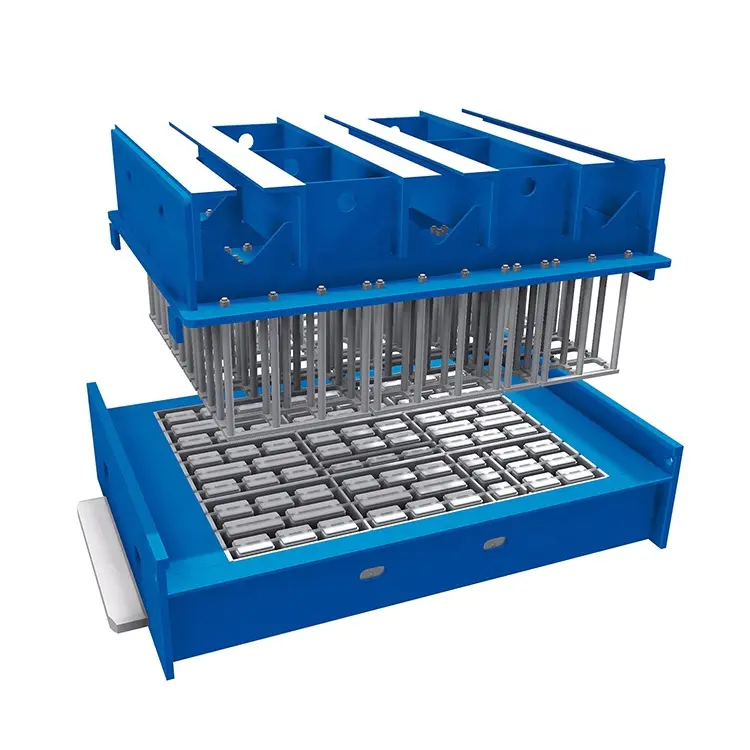

Interlocking brick technology is rapidly transforming the construction industry by improving efficiency, reducing material waste, and lowering building costs. At the center of this innovation is the interlocking brick machine mould, a critical component that determines brick accuracy, durability, surface quality, and production consistency. This comprehensive guide explains how interlocking brick machine moulds work, why mould quality matters, how to select the right mould, common customer challenges, maintenance methods, and how advanced mould solutions improve long-term production performance.

Interlocking bricks are designed to fit together without requiring large amounts of mortar. This building method improves construction speed and structural alignment while reducing labor costs. The interlocking brick machine mould is the key tool responsible for shaping these bricks accurately during the manufacturing process.
A mould determines:
Poor-quality moulds often lead to cracked bricks, inconsistent sizes, excessive downtime, and increased operational costs. Therefore, manufacturers increasingly invest in high-performance mould systems for reliable long-term production.
The mould is installed inside a brick-making machine where raw materials such as cement, sand, fly ash, crushed stone, or soil mixtures are compressed into specific shapes under high pressure and vibration.
The mould process usually includes:
The precision of the mould directly affects whether the interlocking system functions correctly. Even slight dimensional deviations can create construction alignment problems on-site.
| Mould Feature | Production Impact |
|---|---|
| Dimensional Accuracy | Ensures perfect interlocking performance |
| Hardness | Improves wear resistance |
| Surface Finish | Creates smooth brick appearance |
| Structural Stability | Reduces machine vibration damage |
Many brick manufacturers focus heavily on machine selection while overlooking mould quality. In reality, the mould is one of the most important factors affecting final product quality.
A high-quality mould offers several advantages:
Inferior moulds may initially appear cheaper, but they often result in:
Different construction projects require different brick styles and sizes. Therefore, moulds are available in multiple configurations.
| Mould Type | Application | Advantages |
|---|---|---|
| Hollow Brick Mould | Residential walls | Lightweight and cost-effective |
| Solid Brick Mould | Heavy-duty structures | High compressive strength |
| Paver Block Mould | Roads and pavements | Decorative surface patterns |
| Customized Mould | Special engineering projects | Tailored production needs |
The durability and performance of a mould largely depend on the raw materials used during manufacturing.
Common mould materials include:
Advanced heat treatment technology significantly improves mould hardness and resistance to abrasion caused by continuous vibration and compression.
Premium manufacturers often use:
Brick manufacturers often face serious operational issues when using low-quality moulds.
These issues can directly reduce factory profitability and negatively affect customer satisfaction.
Reliable mould manufacturers solve these problems through:
Selecting the correct interlocking brick machine mould requires careful evaluation of production requirements and machine compatibility.
Important selection factors include:
Ensure the mould fits your existing machine model and vibration system.
High-output factories require moulds with stronger wear resistance.
Different projects may need customized interlocking structures.
Premium steel materials increase mould lifespan significantly.
Before purchasing, manufacturers should always request:
Proper maintenance greatly extends mould service life and maintains production consistency.
Recommended maintenance practices:
Routine maintenance reduces unexpected downtime and improves long-term operational efficiency.
| Feature | Standard Mould | Premium Mould |
|---|---|---|
| Service Life | Shorter | Much longer |
| Dimensional Accuracy | Average | Highly precise |
| Maintenance Frequency | Frequent | Minimal |
| Production Stability | Variable | Consistent |
| Long-Term Cost | Higher | Lower |
Modern mould manufacturers increasingly adopt intelligent production technologies to improve product quality.
Advanced technologies include:
These technologies improve dimensional precision while reducing production defects.
Interlocking brick moulds are widely used across multiple industries.
As sustainable construction continues growing worldwide, demand for high-quality interlocking brick moulds also continues to increase.
Investing in premium mould solutions provides long-term financial and operational advantages.
For manufacturers operating in highly competitive construction markets, stable product quality is essential for business growth.
The future of interlocking brick machine mould technology is moving toward:
Manufacturers adopting advanced mould technologies early will gain significant competitive advantages in the evolving construction materials industry.
The lifespan depends on production volume, raw material abrasiveness, maintenance quality, and steel hardness. Premium moulds can last significantly longer under proper maintenance conditions.
Cracking can result from poor mould precision, incorrect raw material ratios, insufficient vibration control, or worn mould cavities.
Yes. Many manufacturers provide customized mould designs based on brick dimensions, project requirements, and machine specifications.
Precision, material quality, heat treatment technology, and compatibility with your machine are the most critical factors.
Basic cleaning should be performed daily, while full inspections should occur weekly or according to production intensity.
An interlocking brick machine mould is far more than a simple machine accessory. It directly determines brick precision, structural quality, production efficiency, and long-term manufacturing profitability. Choosing a reliable mould supplier with advanced engineering capabilities helps manufacturers reduce operational risks while improving product consistency and customer satisfaction.
As global construction industries continue demanding faster, stronger, and more sustainable building solutions, high-performance mould technology will remain a critical foundation for successful brick manufacturing operations.
Fujian Quangong Mould Co.,Ltd specializes in high-precision mould manufacturing for concrete block machines and interlocking brick production systems. With advanced production technology, strict quality control, and customized engineering services, the company helps global manufacturers achieve stable and efficient brick production.
Contact us today to explore customized mould solutions that improve production quality, reduce downtime, and increase long-term operational value.