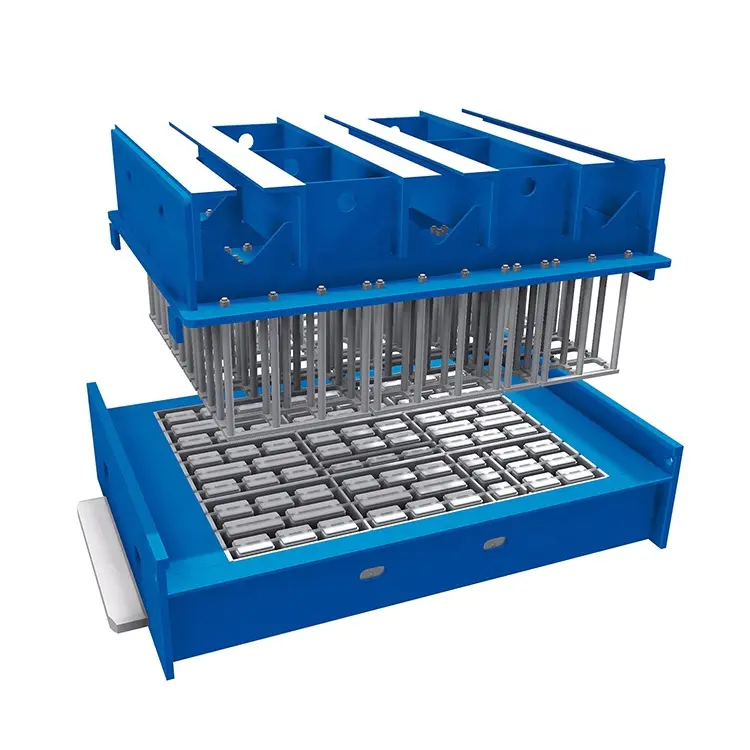
Clay brick production has evolved significantly with the advancement of forming technologies and precision tooling. Among all components in a brick manufacturing line, the mould plays a decisive role in determining product consistency, surface finish, dimensional accuracy, and overall production efficiency. This article explores in depth how a clay brick machine mould works, what materials and structures define its performance, and how manufacturers can choose the right mould to improve productivity while reducing operational costs and defects.
By understanding design principles, wear resistance, maintenance strategies, and industry applications, producers can significantly extend mould life and stabilize brick output quality. This guide is designed to help both new and experienced manufacturers make informed decisions for long-term production success.
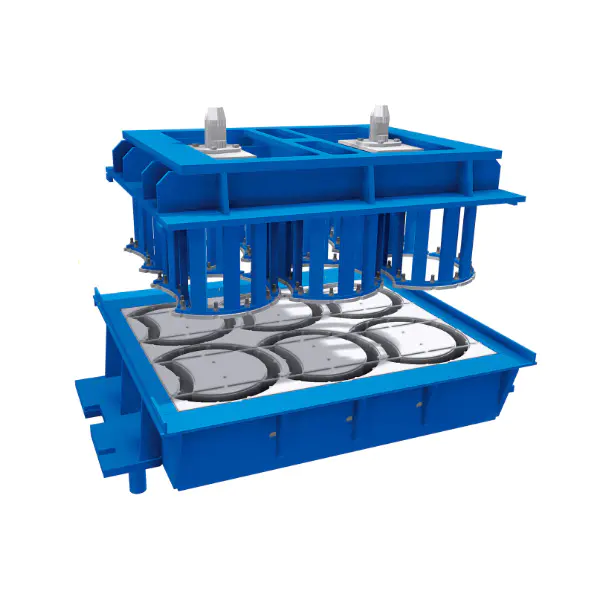
Introduction
In modern construction material manufacturing, clay bricks remain one of the most widely used building elements due to their durability, thermal insulation properties, and cost-effectiveness. However, behind every perfectly shaped brick lies a critical piece of equipment—the clay brick machine mould.
This component determines whether a brick is uniform or defective, smooth or cracked, profitable or wasteful. Many manufacturers underestimate its importance and suffer from uneven product quality, frequent downtime, and high replacement costs.
A well-engineered mould is not just a tool; it is the foundation of a stable production system.
What is a Clay Brick Machine Mould?
A clay brick machine mould is a precision-engineered forming tool installed in brick-making machines. It shapes raw clay material into standardized brick forms under high pressure. The mould cavity defines the brick’s geometry, texture, and surface quality.
In industrial production, moulds must withstand continuous friction, high pressure, and abrasive raw materials. Therefore, their structural design directly affects production efficiency and operational stability.
-
Controls brick size and shape accuracy
-
Ensures consistent output across batches
-
Reduces material waste during forming
-
Supports automated production lines
Key Components of Brick Moulds
A typical clay brick machine mould is composed of several precision parts working together to ensure accurate forming and durability.
-
Mould Frame: The structural base supporting all forming components.
-
Cavity Inserts: Define brick shape and surface pattern.
-
Wear Plates: Protect against abrasion and extend lifespan.
-
Pressing Plate: Applies pressure to shape raw clay.
-
Guiding System: Ensures alignment during operation.
Each component must be engineered with high precision to avoid deformation under pressure and maintain consistent production output.
Types of Clay Brick Machine Moulds
Different production requirements call for different mould structures. Below are the most commonly used types:
-
Solid Brick Moulds: Used for standard construction bricks.
-
Hollow Brick Moulds: Create bricks with internal cavities for insulation.
-
Paver Moulds: Designed for road and landscape bricks.
-
Customized Pattern Moulds: Used for decorative bricks.
Each type offers distinct advantages depending on structural requirements and end-use applications.
Materials and Performance Comparison
The material of a mould significantly influences durability and production efficiency. Below is a comparison of commonly used materials:
|
Material Type
|
Durability
|
Cost
|
Wear Resistance
|
Best Application
|
|
Carbon Steel
|
Medium
|
Low
|
Moderate
|
Small-scale production
|
|
Alloy Steel
|
High
|
Medium
|
High
|
Industrial production
|
|
Heat-treated Steel
|
Very High
|
High
|
Very High
|
Heavy-duty continuous operation
|
|
Tungsten Coated Steel
|
Excellent
|
Very High
|
Extreme
|
High-end automated plants
|
Working Process Explained
The operation of a clay brick machine mould follows a precise mechanical cycle:
-
Raw clay is fed into the forming chamber.
-
The mould closes and aligns with the pressing system.
-
Hydraulic or mechanical pressure is applied.
-
Clay fills the cavity and takes shape.
-
The mould opens and releases the formed brick.
-
The cycle repeats continuously for mass production.
Any inconsistency in pressure or alignment can result in defective bricks or premature mould wear.
Benefits of High-Quality Moulds
Investing in a high-quality clay brick machine mould offers multiple long-term advantages:
-
Improved dimensional accuracy of bricks
-
Reduced defect rates and waste material
-
Longer operational lifespan
-
Lower maintenance frequency
-
Higher production efficiency
These benefits directly translate into increased profitability and production stability.
Common Industry Pain Points and Solutions
Brick manufacturers often face recurring issues related to mould performance:
-
Rapid Wear: Caused by low-quality steel or poor heat treatment.
-
Dimensional Inaccuracy: Due to design flaws or misalignment.
-
Cracking Issues: Resulting from uneven pressure distribution.
-
High Downtime: Frequent mould replacement interrupts production.
Solutions include selecting wear-resistant materials, improving lubrication systems, and adopting precision CNC machining during mould production.
Maintenance and Lifespan Extension
Proper maintenance is essential for extending mould service life. Recommended practices include:
-
Regular cleaning after production cycles
-
Applying anti-corrosion coatings
-
Checking alignment systems frequently
-
Replacing worn-out inserts promptly
-
Maintaining proper lubrication
Well-maintained moulds can last significantly longer and maintain consistent production quality.
How to Choose the Right Mould
Selecting the right mould requires careful evaluation of production needs and machine compatibility.
-
Match mould type with brick design requirements
-
Consider production volume and frequency
-
Evaluate material strength and wear resistance
-
Check machine compatibility and mounting system
-
Assess supplier engineering capability
A well-chosen mould reduces long-term operational risks and improves overall efficiency.
Industrial Applications
Clay brick machine moulds are widely used across multiple sectors:
-
Residential housing construction
-
Commercial building projects
-
Road paving and landscaping
-
Industrial infrastructure
-
Decorative architectural projects
Their versatility makes them essential in both traditional and modern construction industries.
Cost and Investment Analysis
|
Factor
|
Low-End Mould
|
Mid-Range Mould
|
High-End Mould
|
|
Initial Cost
|
Low
|
Moderate
|
High
|
|
Lifespan
|
Short
|
Medium
|
Long
|
|
Maintenance Cost
|
High
|
Moderate
|
Low
|
|
Production Efficiency
|
Basic
|
Stable
|
Excellent
|
Although high-end moulds require greater initial investment, they significantly reduce long-term operational costs.
Future Development Trends
The brick manufacturing industry continues to evolve with technological advancements:
-
Integration of automated mould change systems
-
Use of advanced wear-resistant coatings
-
Digital simulation for mould design optimization
-
Smart monitoring of mould performance
-
Energy-efficient production systems
These innovations aim to improve efficiency while reducing material waste and downtime.
Frequently Asked Questions
Q1: How long does a clay brick machine mould last?
A: Depending on material and usage intensity, it can last from several months to several years.
Q2: What is the most durable mould material?
A: Heat-treated and tungsten-coated steel offer the highest durability.
Q3: Can moulds be customized?
A: Yes, moulds can be fully customized based on brick design and machine specifications.
Q4: What causes mould damage?
A: Common causes include abrasive raw materials, poor lubrication, and misalignment.
Q5: How often should moulds be maintained?
A: Regular maintenance should be performed after each production cycle or daily in high-output environments.
Conclusion and Contact
A clay brick machine mould is far more than a forming tool—it is the core element that determines production quality, efficiency, and profitability. From material selection to maintenance practices, every detail plays a role in ensuring stable and long-term operation.
Manufacturers who invest in high-quality mould systems gain a significant advantage in reducing defects, improving consistency, and maximizing output efficiency.
For advanced and customized mould solutions, Fujian Quangong Mould Co.,Ltd provides professional engineering support and manufacturing expertise tailored to modern brick production needs.
Contact us today to explore durable, precision-engineered clay brick machine mould solutions designed to elevate your production performance and long-term profitability.