
A:A:The current heat treatment process does not show any difference.
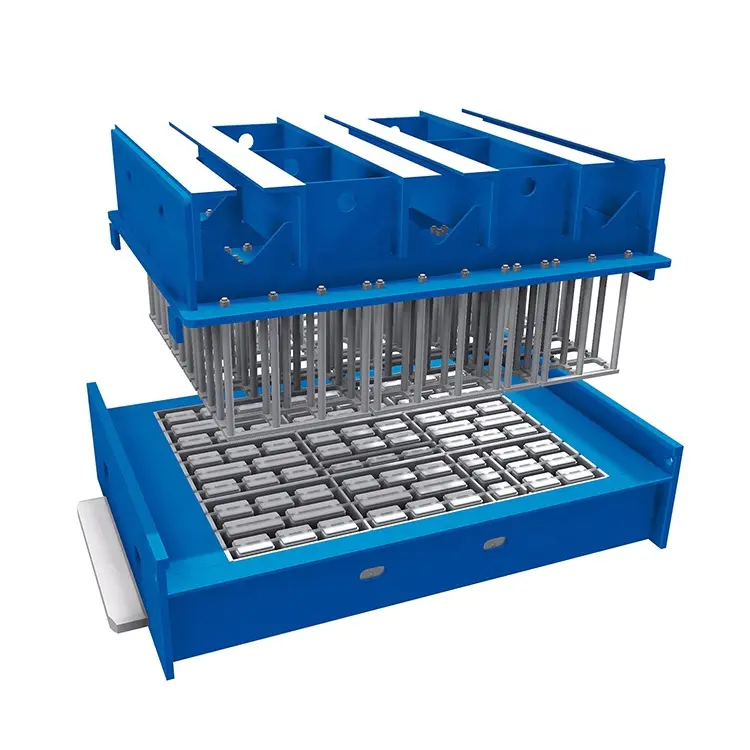
A:A:Because if the hardness is the same, wear will occur simultaneously. The pressure plate has lower hardness, which can protect the mold frame. The cost of replacing the pressure plate is also lower. In addition, after a period of use, the inner cavity size of the mold frame will increase, so a larger pressure plate can be made when replacing the pressure plate to eliminate burrs.
A:A:The current hardness standard (production standard 58-62HRC) has not been adjusted by German heat treatment furnace engineers, which is related to the material itself.
A:A:The hanging plates for hollow bricks use welded steel plates, suitable for every series. Some specially shaped hanging plates are made of 45Cr tempered steel.
A:A:German and Chinese boards are suitable for all brick types. Watter 500 is used for 913 hollow bricks and some solid bricks. Watter 600 is used for some curb stones; currently, Hamder 500 is the primary choice.
A:A:Yield strength 345MPa; the flat hollow brick pressure plate is made of wear-resistant plate; ZN900CG with positioning groove; the position where POYATAS contacts the main unit is made of welded plate.