
QGM is a China manufacturer and supplier of Energy-Saving Concrete Brick Molding Machine for Export. Our equipment produces hollow blocks, solid bricks, pavers, curbstones and grass blocks through vibration and hydraulic pressing. With replaceable multi-cavity molds, PLC automation and customized configurations, we provide efficient concrete block production solutions for global buyers.
QGM’s Energy-Saving Concrete Brick Molding Machine for Export is capable of highly efficient production of a wide range of concrete products, including concrete bricks, hollow blocks, solid blocks, paving stones, curbstones, permeable grass pavers, and eco-friendly slope protection elements.


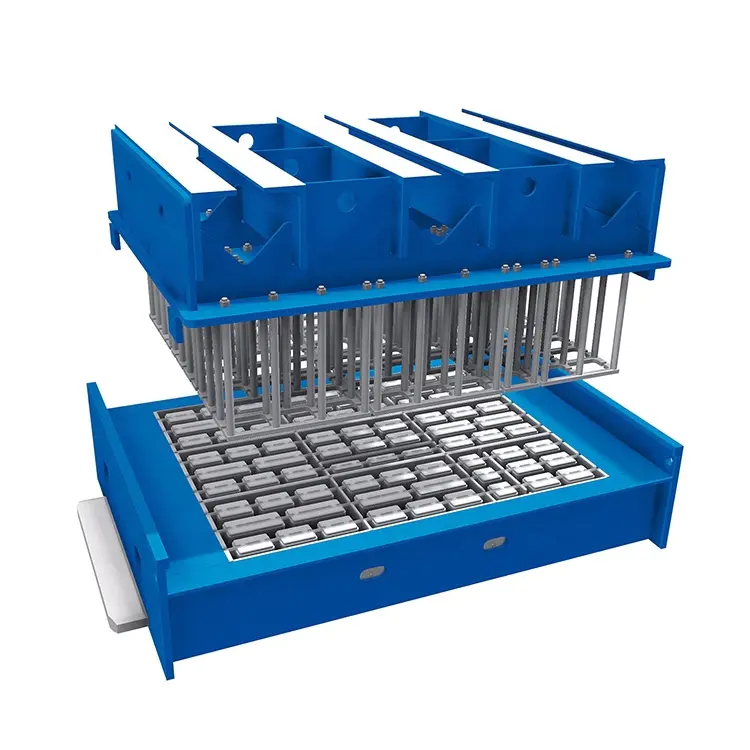
Our energy-efficient brick-making molds are crafted from high-quality alloy steel. This material offers exceptional wear resistance and structural stability, ensuring that the molds maintain precise brick dimensions over long-term use, even when subjected to repeated pressing.
Our molds facilitate the transformation of concrete mixtures into bricks through forming and curing processes, eliminating the need for traditional high-temperature firing. Depending on the production method and raw materials used, these molds can also produce recycled bricks incorporating industrial solid waste, thereby reducing material waste and minimizing environmental impact.
We provide customized Energy-Saving Concrete Brick Molding Machine for Export solutions tailored to specific brick shapes, dimensions, equipment configurations, and production requirements. This flexibility allows manufacturers to select the tooling that best aligns with their unique production processes.
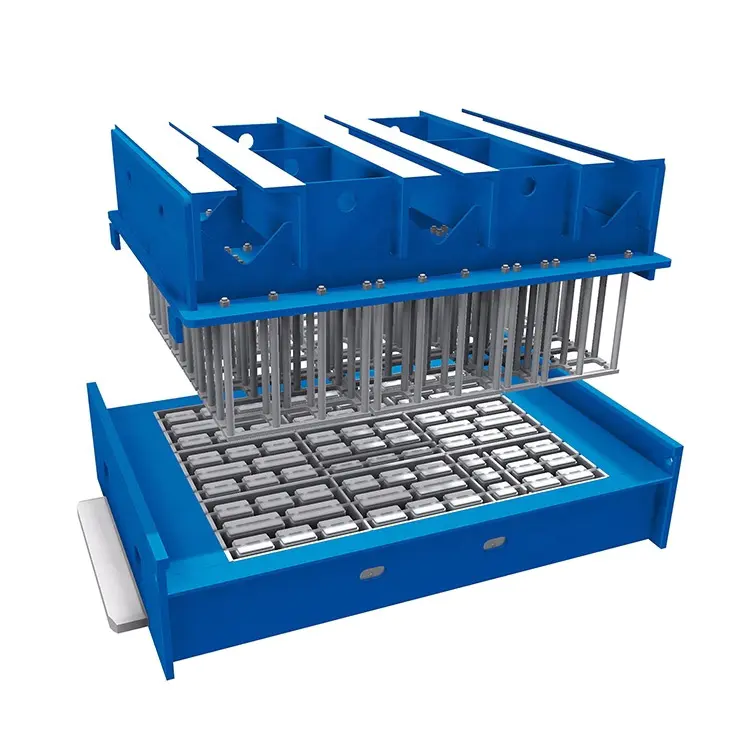
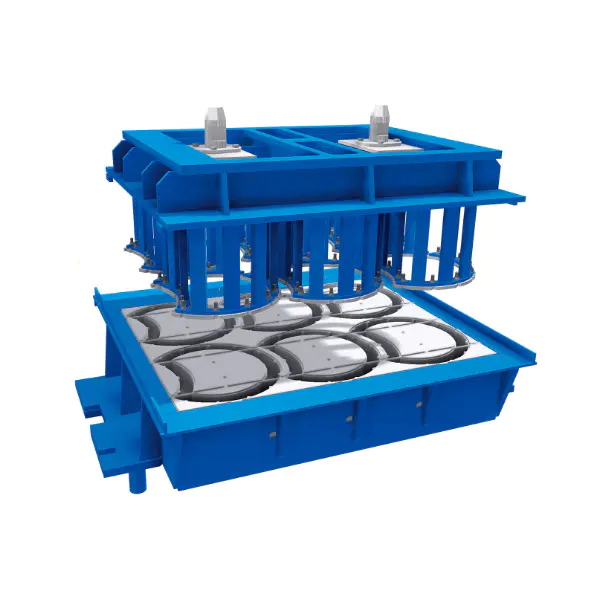
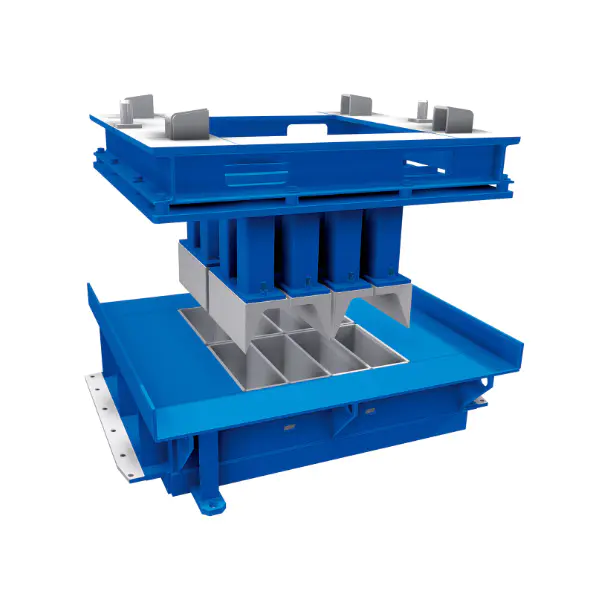
A typical energy-efficient brick-making mold consists of an upper mold and a lower mold. The upper mold usually features a feed opening for raw materials, while the lower mold is designed with a raised base to support the forming process.
In certain mold configurations, the upper mold is equipped with rotatable side clamps. Spring-loaded mechanisms keep these clamps open when the mold is in the "open" position, preventing contact or collision with foam plastic boards during the mold-closing process.
As no single model is suitable for every factory, the final parameters are confirmed according to the selected QGM machine, block dimensions, mould layout, and automation level.
|
Parameter |
Available Configuration |
|
Product name |
Energy-Saving Concrete Brick Molding Machine for Export |
|
Forming method |
Vibration compaction with pressing |
|
Raw materials |
Cement, sand, crushed stone, stone powder, fly ash, slag, and other locally approved aggregates |
|
Product types |
Concrete bricks, hollow blocks, solid blocks, pavers, curbstones, grass blocks, and slope-protection blocks |
|
Feeding system |
Main-material feeding; optional face-mix system for suitable products |
|
Control system |
PLC-based automatic control |
|
Operation mode |
Manual, semi-automatic, or automatic configuration |
|
Hydraulic system |
Configured according to machine model and production requirements |
|
Mould |
Replaceable concrete block mould |
|
Mould cavities |
Determined by block size, board size, and machine capacity |
|
Production board |
Steel, wood-composite, plastic-composite, or other compatible board, subject to machine configuration |
|
Voltage and frequency |
Adapted to the destination country where technically applicable |
|
Surface layer |
Optional for colored or fine-surface paving products |
|
Line configuration |
Stand-alone machine or complete block production line |
|
Curing method |
Natural curing, chamber curing, or project-specific system |
|
Packing |
Export-suitable packing according to equipment dimensions and transport method |
|
Installation |
Remote guidance or on-site service subject to the contract |
|
Documentation |
Operation, maintenance, foundation, electrical, and installation documents according to project scope |
The mold determines the final geometric shape and dimensions of the brick. During the pressing process, it shapes the concrete mixture, ensuring that all finished bricks meet uniform specifications.
When used with automated hydraulic brick-making equipment, multi-cavity molds can produce multiple bricks in a single operating cycle. This increases output, reduces repetitive manual tasks, and significantly boosts overall manufacturing efficiency.
Regular inspections of mold dimensions, welded joints, and structural components are recommended. Any cracks, deformations, or signs of excessive wear should be addressed promptly to prevent further damage and ensure continued forming precision.
After production, use an air compressor and appropriate soft cleaning tools to remove any residual concrete or dust from the molds. For long-term storage, apply a suitable rust-preventive oil to the mold surfaces and keep them in a dry, protected environment to minimize the risk of corrosion and deformation.
A concrete brick-making machine uses vibration and pressure to mold semi-dry concrete, after which the products undergo curing.
A clay brick-making machine, on the other hand, is used to process clay-based raw materials; traditional clay bricks typically require drying and firing processes. The equipment and production processes for the two are completely different.
By changing the molds, this machine can produce hollow blocks, solid bricks, paving bricks, curbstones, grass-paving bricks, permeable bricks, and ecological slope protection products, among others.
Product feasibility depends on the block’s dimensions, height, geometric shape, and the selected equipment model.
Yes. Different products can be produced simply by changing the molds. At the same time, operators need to adjust process parameters such as feeding, vibration, pressure, and demolding accordingly.
Yes. Fujian Quangong Mould Co., Ltd. is a wholly-owned subsidiary of QGM (Quangong Co., Ltd.) and specializes in the design, production, sales, and maintenance of molds for block-making machines.
We can develop Energy-Saving Concrete Brick Molding Machine for Export based on block drawings, 3D models, or approved physical samples.