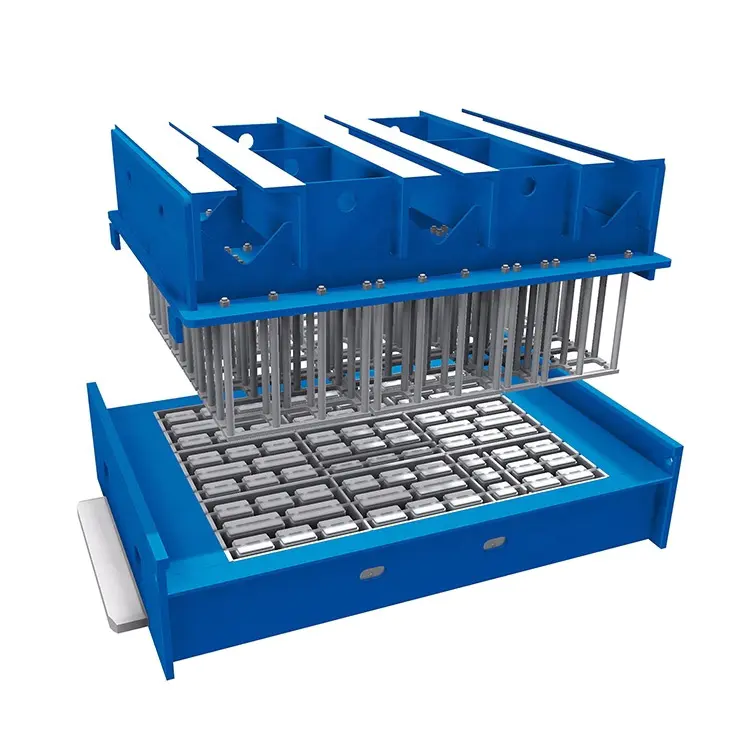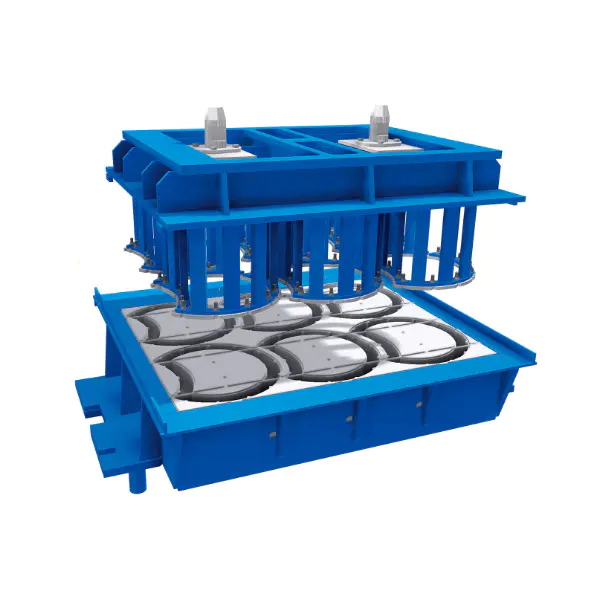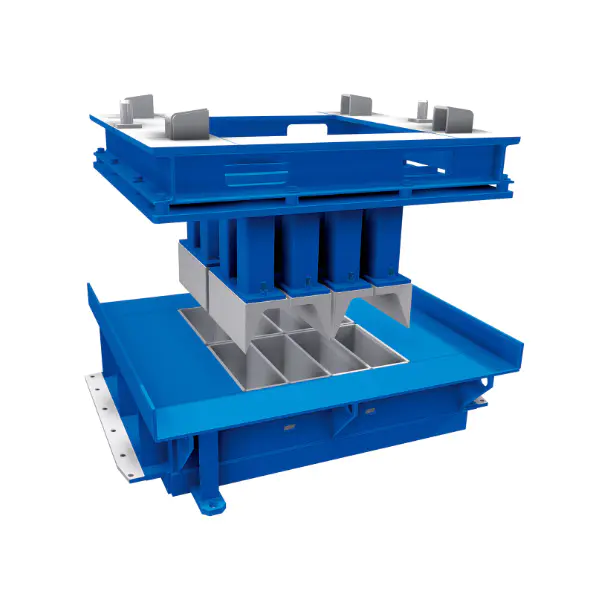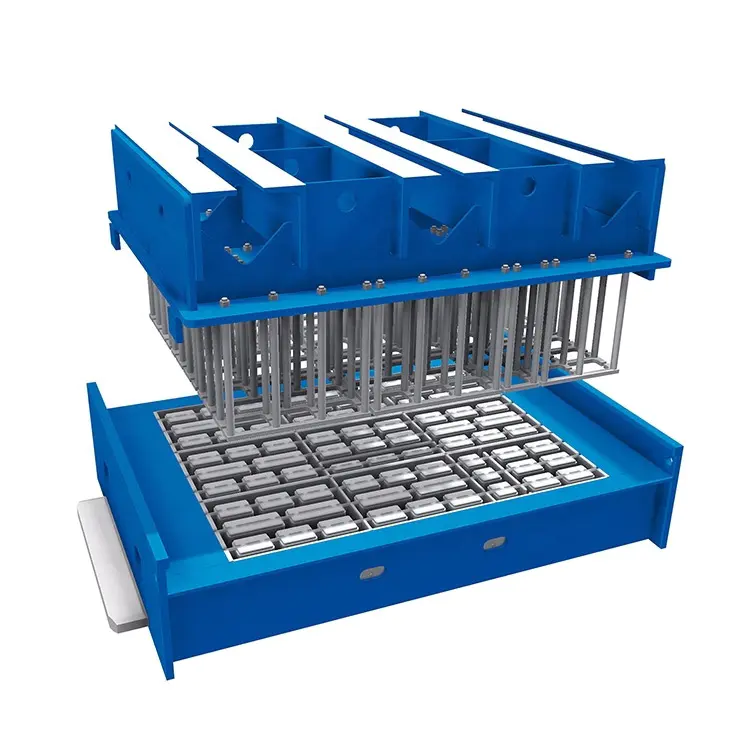

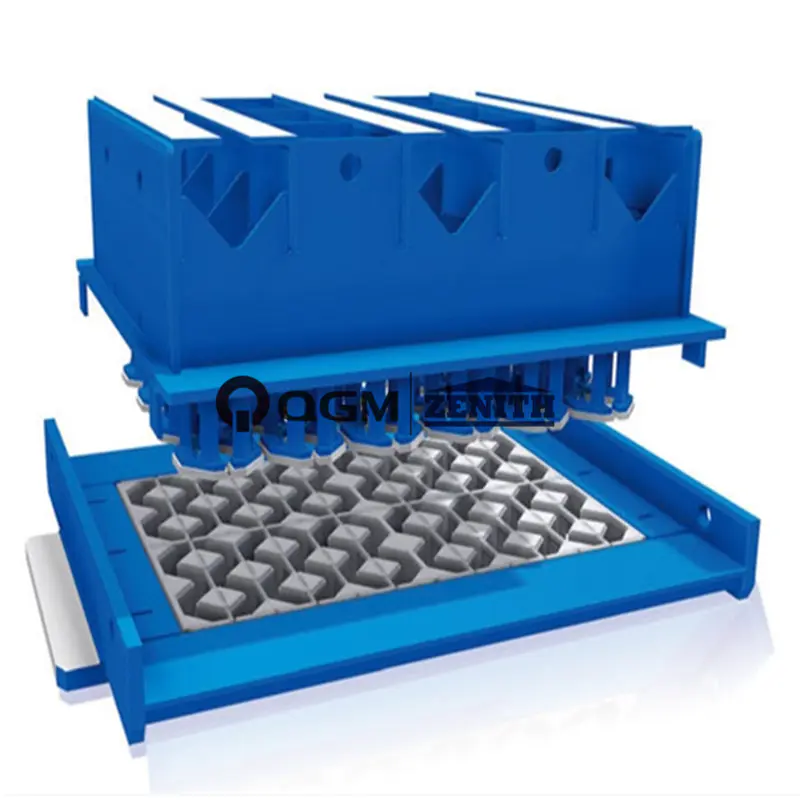
QGM is a professional China manufacturer and supplier of Multi-purpose Block Machine with Quick Mold Change. Made from high-quality alloy steel, our precision-engineered molds offer excellent wear resistance and flexible production for hollow blocks, paving bricks, grass pavers and curbstones. We provide customized mold solutions for diverse construction projects.
Our Multi-purpose Block Machine with Quick Mold Change is designed for manufacturers that need to produce several concrete products on one production line. By replacing the mould and adjusting the production recipe, the machine can manufacture hollow blocks, solid bricks, paving stones, grass blocks, curbstones, ecological slope-protection blocks, and other precast concrete products.
At QGM, we configure the machine according to the customer’s block drawings, production board size, target output, raw materials, and automation requirements.
A multipurpose block machine mold is designed to manufacture different types of concrete blocks using compatible block-making equipment. By changing the mold configuration, manufacturers can switch between different block shapes and specifications, making it a practical solution for diverse construction and infrastructure projects.


We use high-grade alloy steel to manufacture our multipurpose block machine molds. Its wear-resistant and impact-resistant properties help the mold withstand repeated production cycles while maintaining structural stability and supporting consistent concrete block quality.
Accurate mold dimensions are essential for producing concrete blocks with uniform shapes and specifications. We apply advanced machining processes to control cavity dimensions and structural tolerances, helping ensure that finished blocks meet the required construction specifications.
One of the main advantages of a multipurpose block machine mold is its versatility. By replacing the existing mold with another compatible design, the same block-making machine can produce various concrete products, including paving blocks, hollow blocks, and grass pavers. This allows manufacturers to respond to different project requirements without investing in an entirely separate production machine.
Concrete blocks produced with these molds are suitable for sidewalks, public squares, pedestrian areas, and other urban paving projects. Consistent block dimensions help improve installation efficiency and create a uniform finished surface.
Our multipurpose block molds can be configured to produce concrete components for flower beds, tree surrounds, landscape walls, and decorative garden structures. Different block shapes provide greater flexibility for landscaping and outdoor design.
Specialized mold designs can be used to manufacture concrete blocks for riverbank reinforcement, flood-control embankments, and other water conservancy applications. These products help provide structural support and improve the stability of protective structures.
During mold installation or replacement, handle all components carefully to prevent impact damage and deformation. Follow the recommended assembly sequence and protect the mold's working surfaces throughout the installation process.
Check the mold dimensions, welded joints, and key structural areas at regular intervals. Any cracks, worn sections, or signs of deformation should be evaluated and repaired promptly to avoid affecting block quality or production safety.
Before operating the machine, check and adjust the clearance between the pressure head, mold core, and other moving components. Proper spacing helps prevent mechanical interference, unwanted contact, and damage during the pressing cycle.
Remove residual concrete and accumulated material using an air compressor and suitable soft cleaning tools. Avoid striking the mold with heavy objects or using forceful knocking methods, as these may damage the mold surface, affect dimensional accuracy, or cause structural deformation.
Choosing a suitable Multi-purpose Block Machine with Quick Mold Change helps concrete block manufacturers improve production flexibility and maintain consistent product quality.
We recommend selecting the mold according to the intended block design, machine specifications, and actual operating conditions. Proper installation, clearance adjustment, and routine maintenance also play an important role in extending mold service life and maintaining stable production.
|
Parameter |
Available Specification / Description |
|
Product name |
Multi-purpose Block Machine with Quick Mold Change |
|
Forming process |
Vibration compaction combined with pressing |
|
Suitable concrete |
Semi-dry concrete |
|
Main products |
Hollow blocks, solid bricks, pavers, curbstones, grass blocks, permeable blocks, and slope-protection blocks |
|
Mould system |
Replaceable mould box and tamper-head assembly |
|
Mould-change method |
Assisted mechanical, hydraulic, or model-specific quick-change system |
|
Operation mode |
Manual, semi-automatic, or fully automatic |
|
Control system |
PLC-based control system |
|
Production recipes |
Adjustable and storable according to the selected control configuration |
|
Material feeding |
Main-mix feeding; optional face-mix unit |
|
Vibration parameters |
Adjustable according to block geometry and concrete mix |
|
Product height |
Model- and mould-dependent |
|
Cavity quantity |
Determined by block dimensions and production board size |
|
Production board |
Size and material matched to the selected machine |
|
Hydraulic system |
Configured according to machine model and forming requirements |
|
Electrical supply |
Adaptable to destination voltage and frequency, subject to confirmation |
|
Line integration |
Can connect with batching, mixing, conveying, curing, and palletizing equipment |
|
Installation |
Remote guidance or on-site service according to the contract |
|
Application |
Building materials, municipal paving, water conservancy, landscaping, and resource recycling |
The actual time depends on the machine model, mould weight, fastening system, lifting equipment, operator experience, and cleaning work.
We confirm the expected procedure after selecting the machine and mould. Any stated change time should clearly identify whether it includes cleaning, alignment, recipe loading, and trial production.
Possibly, but only after an interface review. Small differences in connection dimensions, guide positions, mould height, or tamper-head structure may prevent safe installation.
Please provide the mould drawing and machine interface data. If necessary, we can evaluate an adapter or structural modification.
Yes, within the forming-height range of the selected machine. The mould, tamper head, feed volume, and machine settings must all match the required height.
Very tall, very thin, or unusually shaped products require an additional manufacturability review.