Brick manufacturing is a cornerstone of global construction, and at the heart of this process lies a critical component:
the brick manufacturing machinery mold. This article explores how molds determine brick quality, production efficiency, cost control,
and long-term operational stability. Whether you operate a small brick workshop or a large automated production line,
understanding mold technology directly impacts your productivity and profitability.
This guide provides a deep dive into mold structure, materials, manufacturing processes, maintenance strategies, troubleshooting techniques,
and future innovations. It also helps buyers identify the right mold system for different production environments, ensuring consistent brick
output and reduced downtime.
1. Introduction
In modern construction material production, brick manufacturing machinery molds play a decisive role in shaping product quality and output efficiency.
Every brick produced in a fully automated line passes through a mold system that determines its size, density, surface finish, and structural integrity.
Without high-precision molds, even the most advanced brick machines cannot achieve consistent results. As global demand for sustainable,
durable, and cost-efficient building materials increases, manufacturers are prioritizing mold innovation as a key competitive advantage.
2. What Is Brick Manufacturing Machinery Mold?
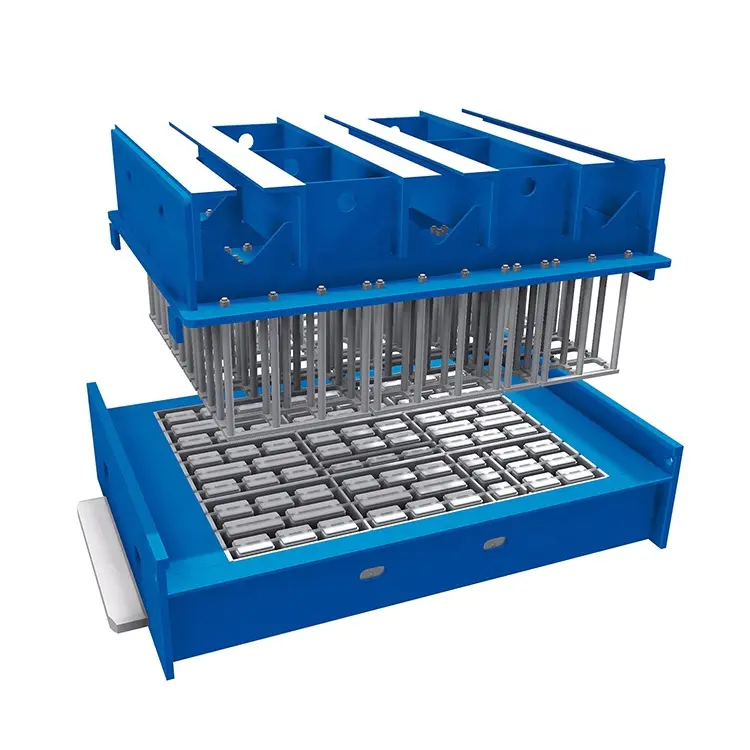
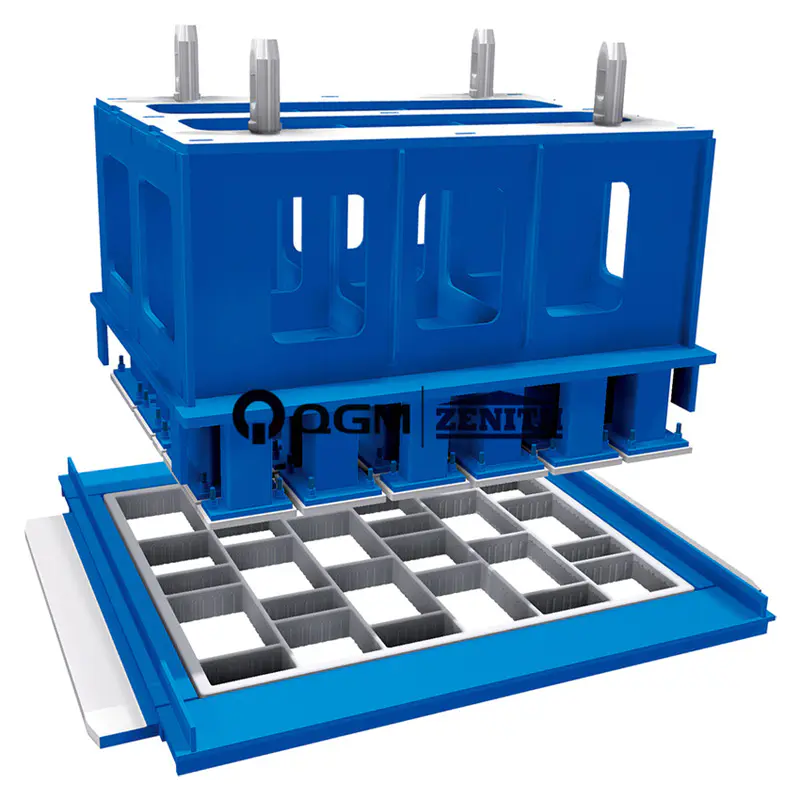
A brick manufacturing machinery mold is a precision-engineered component used in brick-making machines to shape raw materials such as clay,
concrete, fly ash, or cement mixtures into standardized brick units.
These molds are typically installed in hydraulic or mechanical brick presses and determine the final geometry of each brick produced.
The mold cavity defines the brick’s dimensions, texture, and sometimes even surface patterns.
3. Why Mold Quality Matters in Brick Production
Mold quality directly impacts production consistency and operational efficiency. Poor-quality molds can lead to defects such as cracks,
uneven surfaces, or dimensional inaccuracies, which increase waste and reduce profitability.
-
Ensures uniform brick size and shape
-
Reduces material waste during production
-
Improves machine stability and reduces downtime
-
Enhances product market value
In large-scale production environments, even a 1% improvement in mold accuracy can translate into significant cost savings annually.
4. Types of Brick Molds
Different production requirements demand different mold configurations. Below are the most commonly used types:
-
Hollow Brick Molds – Used for lightweight construction blocks
-
Solid Brick Molds – Designed for high-strength structural bricks
-
Paver Brick Molds – Used for road and landscaping bricks
-
Custom Decorative Molds – For architectural and aesthetic designs
Each mold type is engineered based on compression force, material flow characteristics, and cooling requirements.
5. Mold Materials and Their Performance
The durability of a brick mold depends heavily on the materials used in its construction. High-quality molds are typically made from
alloy steel or wear-resistant hardened steel.
|
Material Type
|
Key Advantage
|
Application Scenario
|
|
Alloy Steel
|
High strength and durability
|
High-volume production lines
|
|
Carbon Steel
|
Cost-effective and stable
|
Medium-scale operations
|
|
Hardened Tool Steel
|
Extreme wear resistance
|
Heavy-duty industrial production
|
6. Design and Engineering Considerations
Designing a brick mold involves precision engineering and advanced CAD modeling. Engineers must consider material shrinkage,
pressure distribution, and thermal expansion.
-
Uniform stress distribution to avoid cracking
-
Optimized cavity design for material flow
-
Surface treatment for anti-wear performance
-
Compatibility with automated production systems
7. Manufacturing Process of Brick Molds
The production of brick molds involves multiple precision stages to ensure accuracy and durability.
-
Material selection and inspection
-
CNC machining and cavity shaping
-
Heat treatment for hardness enhancement
-
Surface polishing and coating
-
Final quality inspection and testing
Each step is critical to ensuring that the mold can withstand repeated high-pressure cycles without deformation.
8. Common Problems and Solutions
Even high-quality molds face operational challenges over time. Understanding these issues helps prevent production loss.
-
Wear and Tear: Caused by continuous friction; solved by surface hardening
-
Dimensional Deviation: Results from thermal expansion; controlled via cooling systems
-
Material Sticking: Fixed with anti-adhesive coatings
-
Cracking: Prevented by proper stress design
9. Maintenance and Lifespan Extension
Proper maintenance significantly extends mold lifespan and ensures consistent production quality.
-
Regular cleaning after production cycles
-
Lubrication of contact surfaces
-
Routine inspection for micro-cracks
-
Timely re-coating of protective layers
Well-maintained molds can last significantly longer, reducing replacement costs and downtime.
10. Cost, ROI, and Production Efficiency
Investing in high-quality brick molds may increase initial costs, but the long-term return is substantial.
-
Lower defect rates increase profit margins
-
Reduced downtime improves output efficiency
-
Longer lifespan reduces replacement frequency
In industrial-scale operations, optimized molds can improve productivity by 15%–30% depending on operational conditions.
11. Buying Guide for Brick Molds
When selecting a brick manufacturing machinery mold, consider the following factors:
-
Production capacity requirements
-
Material compatibility
-
Machine type compatibility
-
Expected lifespan and maintenance cost
-
Customization needs
12. Industrial Applications
Brick molds are widely used across multiple industries, including:
-
Residential and commercial construction
-
Infrastructure projects such as roads and bridges
-
Landscape and decorative architecture
-
Industrial facility construction
13. Future Trends in Mold Technology
The future of brick mold manufacturing is moving toward automation, digital monitoring, and smart materials.
-
AI-assisted mold design optimization
-
Smart wear detection systems
-
Advanced nano-coating technologies
-
Fully automated mold replacement systems
These innovations aim to reduce human intervention while increasing precision and efficiency.
FAQ
Q1: How long does a brick mold last?
A: Depending on material and usage, a high-quality mold can last several hundred thousand cycles.
Q2: Can molds be customized?
A: Yes, molds can be fully customized based on brick size, shape, and production requirements.
Q3: What is the most durable mold material?
A: Hardened tool steel is generally considered the most durable option.
Q4: How often should molds be maintained?
A: Regular inspection after each production cycle and deep maintenance monthly is recommended.
Q5: What causes mold damage?
A: Common causes include friction, improper lubrication, and excessive production pressure.
Conclusion
Brick manufacturing machinery molds are essential components that directly influence production efficiency, product quality,
and overall operational success. Investing in well-designed, durable molds ensures long-term stability and profitability
in any brick manufacturing operation.
As technology advances, molds will continue to evolve toward higher precision, automation, and intelligent monitoring systems,
reshaping the future of construction material production.
For high-quality and customized brick manufacturing solutions, Fujian Quangong Mould Co.,Ltd provides professional
engineering support and advanced mold systems tailored to industrial needs.
👉 Contact us today to explore premium brick mold solutions and upgrade your production efficiency with reliable engineering expertise.