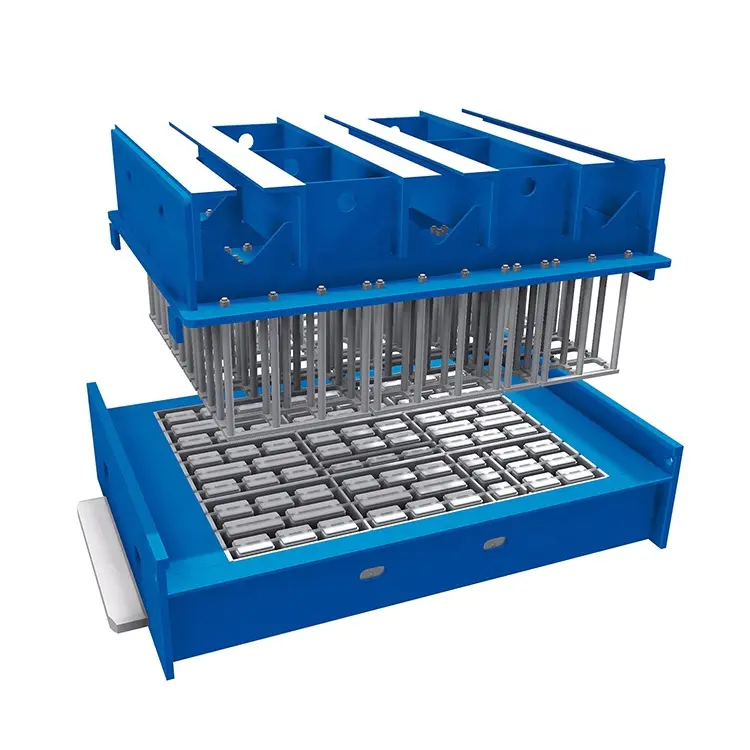
A Block Forming Machine Mold is one of the most critical components in the concrete products manufacturing process. Whether producing hollow blocks, solid blocks, paving stones, curbstones, retaining wall units, or customized concrete elements, the mold directly influences product accuracy, appearance, strength, production speed, and overall manufacturing cost.
Many manufacturers focus heavily on block machines while overlooking the importance of mold quality. However, even the most advanced block-making equipment cannot deliver superior products if the mold suffers from wear, poor design, inadequate material selection, or low manufacturing precision.
This comprehensive guide explains how Block Forming Machine Molds work, their types, material selection, maintenance methods, lifespan considerations, technological innovations, and how businesses can maximize production efficiency through proper mold investment.
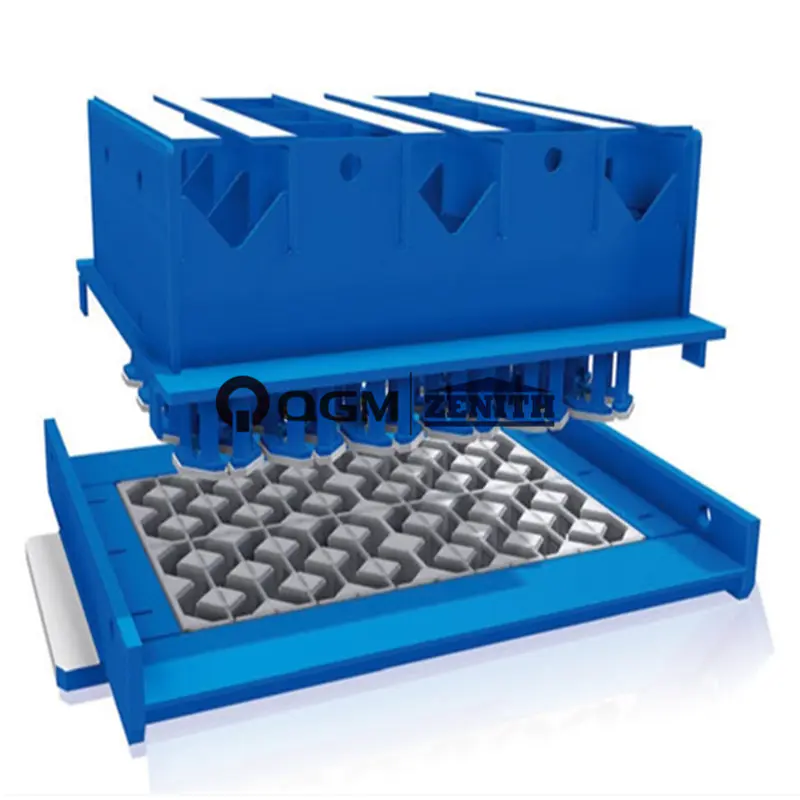
What Is a Block Forming Machine Mold?
A Block Forming Machine Mold is a precision-engineered tooling system used inside a block-making machine to shape concrete mixtures into finished products. It acts as the defining element that determines the dimensions, texture, structure, and consistency of every block produced.
The mold receives compressed concrete material under vibration and pressure. Once the shaping cycle is completed, the finished block is released while maintaining its designed dimensions.
Modern molds are manufactured with strict dimensional tolerances to ensure every block meets industry requirements and construction standards.
Strong mold design directly affects block quality, machine performance, production speed, and long-term profitability.
Why Is Mold Quality So Important?
The mold is often referred to as the "heart" of the block production process. Poor-quality molds can create multiple operational issues, including inconsistent dimensions, surface defects, increased downtime, and excessive maintenance expenses.
-
Improves block dimensional accuracy
-
Enhances surface finish quality
-
Increases production output
-
Reduces rejection rates
-
Minimizes machine wear
-
Extends operational lifespan
-
Lowers production costs
Manufacturers using premium molds often achieve significantly higher production efficiency compared to those relying on low-cost alternatives.
Key Components of a Mold System
A complete Block Forming Machine Mold generally consists of several precision-engineered components:
-
Mold Frame
-
Tamper Head
-
Mold Insert
-
Wear Plates
-
Guide Mechanisms
-
Fastening Components
-
Surface Hardening Layers
Each component contributes to production stability and finished product consistency.
What Materials Are Used in Manufacturing?
Material selection is one of the most important factors affecting mold durability.
|
Material
|
Main Advantage
|
Typical Application
|
|
High-Strength Steel
|
Excellent wear resistance
|
Heavy-duty production
|
|
Alloy Steel
|
Superior toughness
|
Large-volume factories
|
|
Carburized Steel
|
Extended service life
|
High-pressure applications
|
|
Hardened Tool Steel
|
Extreme precision
|
Premium concrete products
|
Advanced heat treatment technologies further improve hardness and resistance to abrasion.
Common Types of Block Forming Machine Molds
-
Hollow Block Molds
-
Solid Block Molds
-
Paver Block Molds
-
Kerbstone Molds
-
Retaining Wall Block Molds
-
Grass Paver Molds
-
Customized Architectural Block Molds
-
Multi-Cavity Production Molds
Different projects require different mold configurations depending on product design and production targets.
How to Choose the Right Mold?
When selecting a mold, manufacturers should evaluate:
-
Block type requirements
-
Expected production volume
-
Machine compatibility
-
Material hardness
-
Precision requirements
-
Maintenance costs
-
Supplier expertise
A properly selected mold can significantly increase production efficiency and reduce operational expenses.
Maintenance and Care Guidelines
Proper maintenance directly extends mold service life.
-
Clean after every production shift
-
Remove concrete residue immediately
-
Inspect wear surfaces regularly
-
Lubricate moving components
-
Monitor dimensional accuracy
-
Store in dry environments
-
Replace worn inserts promptly
Preventive maintenance is significantly less expensive than unexpected mold replacement.
Latest Mold Technologies
The block manufacturing industry continues to evolve through technological innovation.
-
CNC Precision Machining
-
Laser Hardening Technology
-
Robot Welding Systems
-
Advanced Heat Treatment
-
Wear-Resistant Surface Coatings
-
Modular Mold Design
-
Digital Quality Inspection
These technologies enable higher productivity and longer mold service life.
Block Forming Machine Mold Comparison Table
|
Feature
|
Standard Mold
|
Premium Mold
|
|
Dimensional Accuracy
|
Good
|
Excellent
|
|
Wear Resistance
|
Medium
|
High
|
|
Service Life
|
Normal
|
Extended
|
|
Maintenance Frequency
|
Higher
|
Lower
|
|
Production Efficiency
|
Moderate
|
Excellent
|
Business Benefits of High-Quality Molds
Premium molds create measurable business advantages:
-
Higher production output
-
Lower labor costs
-
Reduced downtime
-
Improved customer satisfaction
-
More consistent product quality
-
Long-term cost savings
-
Better market competitiveness
For growing manufacturers, mold quality should be viewed as a strategic investment rather than a simple operational expense.
Frequently Asked Questions
Q1: How long does a Block Forming Machine Mold typically last?
The lifespan depends on material quality, production volume, maintenance practices, and operating conditions. High-quality molds can operate for hundreds of thousands of production cycles.
Q2: What causes mold wear?
Abrasive concrete materials, inadequate maintenance, improper operation, and insufficient lubrication are common causes.
Q3: Can molds be customized?
Yes. Manufacturers frequently develop customized molds for unique block designs and market requirements.
Q4: Why is dimensional accuracy important?
Accurate dimensions ensure easier construction, improved aesthetics, and compliance with project specifications.
Q5: How can production efficiency be improved?
Using high-quality molds, performing preventive maintenance, and ensuring proper machine setup are key factors.
Conclusion
A Block Forming Machine Mold is far more than a shaping tool. It directly influences production quality, operational efficiency, equipment longevity, and profitability. From material selection and manufacturing precision to maintenance and technological innovation, every aspect of mold design contributes to successful concrete product manufacturing.
Businesses seeking long-term production stability should prioritize durable, precision-engineered molds that can withstand demanding industrial environments while consistently delivering high-quality concrete products.