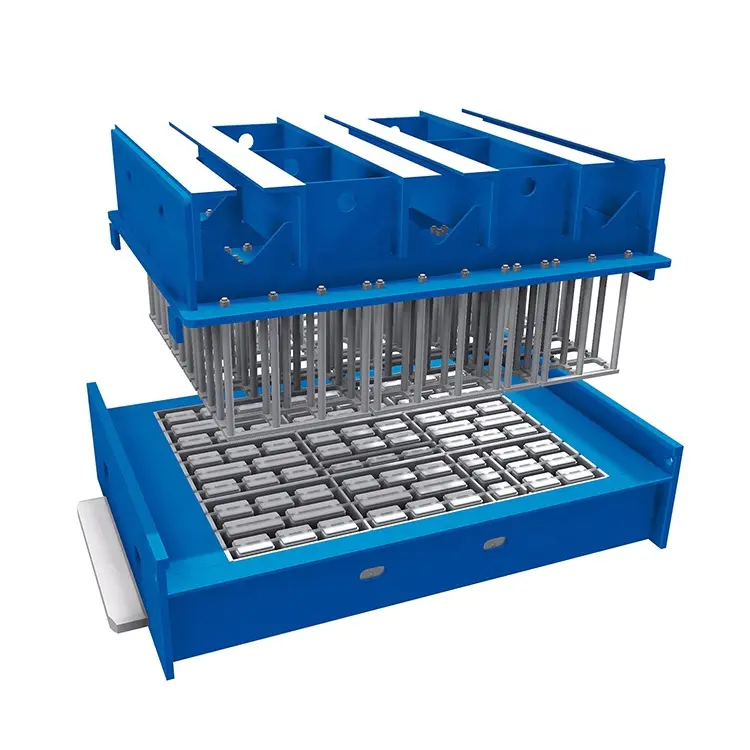

Lightweight block machine molds have revolutionized the construction and building materials industry by offering efficiency, durability, and cost-effectiveness. This article explores their benefits, design considerations, types, and maintenance tips. Additionally, it provides actionable insights to help manufacturers and construction professionals select the right mold for their production needs.

In modern construction, efficiency and quality are paramount. Lightweight block machine molds are specialized tools used to produce high-quality concrete blocks with uniform size and shape. These molds are typically made of durable steel or iron alloys and are designed to withstand repeated use under heavy loads.
By using a lightweight block machine mold, manufacturers can increase production speed while reducing labor costs and material waste. The design flexibility of these molds allows for the creation of various block shapes, sizes, and textures, catering to different construction requirements.
Lightweight molds are easier to handle and require less energy to operate, making block production faster and more consistent. The reduced weight also minimizes wear on the machine components.
Using lightweight molds reduces operational costs by minimizing labor needs and energy consumption. Additionally, the durability of high-quality molds ensures a longer service life, reducing replacement frequency.
Lightweight molds provide precise shaping, resulting in blocks with uniform dimensions. This consistency improves construction quality and simplifies assembly at building sites.
Manufacturers can produce a wide range of block types, including hollow blocks, solid blocks, interlocking blocks, and decorative blocks, using interchangeable molds tailored to production requirements.
There are several types of lightweight block machine molds, each suited for specific production needs:
| Mold Type | Description | Typical Application |
|---|---|---|
| Standard Hollow Block Mold | Used for producing lightweight hollow concrete blocks | General construction, residential and commercial projects |
| Solid Block Mold | Creates fully solid concrete blocks | Roads, foundations, heavy-duty construction |
| Interlocking Block Mold | Blocks designed to lock together without mortar | Eco-friendly building, fast assembly projects |
| Decorative Block Mold | Produces blocks with textures, patterns, or shapes | Landscaping, façades, and interior design |
The mold material must withstand repeated stress while maintaining precision. Common materials include high-strength steel, stainless steel, and cast iron. Surface treatment, such as anti-rust coating, can extend lifespan.
Determine the size and pattern of blocks you need to produce. Lightweight molds can be customized for specific project requirements, including hollow patterns, interlocking designs, or decorative finishes.
Consider molds that are easy to install, remove, and replace. Lightweight designs reduce downtime during production changes and simplify maintenance.
Ensure the mold is compatible with the block-making machine you own. Some molds are universal, while others are designed for specific brands or models.
| Problem | Possible Cause | Solution |
|---|---|---|
| Blocks Sticking to Mold | Insufficient lubrication or worn surface | Apply mold release agent, polish mold surface |
| Uneven Block Dimensions | Warped or damaged mold | Inspect and replace mold if necessary |
| Corrosion on Mold Surface | Exposure to moisture or poor material coating | Use anti-rust coating, store molds in dry area |
| Slow Production Rate | Heavy mold weight or misalignment | Switch to lightweight mold, realign machine components |
Q1: How long does a lightweight block machine mold last?
A: The lifespan varies depending on material quality and usage frequency. High-quality steel molds can last several years with proper maintenance.
Q2: Can molds be customized for specific block shapes?
A: Yes, molds can be custom-designed to produce various block shapes, patterns, and sizes.
Q3: Are lightweight molds compatible with all block machines?
A: While many molds are universal, it's important to check compatibility with your specific machine model.
Q4: How can I prevent blocks from sticking to the mold?
A: Use mold release agents, lubricants, or coatings to ensure smooth block release.
Q5: Is it worth investing in high-end molds?
A: Yes, high-quality molds improve production efficiency, reduce maintenance costs, and ensure consistent block quality.
Choosing the right lightweight block machine mold is crucial for efficient block production, high-quality results, and reduced operational costs. By considering mold type, material, design, and maintenance practices, manufacturers can enhance productivity and profitability. Investing in durable, well-designed molds ensures long-term benefits for any construction project.
For more professional guidance and high-quality molds, trust Fujian Quangong Mould Co.,Ltd. Contact us today to explore our full range of lightweight block machine molds tailored to your production needs.