
A:A: Surface roughness Ra6.3, tolerance: ±0.05
A:A: CNC machining has higher precision than wire EDM. You can request CNC machining when placing an order. We are also gradually reducing the number of molds we use for wire EDM.
A:A: CNC can machine internal cavities with a radius of R4 (inclusive) and above, and a diameter of 80mm (inclusive) and below. CNC can also machine rounded corners or sharp corners with a radius of R4 or below. CNC is approximately 50%-70% faster, depending on the brick sample and quantity. CNC is more expensive, and the price is calculated based on the brick sample and quantity.
A:A: No, it will not deform and will not affect its use.
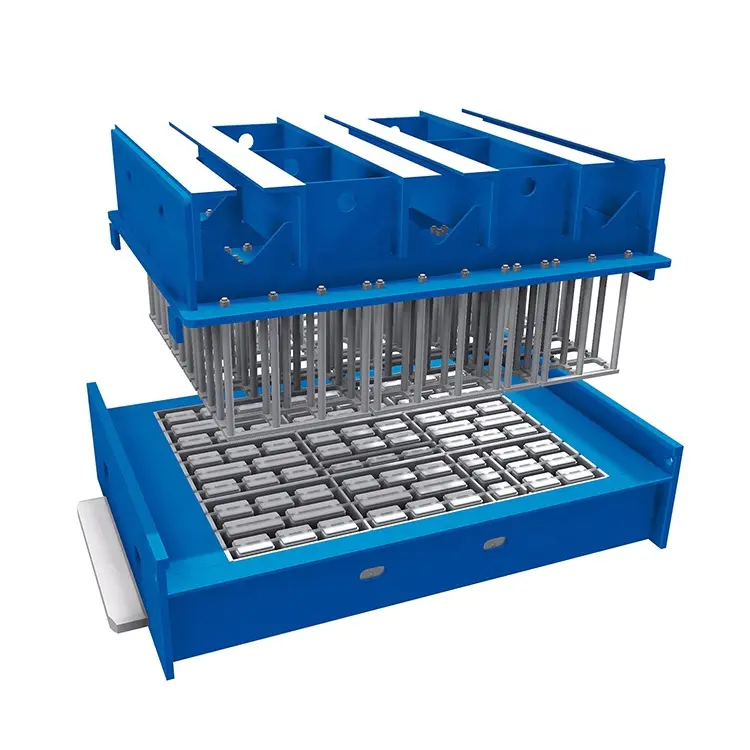
A:A: Welded molds have a shorter lead time, and the technology is currently quite mature. Assembled molds have a longer lead time; only a few sets have been made so far, and they are still under development. However, they also require customers to have certain assembly capabilities on-site.
A:A: Full welding results in stronger connections but also makes parts more susceptible to deformation. Partial welding offers weaker connections than full welding but results in less deformation. We choose between full welding and partial welding based on the application location. Full welding is used for the base plate and mold frame, while partial welding is used for other locations.