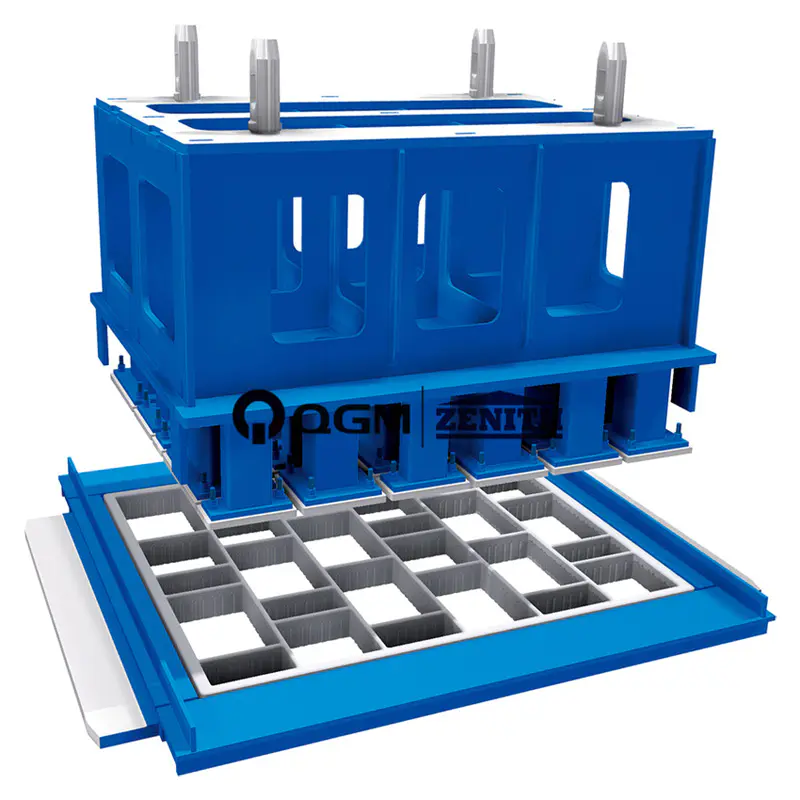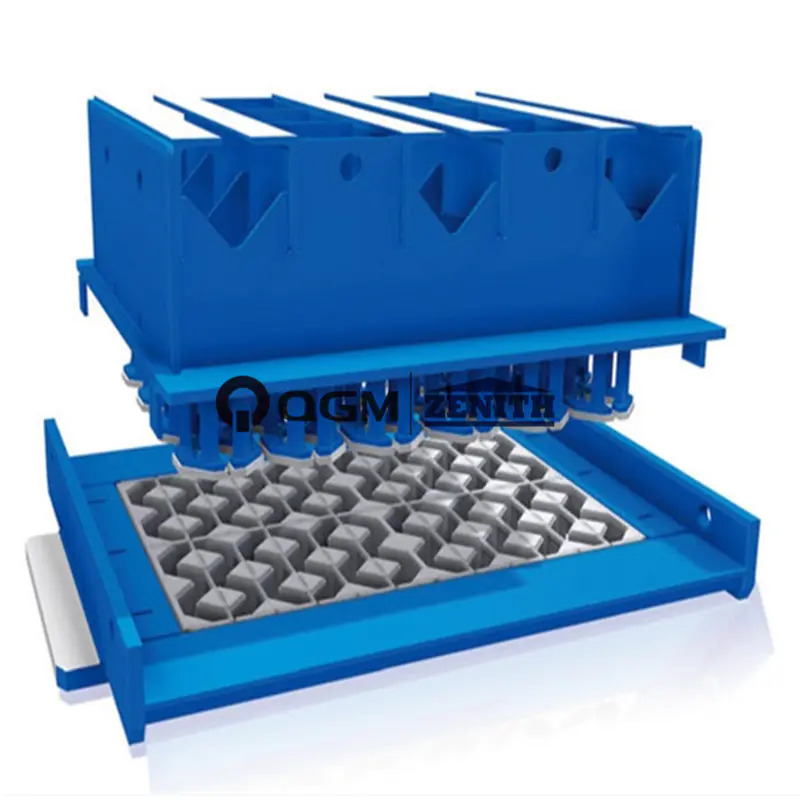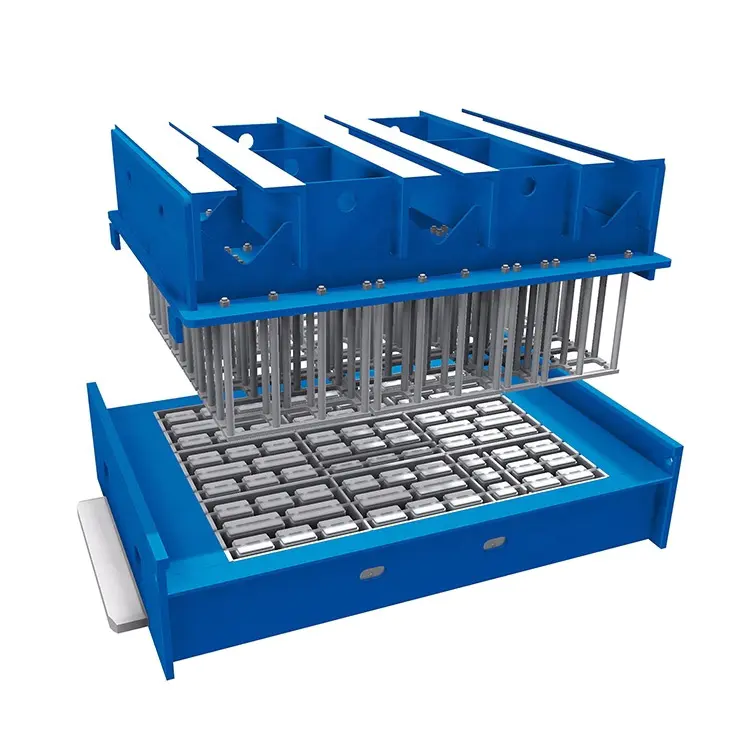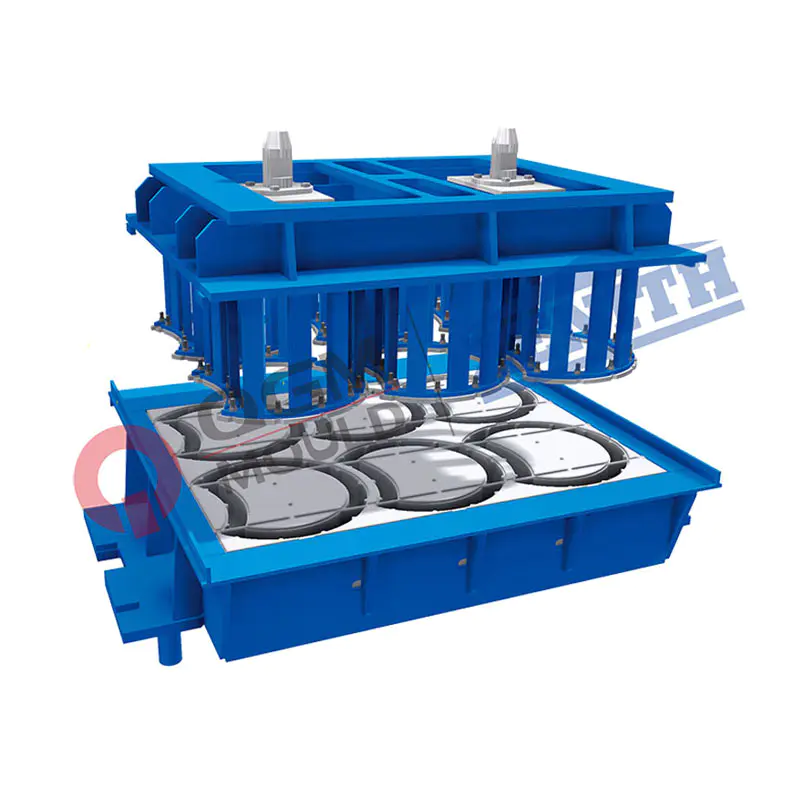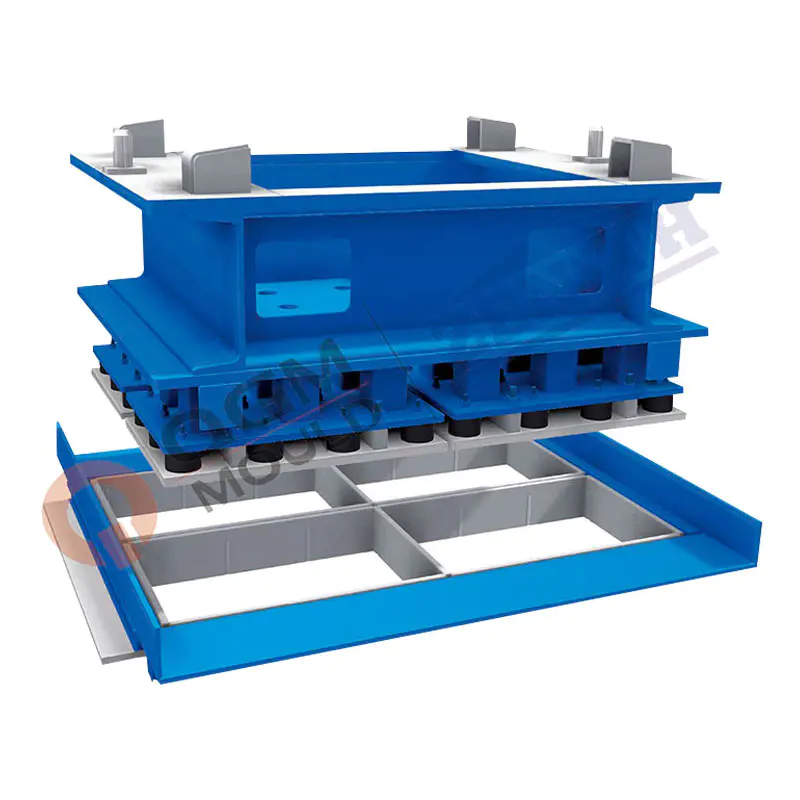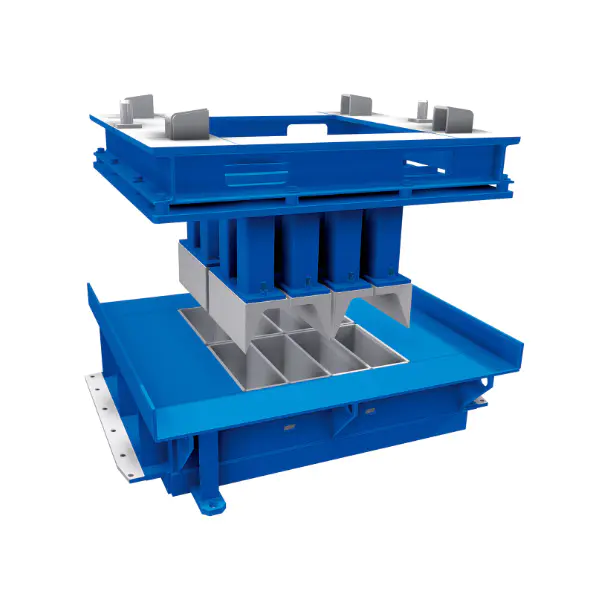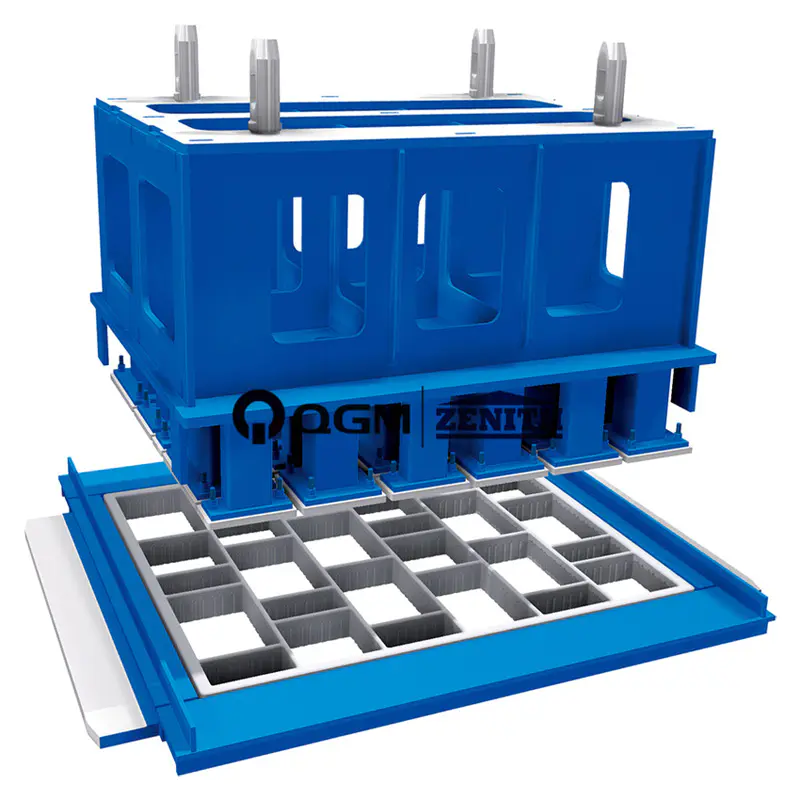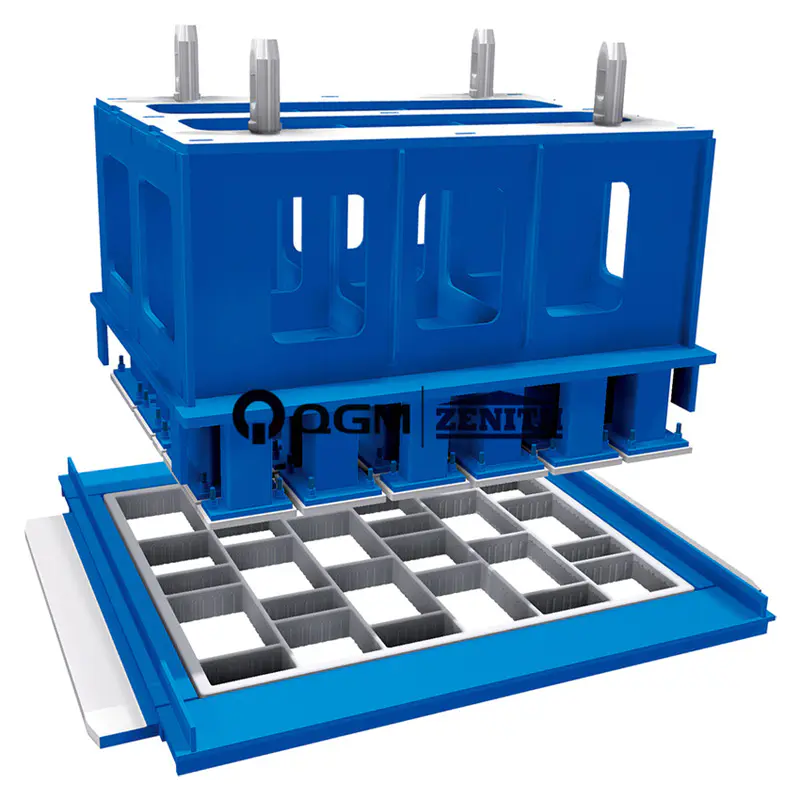

The AAC block plant is designed and manufactured by QGM Block Machine; it utilizes a strictly controlled process to transform silica sand, cement, lime, gypsum, and aluminum powder into lightweight, high-strength construction blocks. Every stage—from batching to final palletizing—is managed by a centralized PLC control system, ensuring high production efficiency.
A complete AAC block plant consists of the following main components:
|
System |
Key Functions |
|
Raw Material Preparation System |
Storage, crushing, and processing of raw materials such as sand, fly ash, cement, lime, and gypsum |
|
Batching System |
Precise weighing of raw materials according to production formulas |
|
Mixing System |
Mixing raw materials to form a homogeneous slurry |
|
Casting System |
Casting the slurry into molds for initial shaping |
|
Pre-curing System |
Curing the green body to the strength required for cutting |
|
Cutting System |
Processing large green bodies into standard AAC blocks |
|
Autoclaving System |
Enhancing product strength and stability through high-temperature, high-pressure curing |
|
Packaging & Conveying System |
Handling finished product transport, stacking, and packaging |
|
Automatic Control System |
Implementing production process monitoring and automated management |
Production capacity is the primary factor to consider when choosing an AAC block plant.
Small-scale building material enterprises may require low-to-medium capacity production lines;
Large building material groups or regional suppliers typically require highly automated, high-capacity production solutions.
When making a selection, you need to clarify:
✔ Daily output requirements
✔ Annual production capacity targets
✔ Product sales region
✔ Future expansion plans
Common raw materials include sand, fly ash, cement, lime, gypsum, and aluminum powder.
QGM Block Machine provides process adjustment solutions tailored to the customer's local conditions.
Modern AAC production lines offered by QGM include automatic batching systems, automatic cutting systems, automatic conveying systems, and intelligent control systems.
For long-term AAC plant operations, highly automated production lines generally offer lower labor costs and more consistent product quality.
| Parameter | Unit | Specification Range |
|---|---|---|
| Annual Production Capacity | m³/year | 30,000 – 300,000 |
| Dry Density of AAC Blocks | kg/m³ | 400 – 700 |
| Compressive Strength (28 days) | MPa | 3.5 – 7.5 |
| Thermal Conductivity | W/(m·K) | 0.09 – 0.16 |
| Shrinkage (drying) | mm/m | ≤ 0.3 |
| Block Dimensions (Standard) | mm | 600 × 200 × 100/150/200/250 |
| Autoclave Curing Cycle | hours | 8 – 12 |
| Steam Consumption per m³ of AAC | kg/m³ | 140 – 170 |
| Power Installed (total plant) | kW | 250 – 1,200 (depending on capacity) |
| Plant Footprint (excluding yard) | m² | 3,000 – 12,000 |
|
Common Issues |
Issues Observed |
Main Reason |
Solution |
|
Insufficient AAC block strength |
Low compressive strength; prone to breakage, edge/corner chipping; fails to meet construction standards |
1. Unreasonable raw material proportions 2. Inaccurate aluminum powder dosage 3. Insufficient temperature or pressure during autoclave curing 4. Fluctuations in raw material properties |
1. Regularly test raw materials and optimize formulations 2. Use automated batching systems to improve metering accuracy 3. Monitor autoclave temperature, pressure, and curing time 4. Adjust production process parameters |
|
Significant dimensional deviations in AAC blocks |
Inconsistent product dimensions; hinders assembly/fitting; increased scrap rate |
1. AAC mold wear 2. Reduced cutting system precision 3. Insufficient green body hardness leading to cutting deformation |
1. Regularly inspect and maintain molds 2. Adjust cutting equipment parameters 3. Check cutting wire tension 4. Control static curing time |
|
Mold collapse or deformation of the green body |
Insufficient green body height after casting; surface collapse; non-uniform internal structure |
1. Unstable slurry mix ratio 2. Inadequate mixing 3. Abnormal aluminum powder reaction 4. Improper control of static curing time |
1. Optimize the slurry formulation 2. Ensure thorough mixing of raw materials 3. Precisely control the aluminum powder dosage 4. Adjust the pre-curing time based on ambient temperature |
|
Reduced production efficiency |
Reduced daily output; extended production cycles; frequent equipment downtime |
1. Wear of equipment components 2. Non-standard operating procedures 3. Lack of regular maintenance 4. Automation system anomalies |
1. Develop an equipment maintenance plan 2. Train operators 3. Regularly inspect critical components 4. Promptly troubleshoot control system malfunctions |
|
Increased product breakage after cutting |
Cracks and missing corners in AAC blocks; increased scrap rate |
1. Insufficient green body strength 2. Wear or slackness of cutting wires 3. Improper cutting speed parameters |
1. Adjust the static holding time 2. Inspect and replace cutting wires 3. Optimize cutting speed and pressure parameters 4. Keep the cutting equipment clean |
|
Inconsistent autoclave curing results |
Fluctuating product strength; significant quality variations between batches |
1. Unstable autoclave pressure 2. Insufficient steam supply 3. Inaccurate control of steam curing time |
1. Regularly inspect autoclaving equipment. 2. Ensure a stable steam supply. 3. Strictly control the heating, holding, and cooling processes. |
|
Excessive raw material consumption |
Increased unit production costs; significant material waste |
1. Significant errors in automatic batching 2. Excessive cutting waste 3. Imprecise control of production parameters |
1. Use precision metering systems 2. Improve cutting accuracy 3. Optimize production process parameters 4. Analyze production data to reduce waste |
|
Frequent equipment malfunctions |
Increased downtime; higher maintenance costs; impact on order delivery |
1. Inadequate maintenance 2. Failure to replace wear parts in a timely manner 3. Insufficient experience of operators |
1. Establish an equipment inspection system 2. Regularly replace wear parts 3. Strengthen operational training 4. Maintain an inventory of critical spare parts |
|
Mixing system irregularities |
Uneven slurry mixing; unstable product performance |
1. Wear of mixing blades 2. Insufficient mixing time 3. Incorrect order of raw material addition |
1. Check the condition of the mixing blades 2. Adjust the mixing time 3. Add raw materials according to standard procedures |
|
Automatic control system failures |
Equipment malfunction; production process interruptions |
1. Sensor malfunction 2. Aging of electrical components 3. Control program error |
1. Regularly inspect the electrical system 2. Replace faulty components 3. Update and maintain control programs |
|
Reduced mold service life |
Reduced dimensional accuracy; frequent mold replacement required |
1. Substandard mold material quality 2. Inadequate cleaning and maintenance 3. Corrosive operating environment |
1. Select high-quality molds 2. Perform regular cleaning and maintenance 3. Check for wear and repair promptly |
|
Excessive energy consumption |
Increased electricity and steam consumption; rising production costs |
1. Decline in equipment efficiency 2. Low steam utilization rate 3. Inefficient production process |
1. Optimize equipment operating parameters 2. Check the steam system for tightness 3. Enhance the level of automated management |