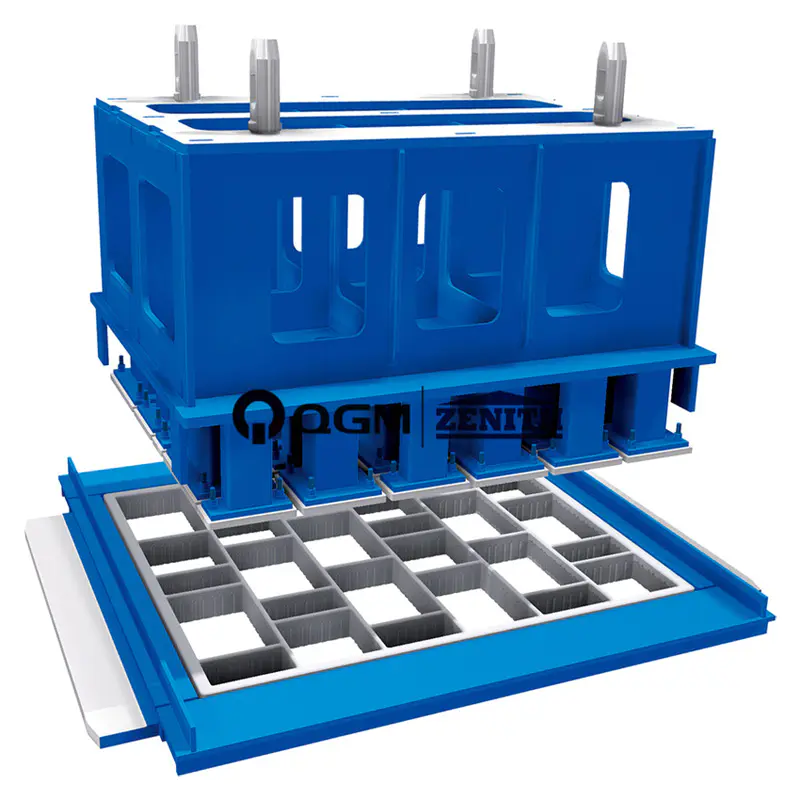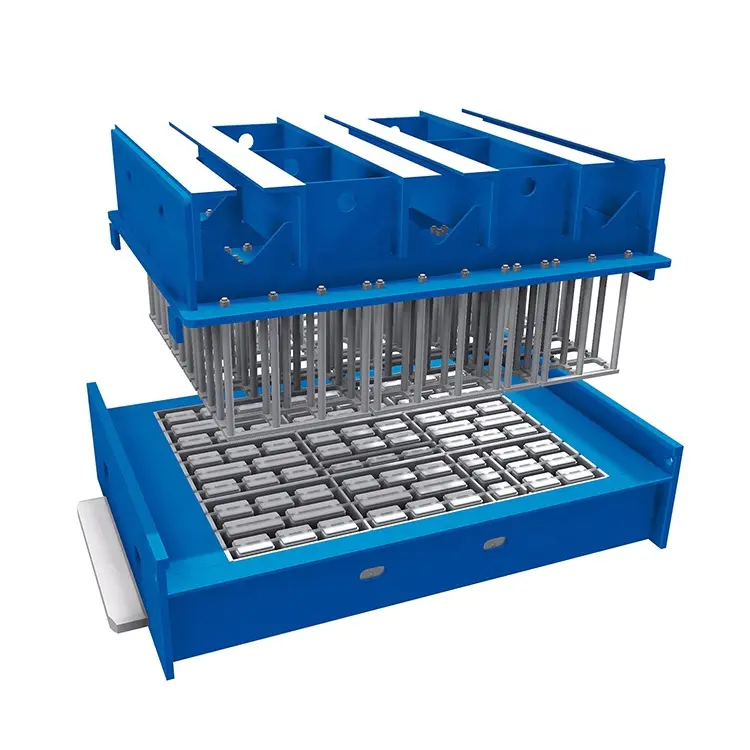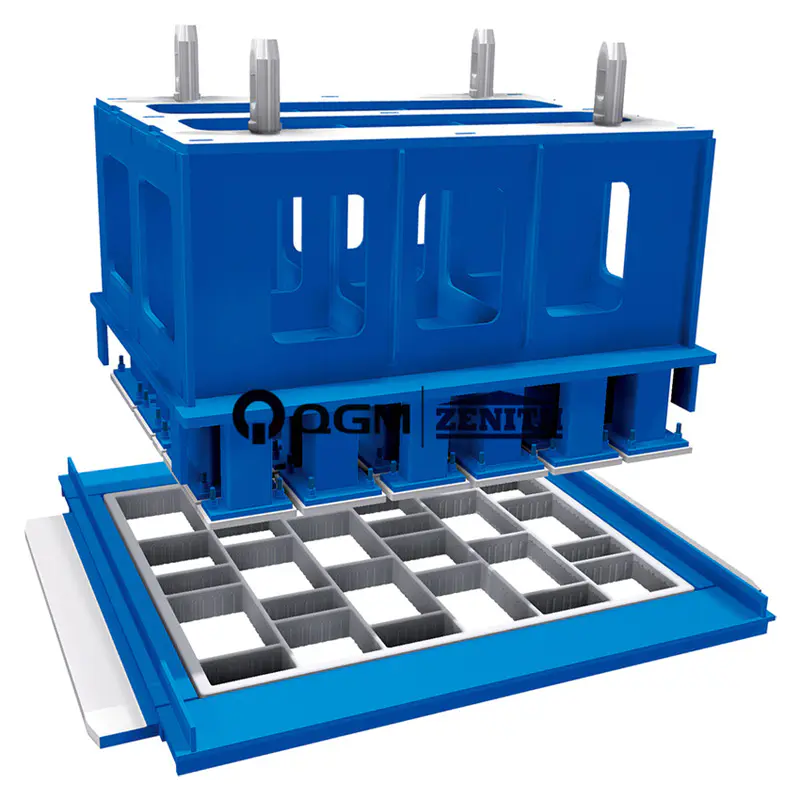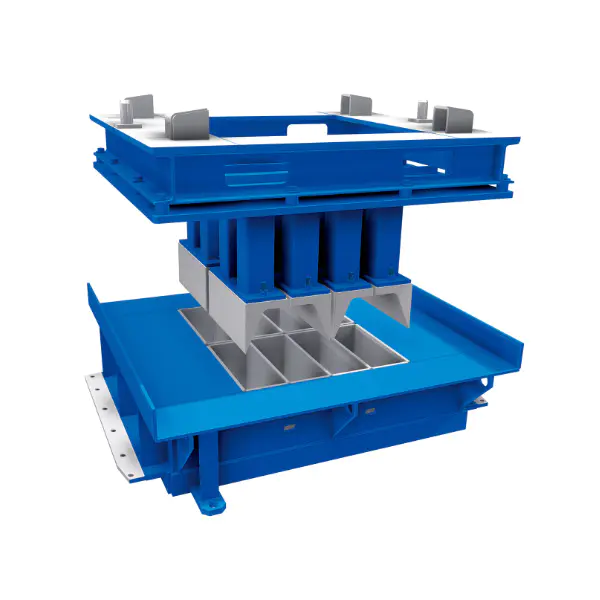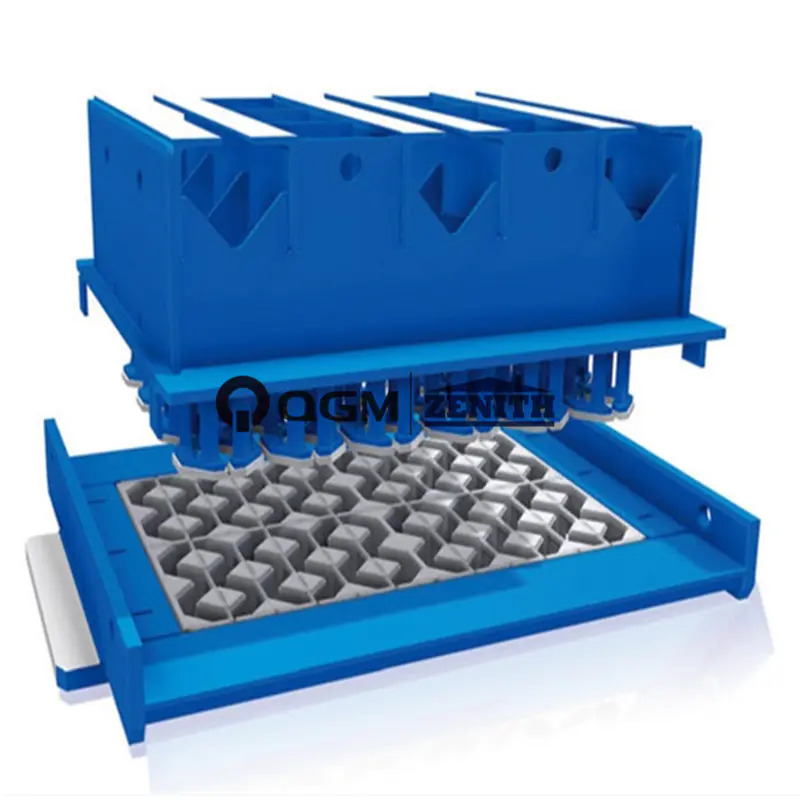

Cement brick moulds are essential tools for producing uniform, high-strength bricks used in construction and landscaping projects around the world. Our moulds are engineered from heavy-duty steel with precision welding, allowing for consistent block dimensions and smooth surface finishes. Whether you are investing in concrete wall moulds for retaining structures, exploring a reliable concrete block mold for commercial production, or searching for durable concrete block moulds for sale, our product line delivers performance that withstands thousands of pressing cycles. Many of our clients use these same high-grade moulds as versatile cement block moulds for interlocking pavers, hollow blocks, and solid bricks, thanks to interchangeable core options and adjustable side plates. Every element of the design focuses on minimizing material waste while maximizing output efficiency, with hardened wear plates in high-friction areas to reduce maintenance downtime.
cement brick mould comes in multiple configurations tailored to specific production requirements. The standard flat-pack design enables compact storage and easy assembly without requiring specialized tools. Operators appreciate the quick-release clamp mechanisms that allow one person to strip a fully cured block in seconds, speeding up cycle times without damaging the fresh concrete. Internal chamfers on all edges produce clean arrises and prevent chipping during demoulding, while the polished cavity surfaces create a finish that often requires no secondary troweling. For high-volume plant operations, we offer automated hydraulic versions with integrated vibration tables, but the manual hand-operated models remain popular among small and medium enterprises due to their low ownership cost and portability. Heavy ribbing on the back of each mould panel ensures rigidity even when filled with high-slump mixes, and the consistent heat distribution during steam curing produces bricks with compressive strengths regularly exceeding 15 MPa.
| Model | Cavity Dimensions (mm) | Blocks Per Cycle | Steel Thickness | Weight (kg) | Typical Output per Hour |
|---|---|---|---|---|---|
| CBM-400 | 400 x 200 x 150 | 1 | 6 mm | 38 | 80 – 100 |
| CBM-400D | 400 x 200 x 150 | 2 | 6 mm | 62 | 180 – 220 |
| CBM-200H | 200 x 200 x 400 (hollow) | 3 | 8 mm | 85 | 300 – 360 |
| CBM-P6 | 220 x 110 x 60 (paver) | 6 | 5 mm | 48 | 550 – 650 |
| CBM-150C | Custom curb profile | 2 | 8 mm | 72 | 120 – 150 |
When choosing a cement brick mould, consider the compatibility with your existing vibration system and the planned daily output. Our moulds feature standardized mounting-hole patterns that fit most Asian, European, and African block machines without adapters. The replaceable wear plates extend the service life beyond 30,000 cycles, and the uniform heat conduction prevents crack formation during rapid curing. All seams are sealed with high-temperature-resistant gaskets to prevent slurry leakage, which preserves sharp edges on every brick. For operations expanding into decorative landscape products, the interchangeable face inserts allow you to switch from smooth to textured or stone-patterned finishes within the same mould frame. This modularity reduces inventory costs while broadening your product portfolio.
Our cement brick mould inventory covers the most common global block sizes, including 400x200x150 mm, 300x150x100 mm, and 200x100x60 mm, plus the corresponding hollow variants. Standard wall thickness on hollow moulds is 25 mm, producing strong load-bearing units. Each shipment includes a detailed assembly drawing, a spare set of wearing components, and a quality certificate tracing the raw material heat number. Lead times for standard models average seven working days, while custom sizes may extend to 15 days depending on complexity.