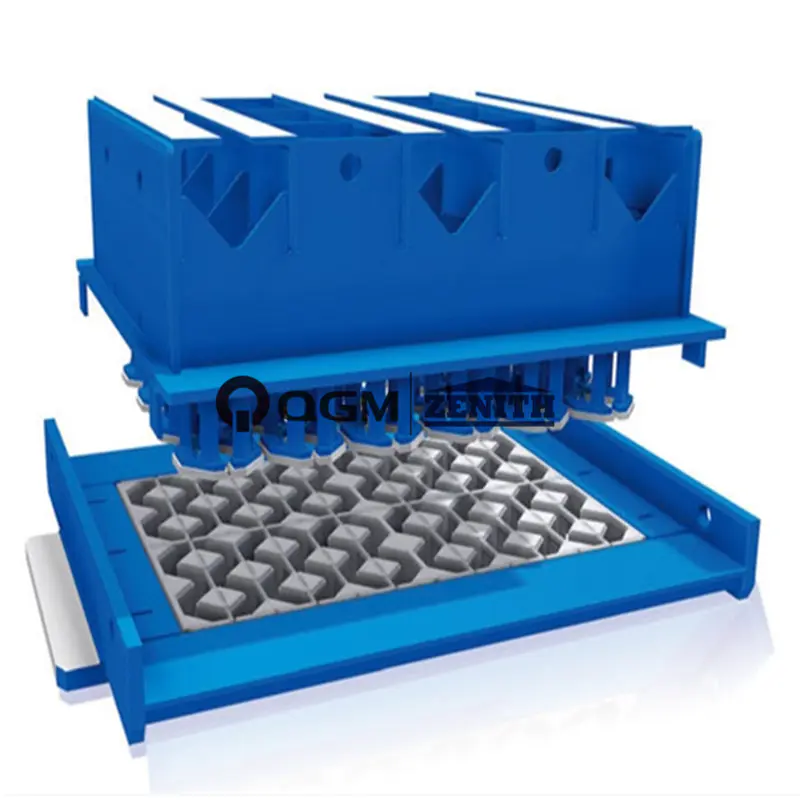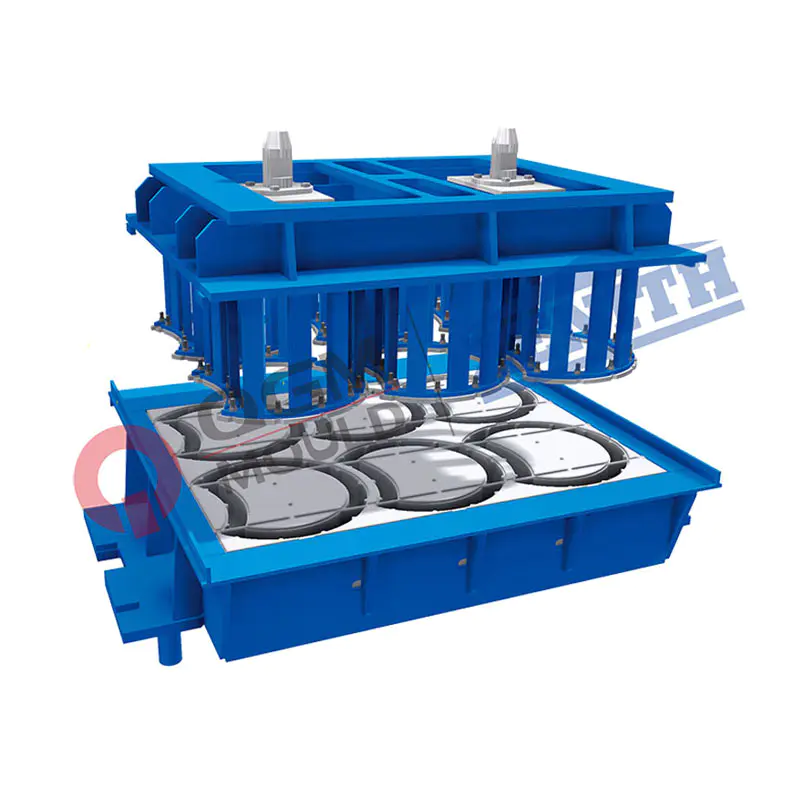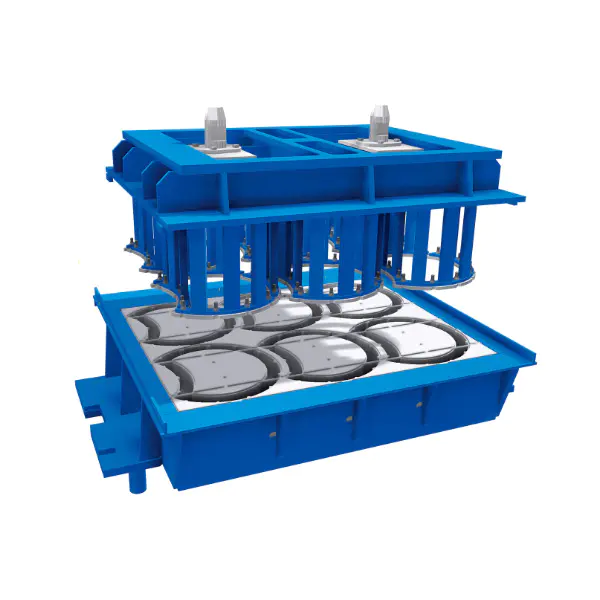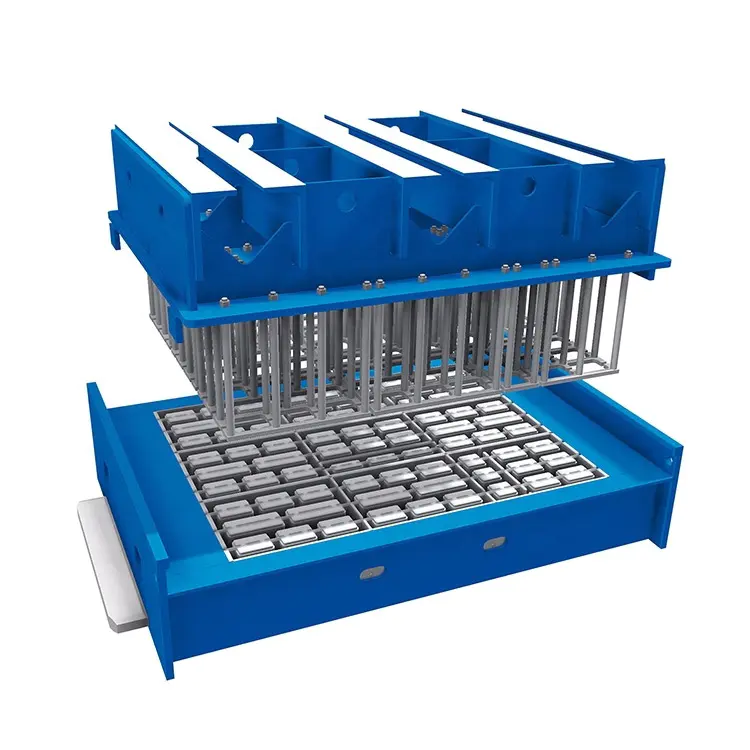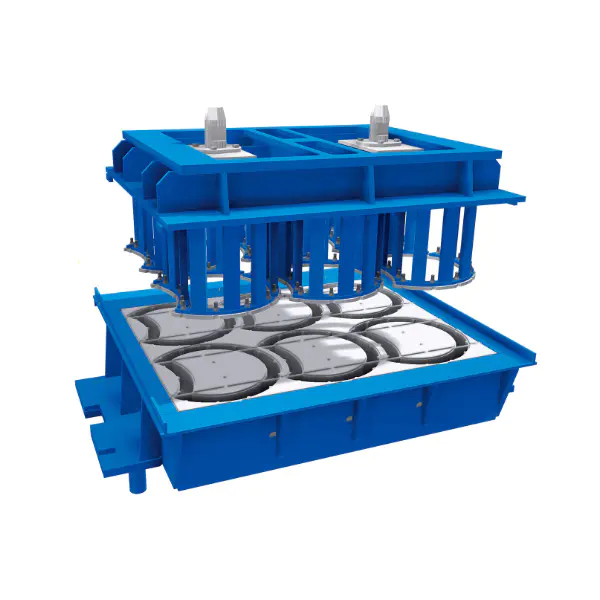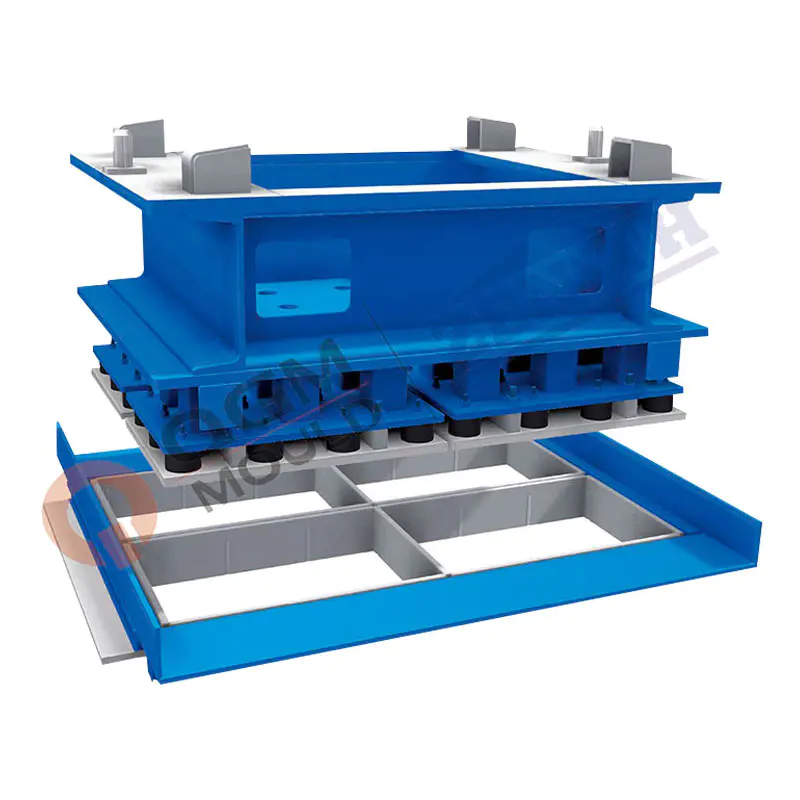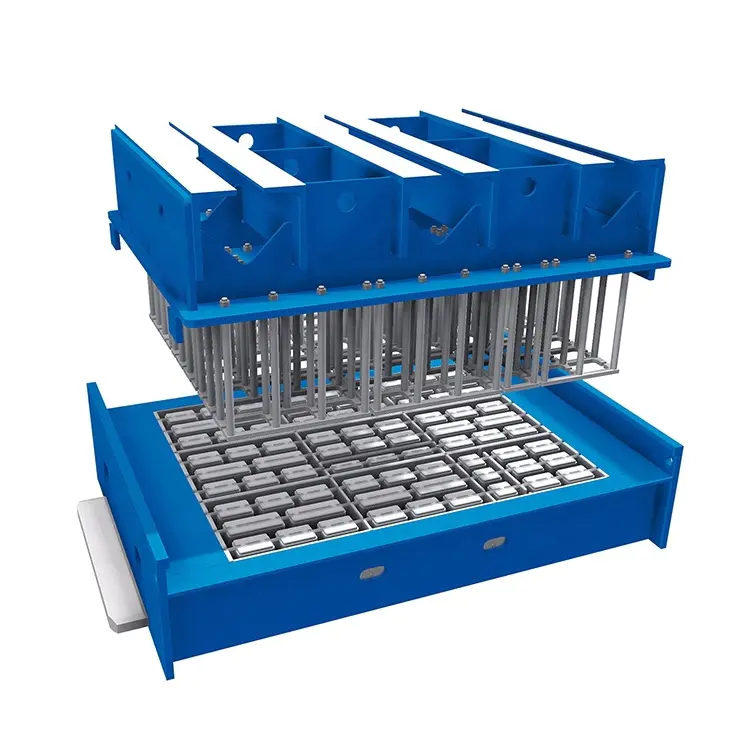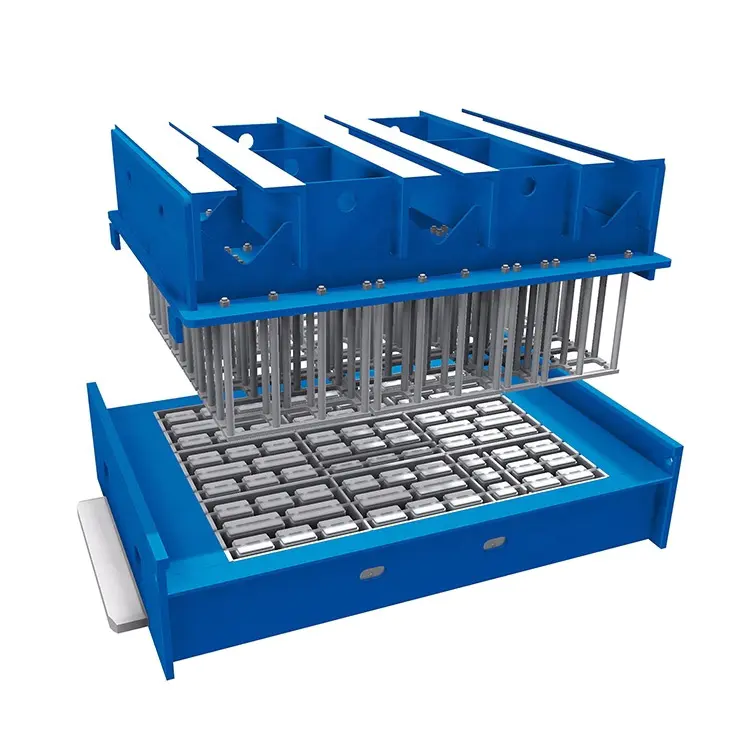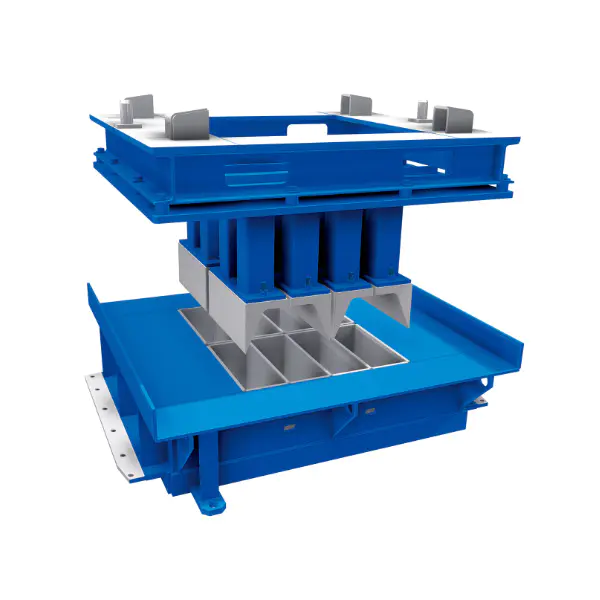

Selecting the right block machine mold equipment determines the dimensional accuracy, surface finish, and production efficiency of every concrete block. Our inventory covers precision-engineered block machinery mold equipment manufactured from high-chromium alloy steel with heat treatment to 58-62 HRC, guaranteeing over 500,000 cycles before refurbishment. For automated lines, the block machines mold equipment series includes quick-change cartridges that reduce downtime to under 15 minutes, while the brick machinery mold equipment line caters to solid and perforated brick formats with interlocking paver variants. Every mold assembly undergoes laser alignment verification and hydraulic pressure testing to maintain ±0.3 mm tolerance across the cavity plate, directly impacting stacking strength and water absorption rates of the final product.
The <产品名字> stands as the core production unit designed for high-density output environments. Its frame integrates a dual-vibration system driven by independent servo motors, delivering adjustable frequencies between 45 Hz and 65 Hz and centrifugal forces up to 90 kN. This dual synchronization compacts dry-mix concrete uniformly, eliminating weak zones in hollow blocks, paving stones, and curbstone profiles. A centralized lubrication network services 16 grease points automatically, cutting manual maintenance interventions and allowing continuous three-shift operation. Mold change-outs are handled by a hydraulic clamping mechanism with position sensors that align the mold box within 0.1 mm repeatability, making format switchovers fast and error‑free. The control panel includes recipe storage for 30 product profiles, storing vibration time, feed depth, and press force parameters that operators can recall with a single touch.
| Product Type | Cavities per Mold | Block Dimensions (L×W×H mm) | Estimated Daily Output (8h shift) |
|---|---|---|---|
| Hollow block (4-inch) | 8 | 400×200×200 | 12,800 pcs |
| Hollow block (6-inch) | 6 | 390×190×190 | 10,560 pcs |
| Solid paver (rectangular) | 24 | 200×100×60 | 38,400 pcs |
| Interlocking paver (zigzag) | 21 | 220×110×80 | 33,600 pcs |
| Perforated brick | 18 | 240×115×90 | 27,000 pcs |
| Curbstone (standard) | 2 | 1000×200×160 | 2,880 pcs |
Material feeding accuracy is enhanced by a grid-structured hopper with independently controlled gates, which synchronize with metering sensors to maintain fill height tolerance within 1.5 mm. The vibration table beneath the mold box is cast from S355J2 structural steel and stress‑relieved after welding, providing a flatness of 0.05 mm per 300 mm. This guarantees uniform transmission of vibration energy into the concrete mix, even under maximum pallet size of 1400×750 mm. For operations requiring frequent mold changes, the quick-positioning system uses conical guide pins and pneumatic locking cylinders, reducing the swap to a one-operator, 12-minute task—crucial for just‑in‑time production of different block types.
The <产品名字> integrates with power units rated 37–55 kW, delivering pressing forces from 180 to 280 kN. Key parameters include:
All contact zones on the mold core and sidewall plates feature replaceable wear strips made from Hardox 500 or equivalent. The lower pallet guide rails incorporate greased brass bushings to minimize friction during table descent. Estimated service life of major assemblies under normal maintenance:
Quality assurance includes a full 3D coordinate measurement report supplied with each mold, documenting cavity dimensions, wall thickness deviation, and parallelism. Hydraulic pressure tests at 30 MPa verify circuit integrity, while a trial press of four sample cycles with non‑reactive filler material confirms vibration synchrony and stroke accuracy before shipment. This systematic approach maintains a rejection rate below 0.3% in customer plants.