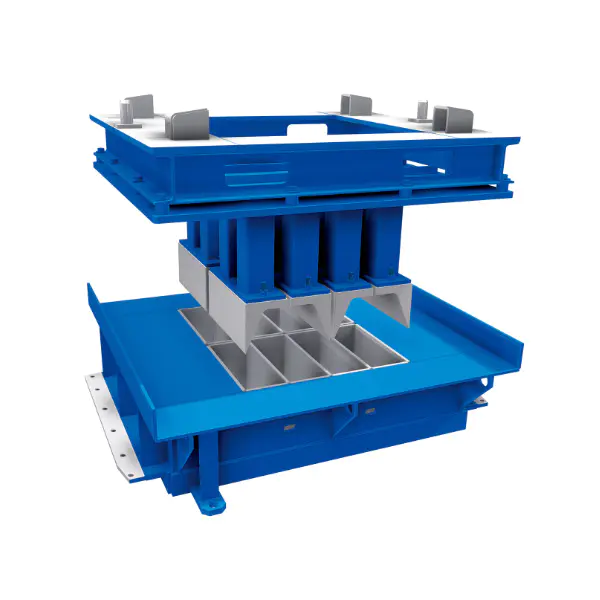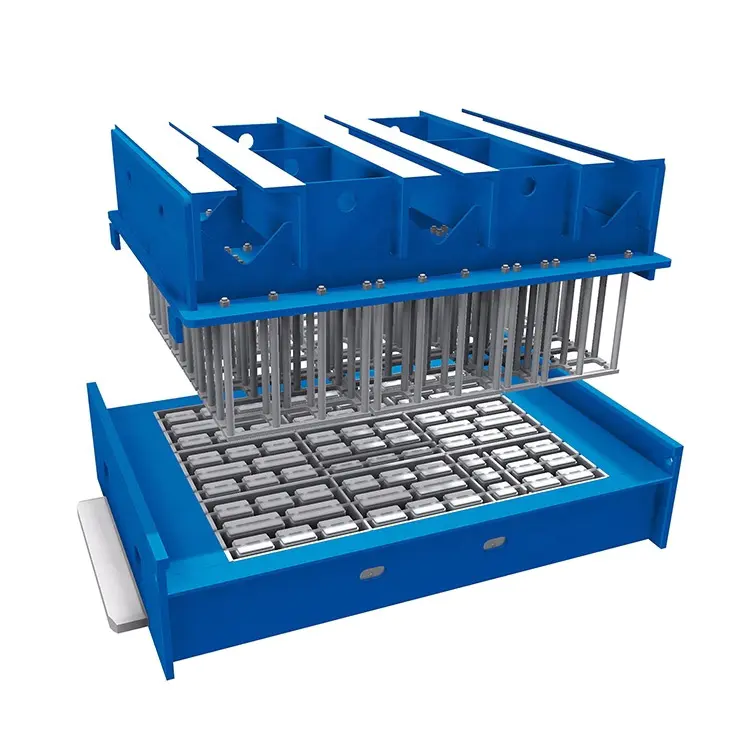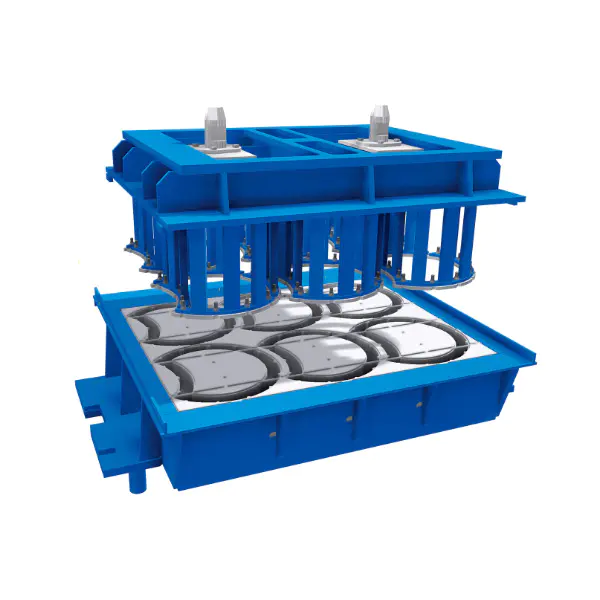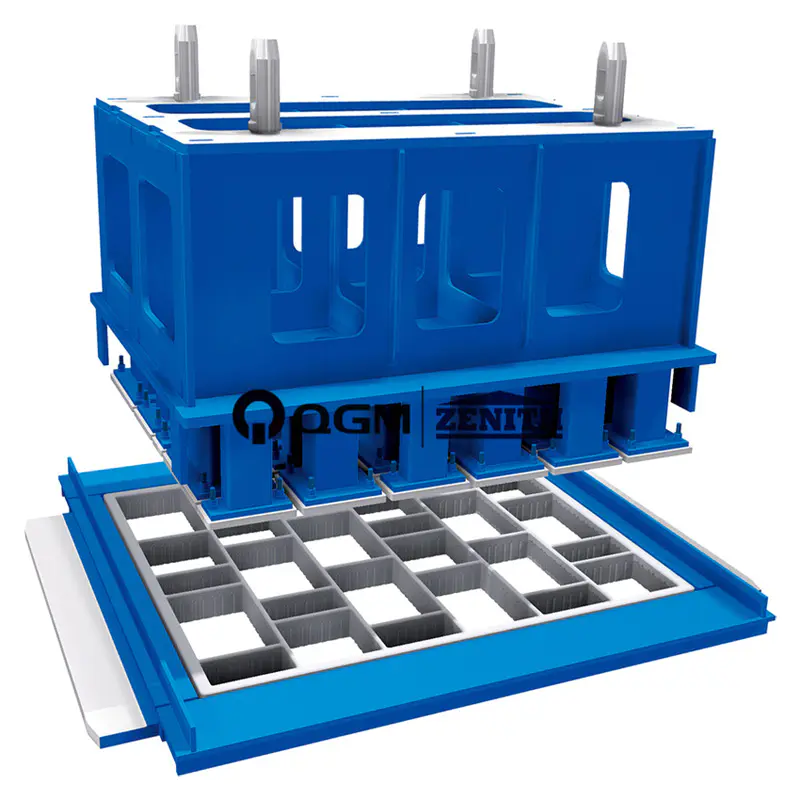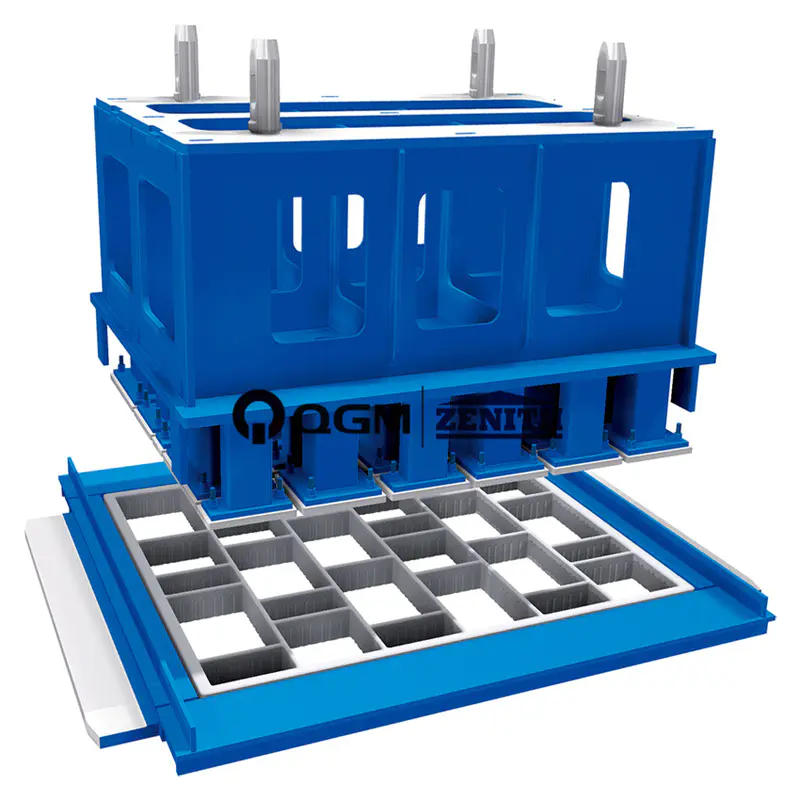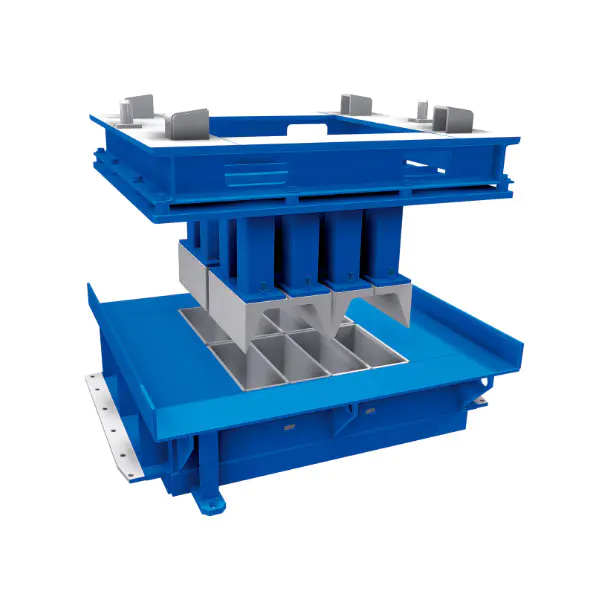

The AAC block production line transforms siliceous raw materials into lightweight, thermally insulating blocks through a series of automated processes, integrating batching, mixing, casting, pre-curing, cutting, and high-pressure steam curing.
These stages operate in coordination to ensure dimensional accuracy and energy efficiency while minimizing the need for manual handling. The production line layout can be flexibly adjusted based on site conditions and target output, ranging from compact configurations suitable for startups to large-scale, multi-line systems with annual capacities exceeding 300,000 cubic meters. Please contact QGM Block Machine for consultations regarding customized solutions.
AAC block production begins with the processing of raw materials.
Common materials include cement, lime, sand, fly ash, gypsum, and aluminum powder.
Formulas can be adjusted based on local raw material availability to ensure consistent product performance.
The production line uses an automated metering system to control the proportions of various raw materials before feeding them into the mixing equipment.
Precise batching ensures stable product density, uniform internal pore structure, and compliance with strength requirements.
The mixed slurry is conveyed into molds. The reaction with aluminum powder creates a uniform internal pore structure, giving the AAC product lightweight and thermal insulation properties, as well as reducing the structural load on buildings.
After casting, the green body undergoes a period of static curing to reach the hardness required for cutting.
This stage influences cutting quality, dimensional accuracy, and the final product pass rate.
The cured green body enters the cutting system, where it is processed into AAC blocks of various specifications.
The cut blocks are placed in an autoclave for final curing under high-temperature and high-pressure conditions.
Autoclave treatment imparts higher strength, a more stable structure, and superior durability to the AAC blocks.
Raw material batch weighing accuracy: ±0.5%
Pouring mixer cycle time: 4–6 minutes
Rising frame pre-curing temperature: 40–50°C
Horizontal cutting tolerance: ±1 mm over 600 mm length
Optimal autoclave pressure: 1.0–1.3 MPa at 190–200°C
Finished block density range: 400–700 kg/m³
Compressive strength compliance: 2.5–7.5 MPa per GB/T 11968
| Parameter | Unit | Model 100 | Model 150 | Model 200 |
|---|---|---|---|---|
| Annual capacity | m³ | 80,000–100,000 | 120,000–150,000 | 180,000–200,000 |
| Mould size | m | 4.2×1.2×0.6 | 4.8×1.2×0.6 | 6.0×1.2×0.65 |
| Cutting system | – | Horizontal & vertical wire | 6-face flying cutter | 6-face flying cutter with tilting table |
| Autoclave Ø×L | m | 2.0×26.5 | 2.5×31.5 | 2.68×38.0 |
| Installed power | kW | 350 | 480 | 650 |
| Compressed air demand | m³/min | 8 | 12 | 16 |
| Steam consumption | kg/m³ product | 145 | 138 | 130 |
1. Check all fasteners (bolts, nuts) on the AAC block production line for looseness, especially at connection points on high-vibration equipment such as cutting machines and ball mills.
2. Check the hydraulic system for normal oil levels and temperatures, and inspect pipelines for leaks.
3. Verify that lubrication points have been serviced with the required grease or oil.
4. Check the indicator lights and emergency stop buttons on the electrical control cabinet for proper functionality.
5. Check the tension of the cutting wires to ensure it meets specifications and inspect for any broken wires.
1. Listen to the equipment while running; shut down immediately to investigate if abnormal noise or impact sounds are detected.
2. Monitor bearing temperatures; stop the machine immediately for inspection if oil temperatures rise abnormally.
3. Observe the PLC control panel parameters (pressure, temperature, flow rate) to ensure they remain within normal operating ranges.
4. Check the autoclave pressure gauges and safety valves for proper operation.
1. Thoroughly clean the mold cavities and apply release agent to prevent sticking and corrosion.
2. Clear waste material and slurry residue from the cutting machine's work surface.
3. Drain accumulated water from pipelines (especially important in low-temperature environments to prevent freezing).
4. Complete the equipment operation log, recording any anomalies observed during the shift.
A: The AAC block production line is primarily used to manufacture AAC blocks, lightweight concrete blocks, AAC wall panels, and insulation blocks.
By changing molds of different specifications, the line can produce building materials with various dimensions and performance characteristics.
A: Yes, it aligns with modern trends in green building material production.
It utilizes industrial by-products such as fly ash; the finished products are lightweight, which reduces energy consumption during transportation.
In application, AAC blocks offer excellent thermal insulation properties, contributing to energy efficiency in buildings.
A: Yes. Although modern AAC production lines feature a high degree of automation, trained operators are still required to handle equipment startup and operational monitoring, adjust production parameters, perform daily inspections, troubleshoot minor issues, and manage equipment maintenance.
Professional training helps enterprises maximize equipment utilization and minimize human error.
A: To design a suitable production solution, the following information is required:
|
Information |
Purpose |
|
Target Production Capacity |
Determine production line scale |
|
Product Specifications |
Design molds and equipment configurations |
|
Raw Material Types |
Optimize production processes |
|
Facility Dimensions |
Plan equipment layout |
|
Power and Steam Requirements |
Confirm infrastructure requirements |
|
Target Markets |
Establish product standards |